
WWII 'hellship’ that held over 1,000 British & Dutch prisoners of war found off Philippine coast
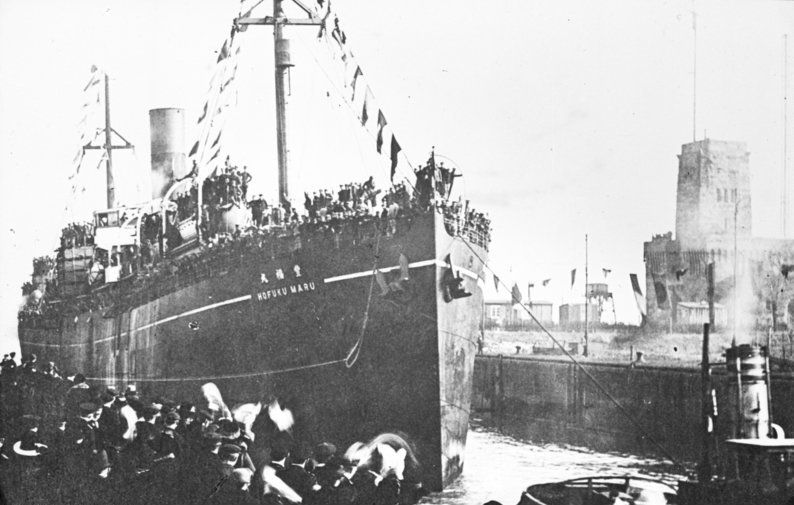
PHILIPPINES: The wreck of the Hōfuku Maru, a Japanese warship that sank on September 21, 1944, with over one thousand prisoners of war from the United Kingdom and the Netherlands, was recently found after around eighty years near Zambales, the Philippines.
The vessel had been struck by four torpedoes dropped by warplanes from the United States, which had mistaken it for a military cargo.
The Hōfuku Maru was one of the 56 so-called “hellships” that the Japanese military used to transport more than 50,000 POWs during World War II. CNN reported that 19 such ships were sunk by Allied fire, five of which have never been discovered.
Among the 1,289 POWs on board, fewer than 300 survived, and 1,047 died. After World War II ended, two of the survivors from the UK, Captain Nigel Evans and Captain James Gibson, testified during war crimes trials in Singapore concerning the horrific treatment they received aboard the vessel, which resulted in the death sentence given to Sergeant Major Jotani Kitaichi of the Imperial Japanese Army.
“Our ship received three direct hits amidships and sank in two minutes. All the prisoners on board went down with the vessel. There were insufficient life belts to go round, and the holds were partially battened down. However, the captain, crew, and guards all left the boat as soon as the machine gunning started making no attempt to release the prisoners,” Capt Evans said in his testimony. Both he and Capt Gibson had been captured in Singapore by the Japanese in early 1942.
A team of researchers was responsible for finding the vessel. They searched for relevant documents in both American and Japanese military archives, and then carried out sonar surveys and technical dives.
The first dive missions took place in December 2025 and January 2026, when a type of wreckage was found at around 50 meters. CNN noted, however, that the wreckage has gradually been covered by volcanic ash that resulted from the eruption of nearby Mount Pinatubo in 1991, making it almost impossible to identify the vessel.
Early this year, thanks to the Discovery Channel, the research team was joined by maritime archaeologist Calvin Mires and underwater imaging specialist Evan Kovacs, who used a technique called photogrammetry to help them get a clearer picture of the wreck.
Enjoying this article?
Subscribe to get more stories like this delivered to your inbox.
According to Mr Mires, there has been a “preponderance of evidence,” in large part based on the vessel’s blueprints, that suggests it is indeed the Hōfuku Maru.
On June 8, after reviewing the team’s report on their findings concerning the wreck, the Cultural Heritage Agency of the Netherlands issued a statement saying it was “almost certainly” the Hōfuku Maru.
The team confirmed the discovery of human remains on the wreck, and the governments of the UK, the Netherlands, and the United States, which will determine the next steps, have been informed of the matter. /TISG
Senior Writer