
From the Language Movement to the Liberation War: The story of Rasendra Datta Chowdhury
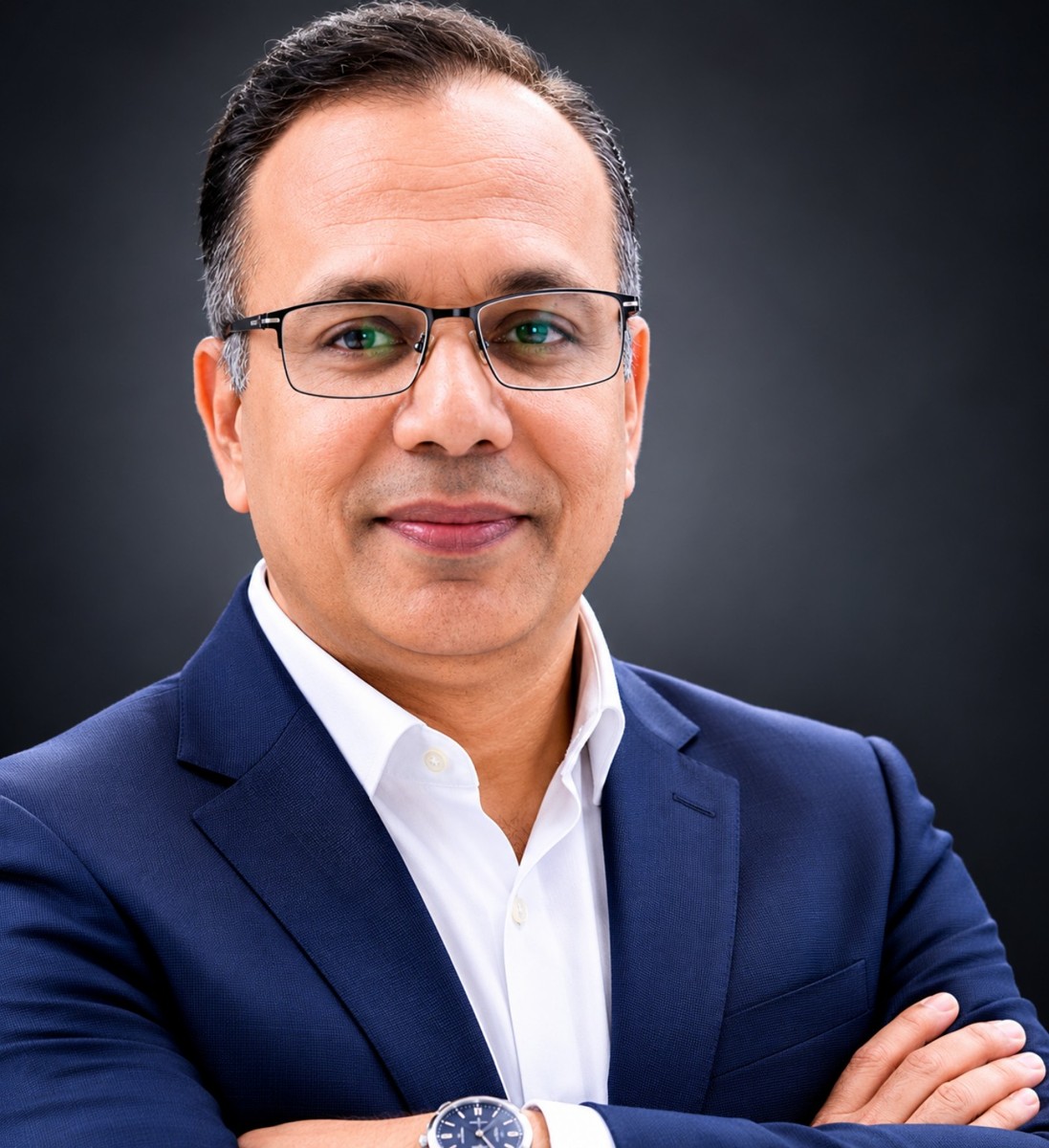
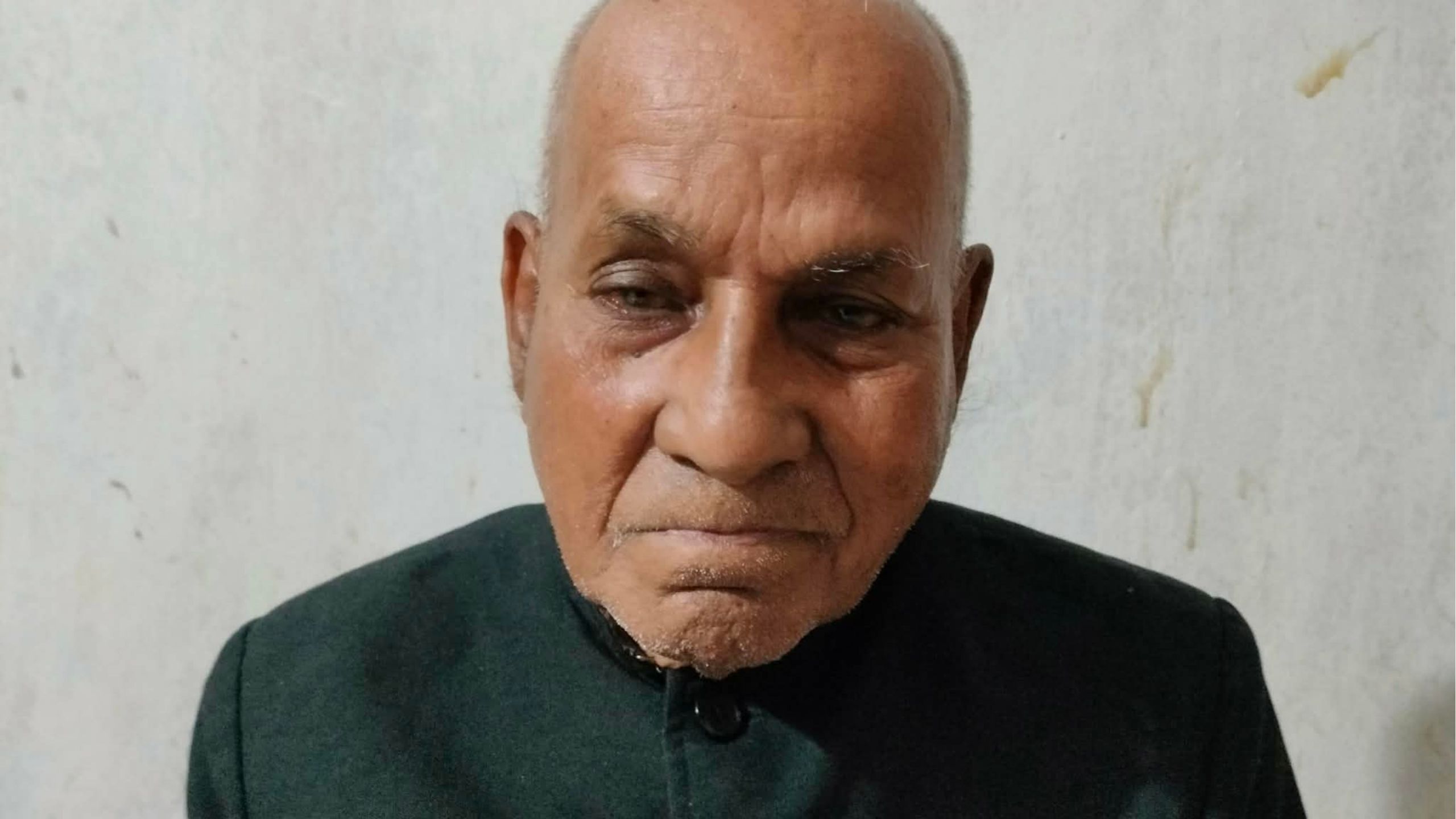
Now an octogenarian, he spends his days at home. Throughout his life, he devoted himself to socially oriented welfare work, striving to transform society and contribute to the country's development through principled and constructive politics.
Rasendra Datta Chowdhury: An Idealistic Public Leader and Courageous Journalist
By Sangram Datta:
The border district of Moulvibazar in northeastern Bangladesh has witnessed numerous historic movements and struggles. Closely intertwined with the land, its people, and its politics is an idealistic politician, journalist, and cultural figure-Rasendra Datta Chowdhury. For nearly seven decades, his contributions to politics, journalism, and culture have remained both relevant and inspiring.
He was born on April 12, 1940, in the village of Noagaon under Sreemangal police station in the then South Sylhet subdivision of Assam Province in British India (now Moulvibazar district, Bangladesh). His father, Jatindra Mohan Datta Chowdhury, was a landlord, and his mother was Bindubasini Datta Chowdhury. His ancestral home was in Dattarail village of Dakshin Dhakadakshin in the then Sylhet district.
He completed his matriculation from Sreemangal Victoria High School, followed by intermediate and B.Com degrees from Moulvibazar College. Later, he also earned a B.Ed degree. For a period, he worked as a teacher at Bhairab Bazar High School in Sreemangal.
Despite being born into a landlord family, he chose to engage in politics in support of the poor and marginalised. From the Pakistan period, he developed a deep interest in reading newspapers. From an early age, he regularly read publications such as Anandabazar and The Statesman, along with various English-language newspapers, which eventually shaped him into a writer.
From childhood, he was deeply interested in cultural activities and was actively involved with cultural organisations during the Pakistan era.
His political journey began with the Language Movement of 1952. At a large student gathering held at the Sreemangal Town Committee field, he, along with others, played a leadership role. This marked his active involvement in student politics and mass movements.
He later emerged as a prominent student leader of the 1950s in the region. In 1962, during the student movement against Ayub Khan’s military regime and the Education Commission report, he played an active and leading role.
During his student life, he was associated with the East Pakistan Student Union. Later, in 1957, when the National Awami Party (NAP) was formed under the leadership of the veteran leader Maulana Abdul Hamid Khan Bhashani, he joined the party and worked to advance leftist politics in the region. For this reason, he became recognised as a pioneer of leftist political thought in the area.
In 1967, the National Awami Party (NAP) split into two factions: NAP (Bhashani) and NAP (Muzaffar). Identified with the pro-Moscow line, he joined NAP (Muzaffar) and worked to strengthen the party in the region.
During the Pakistan era, he served as the convener of a three-member secret cell of the Communist Party. The other members were NAP leaders Mohammad Shahjahan Mia and Syed Muizur Rahman, respectively.
He was one of the key figures associated with the students’ 11-point program during the anti-Ayub movement and was among the principal organisers of the mass uprising of 1969 in the region.
In 1963, a historic peasants and workers hill movement took place in Sreemangal. He was one of its leading figures. Alongside Mohammad Shahjahan Mia, he played a central leadership role in the Balishira hill movement. Under their leadership, Martyrs’ Day of Balishira was observed from 1963 through the 1980s.
During the Pakistan period in 1965, he campaigned across Sreemangal and the greater Moulvibazar subdivision in support of Fatima Jinnah during the presidential election. At that time, he and his party colleagues, including leader Mohammad Shahjahan Mia, were physically attacked by the ruling Ayub Khan’s forces.
He also made significant contributions to the anti-Pakistan government movements, including the Six-Point Movement of 1966 and the Mass Uprising of 1969.
On April 6, 1970, he was arrested as the principal accused in the so-called "Pakistan-breaking" or "Joy Bangla" case. Along with him, other prominent leaders of the same party named Mohammad Shahjahan Mia, M. A. Rahim of the Chhatra League, and student leader S. A. Mujib were also detained. The Pakistani government sent them to Moulvibazar Jail. The following day, a previously scheduled mass rally was held in Srimangal town under the initiative of NAP. At the rally, Begum Matia Chowdhury - then a NAP leader widely known as the "fiery daughter of the era" and former DUCSU Vice President and NAP Vice President Ahmedul Kabir delivered passionate speeches demanding their release. Subsequently, under intense and militant protests by thousands of Awami League, Chhatra League, NAP, and Student Union leaders, activists, supporters, and ordinary people, the government was compelled to release them.
On 1 March 1971, at 1:00 p.m., as soon as President Yahya Khan’s speech was broadcast on the radio, NAP leaders Rasendra Datta Chowdhury, Mohammad Shahjahan Mia, and Syed Muijur Rahman began a procession from Srimangal Municipality with slogans. Within moments, the entire town came alive, as people from all directions joined in under the leadership of NAP and the Awami League.
On March 24, 1971, the then Punjabi SDPO of Moulvibazar came to Srimangal and re-hoisted the Pakistani flag.
In response, the following day, March 25, the rebellious masses laid siege to the police station.
Inside the station, NAP leader Rasendra Datta, Syed Muijur Rahman, and Chhatra League leader Ekram Hossain Chowdhury brought down the Pakistani flag and re-hoisted the flag of independent Bengal in front of the authorities. At that time, the police present stood silently, observing the scene in the face of the enraged crowd.
In this way, he, along with leaders and activists of NAP and the Awami League, united the general public. Many received training, and with a large resistance force, they advanced toward Moulvibazar under the leadership of Sector 4 Commander Major C. R. Datta to confront the Pakistani army.
From April 1 to April 28, the freedom fighters engaged in relentless resistance, carrying out fierce attacks with valour and determination, keeping the flag of independent Bangladesh aloft in Srimangal.
On April 30, 1971, Pakistani forces entered Srimangal, launching attacks in the Sylhet region by land, water, and air. As a result, he and numerous leaders and activists of pro-independence groups were compelled to cross the border into India. There, they worked to build public opinion in support of the liberation war and played a significant role in advancing the cause of independence.
During the Great War of Independence in 1971, the Government of India awarded Rasendra Datta Chowdhury an honorary certificate in recognition of his valuable contributions, including assistance in maintaining law and order and his overall support for Bangladesh’s independence.
In 2014, when the government called for online applications for inclusion in the list of freedom fighters, he responded by submitting an application. However, in 2017, the verification committee of Srimangal Upazila chaired by former Agriculture Minister and MP Vice Principal Abdus Shahid along with some members, allegedly acted with narrow political considerations. In the remarks section of his application, they noted that no information related to his status as a freedom fighter was found, and forwarded the case to the National Freedom Fighters Council (JAMUKA). As a result, his name has still not been recognised in the official list of freedom fighters by the Government of Bangladesh.
Similarly, several others, including Awami League leader M. A. Rahim, former Srimangal Union Parishad Chairman Mohammad Rais Mia, and NAP leader Mohammad Shahjahan Mia, were also deprived of proper recognition.
Due to similar remarks by the Srimangal verification committee stating that no supporting information or evidence of their involvement as freedom fighters was found, their applications were forwarded to JAMUKA in Dhaka, preventing them from receiving rightful recognition.
On October 12, 2022, he filed an appeal at the central office of JAMUKA. However, for unknown reasons, he did not receive any letter by post or phone call regarding the hearing of his appeal.
Later, on May 19, 2024, when he contacted the Honourable Minister of the Ministry of Liberation War Affairs, A. F. M. Mozammel Haque, the minister stated that there was nothing he could do. He nonetheless provided a recommendation by signing and sealing a photocopy of the appeal. Subsequently, a notice was issued regarding the submission of a request for an appeal hearing. As no response was received to the notice, a writ petition was filed before the Honourable High Court in January 2025. In response to the writ petition, the Honourable High Court issued an order along with a rule nisi.
After the country’s independence, due to his involvement in protests against the killing of two student leaders by police gunfire during a student union procession in Dhaka in 1973, he and another NAP leader, Mohammad Shahjahan Miah, were declared persona non grata in the locality by some local activists of the then ruling party.
However, because of the strong organisational structure of the NAP, nothing significant could be done against them. The aforementioned two NAP leaders were attacked by local activists of the then ruling party. As a result, the local organisation of the ruling party and the main opposition party, NAP, were involved in retaliatory clashes and related incidents in the area for some time.
In the post-independence period, he was one of the prominent and courageous frontline leaders of the main opposition party, NAP. Under his leadership, from the Language Movement of 1952 until he suffered a stroke in old age, his contributions to various movements and struggles were immense.
From 1972 through 1990, he was subjected to repeated attacks by groups of militants allegedly mobilised by successive governments.
When Bangabandhu Sheikh Mujibur Rahman established BAKSAL, he was appointed Joint Secretary of the Srimangal Thana Committee.
Both during the Pakistan period and after independence, he was active in labour movements on behalf of tea labourers.
After the assassination of the Father of the Nation, Bangabandhu Sheikh Mujibur Rahman, in 1975, he was arrested for political reasons and remained in prison for two years.
Later, on the instructions of NAP leader Professor Muzzafar Ahmed, a writ was filed in the High Court by his personal assistant, through which he was released.
From the Pakistan period through every democratic movement in Bangladesh, his contributions were of great significance.
Alongside politics, his presence in the international arena was also notable. In 1980, at the invitation of the Soviet government, he visited Russia for one and a half months. As part of a "Leader's Tour Program," he travelled across various parts of the then Soviet Union, including Moscow, Leningrad (now Saint Petersburg), Uzbekistan, and several other republics.
During that time, he had the opportunity to closely observe the implementation of socialist ideals in the Soviet Union. The country’s approaches to education, agricultural development, industrialisation, and cultural activities left a deep impression on him. After returning, he shared his experiences with young political leaders and activists in Bangladesh and became engaged in further organising left-wing politics. In his words, "The Soviet visit was a practical classroom that showed how a state can work in the interest of working people."
He was never election-oriented in his political approach. His focus remained on movements and struggles aimed at establishing people’s rights. In 1983, he was elected Chairman of Srimangal Union Parishad by a large margin through popular vote. He served as Chairman from April 12, 1983, to February 15, 1988.
During that period, local residents, along with people from various professions, reportedly pressured him to contest the election.
In that election, he was elected Chairman with overwhelming support from the people without spending any money—an unprecedented event in the area. At a time when millions of money (taka) are typically spent to win such positions, he did not have to spend any money. People from all walks of life campaigned in his favour, regardless of political affiliation. Rising above party and ideological divisions, he was elected Chairman and formulated plans in such a way that future representatives would continue to implement and expand those initiatives. The scale of development work carried out during his tenure as Chairman has not been surpassed by any of his successors to date.
While serving as Chairman, he played a significant role in development, including long-term planning in education, healthcare, roads, and infrastructure. The development work carried out during his tenure is still remembered by the people of Srimangal. Locals say that the record he set remains unbroken.
Enjoying this article?
Subscribe to get more stories like this delivered to your inbox.
It is pertinent to note that his father, former Congress leader Jatindra Mohan Datta Chowdhury, was also among the founding members of the local Union Parishad at the time of its establishment. His immediate younger brother, Direndra Datta Chowdhury (Panu), a NAP leader and a guerrilla freedom fighter associated with NAP, the Communist Party of Bangladesh (CPB), and the Student Union, was elected as a member of the same Union Parishad in 1973 by an overwhelming majority of votes.
In 1985, when the then President, Lieutenant General Hussain Muhammad Ershad, visited Srimangal, he raised demands before him to declare the Balishira Hills a protected forest area and to undertake dredging of the Gufla River. These appeals were repeatedly broadcast on radio.
Alongside politics, he also played a distinctive role in journalism after independence. Following the country’s liberation in 1971, he, together with former Srimangal municipal commissioner Bipul Ranjan Chowdhury, Kamalesh Bhattacharya (later Chairman of Srimangal Municipality and a dedicated Awami League leader), Zahir Uddin Ahmed, Rana Debroy, Gopal Deb Chowdhury, Syed Nesar Ahmed, and others, took the initiative to establish a press club in Srimangal. After prolonged efforts, the Srimangal Press Club was established in 1976 with the cooperation of the then Moulvibazar subdivision administration.
Under his leadership, the press club became a symbol of unity among journalists. Rasendra Datta Chowdhury, Zahir Uddin Ahmed, Kamalesh Bhattacharya, Rana Debroy, M. A. Salam Chowdhury, Md. Abdul Hye Chowdhury, Abdul Jalil, Mohammad Alfu Miah Chowdhury, Mohammad Abdul Gaffar, Bidhubhushan Pal Swapan, and many other distinguished journalists together ushered in what is regarded as a golden era of journalism in Srimangal.
Despite differences in political affiliation, their journalistic neutrality was never questioned. Their sole objectives were to uphold the truth, serve humanity, and protect public interest. They remained steadfast in highlighting the lives of the people of Srimangal, the struggles of tea workers, and the issues affecting the general populace. The press club effectively became a stronghold of independent journalism.
As a writer and journalist, he was remarkably courageous and possessed extensive command over writing. Just as he could deliver fluent speeches, he also skillfully and articulately reported local events, development issues, and public concerns in newspapers with clarity and precision.
In addition to politics and journalism, he also played a significant role in the cultural sphere during the Pakistan period. During that time, his colleagues included Dr Rama Ranjan Deb, Hitendra Gupta, Akhil Chandra Dhar, Biraj Kusum Chowdhury Chuni, among others.
Since 1962, he worked for more than four decades with one of the country’s leading national daily newspapers, The Daily Sangbad. In addition, he was engaged in journalism with various other publications.
From 1952 until December 31, 2020, when he suffered a mild stroke, he was involved in politics for nearly 68 years. Over the course of his life, he was imprisoned three times for political reasons. He is widely regarded in the region as a symbol of honesty, dedication, principled conduct, and courageous journalism.
On the night of December 31, 2020, he suffered a fall followed by a mild stroke and remained under treatment for five days at Sylhet MAG Osmani Medical College Hospital.
In the first week of February 2022, he contracted COVID-19 and was admitted to Shaheed Syed Nazrul Islam Medical College Hospital in Kishoreganj district town, where he received treatment for eight days before recovering and returning home.
Currently, this octogenarian politician and fearless journalist is living in his residence in Srimangal in a state of illness.
Rasendra Datta Chowdhury is not merely a politician; he is an idealist, a dedicated freedom fighter, a courageous journalist, and a cultural activist. His prominent role in the Liberation War remains indelible in history, while his contributions to journalism are forever associated with the founding and development of the Srimangal Press Club.
From domestic politics to the international arena, his experiences—particularly his visit to the Soviet Union-have shaped him into a multifaceted personality. He engaged in politics at considerable personal risk, led movements and struggles, and wrote fearlessly. Yet, he still remains deprived of appropriate state recognition. His life story stands as a unique document of Bangladesh’s political and cultural history, extending beyond Moulvibazar to the national level.
Contributing writer at The Independent News