
India cannot be a good neighbour to Myanmar through its ties with the Junta

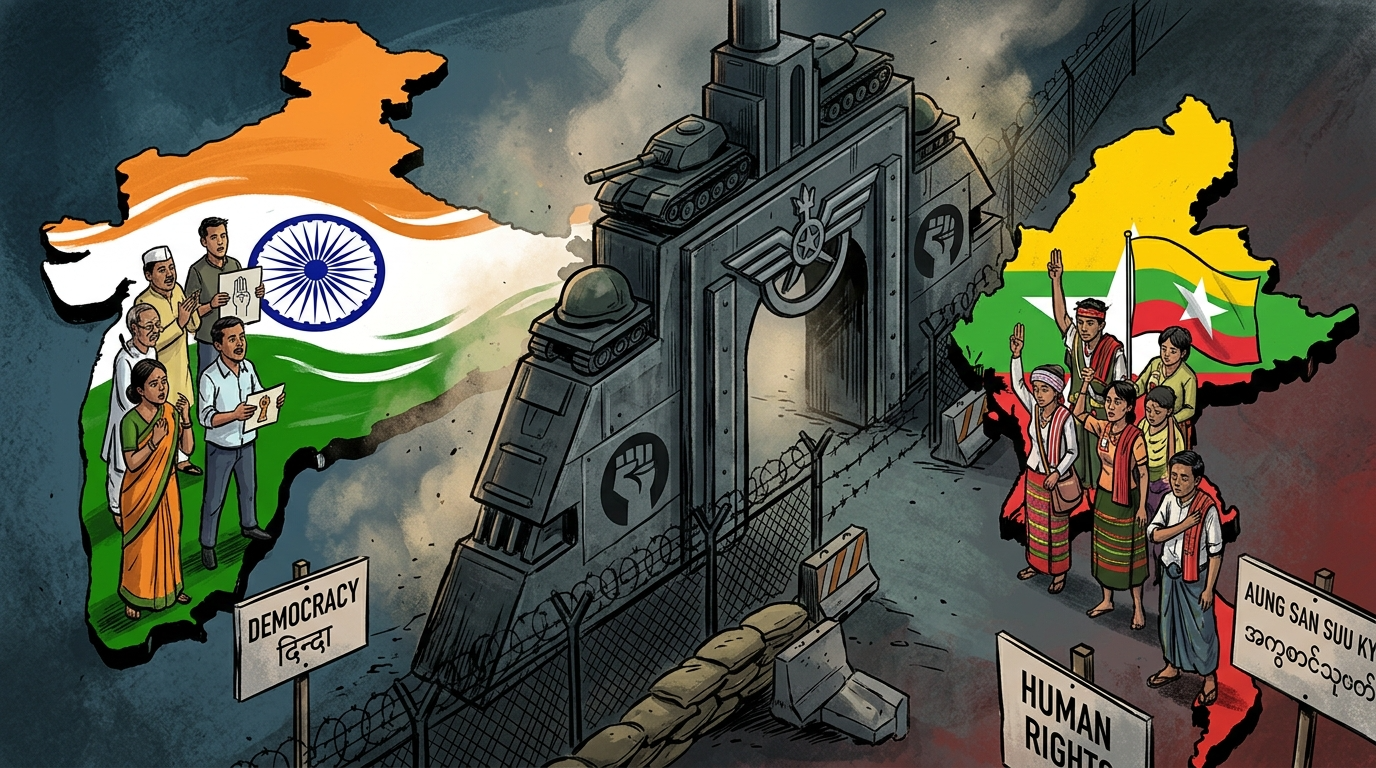
Should India be pursuing diplomatic relations with Burmese Junta while the latter is violating human rights of Rohingyas?
At a time when the people of Myanmar go through the darkest period of time and need international support more than ever, India has chosen to stand with the military dictatorship and to legitimize the military-backed government. This could very likely dry up the goodwill among the Burmese for India while spoiling the credibility of India’s long-standing democracy largely regarded as the world’s most reputable.
Alongside China and Russia, India maintains pragmatic relations with the Junta. While western countries have imposed sanctions on the Myanmar military following the 2017 genocide committed against the Rohingya and the 2021 coup d’ tat, these countries still preserve their pragmatic, diplomatic and strategic ties with the Junta to serve their lucrative interests. By doing so, they have been helping the military dictatorship to hold their grip on power.
On 1 February 2021, the Myanmar military seized power by overthrowing the democratically elected government of Aung San Suu Kyi’s (Nobel Peace Laureate) party, National League for Democracy (NLD), as well as detaining hundreds of politicians and activists. What followed was widespread armed resistance by civilians, and political upheavals and fighting escalated nationwide.
Dramatically, it has caused an unprecedented humanitarian catastrophe as many people have been displaced. It has been over five years since the coup but yet the situation has not changed. Rather the situation has worsened. Myanmar is currently undergoing the worst ever circumstances with the country being collapsed politically and economically.
Between Dec 2025 and Jan 2026, the Junta organized an election which was both nationally and internationally deemed as a sham election. The majority of civilians rejected it and didn’t participate in the voting. It was held under the domination of the military and its sole purpose was to gain international legitimacy and ease international sanctions and pressure.
On 10 April 2026, the military’s chief, Gen. Myint Aung Hlaing declared himself as the president of Myanmar. Not long after assuming the office, he made his first foreign visit to India. Upon his arrival in Gaya, Bihar, on 30 May, he was offered a warm reception and welcomed by rolling out a red carpet.
During his visit, he was in meetings with the Prime Minister, Narendra Modi, and the president, Droupadi Murmu, where they discussed bilateral relations, connectivity, trade, border security and regional cooperation.
“India’s policy is not intended to be a commentary on the internal political arrangements in Myanmar and that New Delhi believes engagement is the best way forward,” Vikram Misri, Foreign Secretary of India, said. “History has shown that disengagement doesn’t give us any results that are better than engagement.”
Mr Misri said that New Delhi’s preference is to continue engagement and has no interest in internal politics. That's, however, just a rhetorical statement. After all, India has rolled out a red carpet for Myint Aung Hlaing, who is not a legitimate president, not to mention the alleged perpetrator of genocide.
Simply claiming non-interference into Myanmar’s internal politics doesn’t prove New Delhi’s standing with its moral values. Conferring legitimacy on the military-backed or illegitimate government of Myanmar defines its role in Myanmar’s politics.
Historically, India stood with the people of Myanmar during their struggle for democracy. Following the 1988 pro-democracy uprising, New Delhi provided refuge to dissidents and supported the pro-democracy movement. At the time, India showed solidarity with the people of Myanmar which earned India remarkable goodwill among the people of Myanmar.
However, current New Delhi’s approach of engagement with its Act East Policy, contradicts the past history. It no longer serves India's moral values nor the democratic future of Myanmar that its people aspire for. Its maintenance of engagement with the Junta causes the civilians to pay the price as it helps the military to sustain its grip on power.
India shares 1600-kilometer-long border with Myanmar. Both countries have a record of good relations and neighbourhoods. To uphold that bonding, India should stand on the side of the people of Myanmar by supporting their pro-democracy movement.
Enjoying this article?
Subscribe to get more stories like this delivered to your inbox.
Being a good neighbour doesn’t mean maintaining ties with the Junta against whom the civilians are fighting. India should be cautious about its ties with the Junta, which significantly affects its moral standing and democratic values.
For short-term ties with the Junta, India shouldn’t ruin its largest democracy, as well as the goodwill among the people of Myanmar. As the world's most reputable democracy, India should be standing with the people of Myanmar who are leading a pro-democracy movement and paving the way towards a peaceful and democratic transition in Myanmar.
The people of Myanmar are courageous and they will mark a new dawn one day. And when it comes true, India would be deemed to be holding double standards in their engagements.
New Delhi must consider rethinking its Act East Policy and stop its lucrative pursuit through ties with the Junta who doesn’t have a long-term future.
New Delhi’s solidarity would mean a lot to the people of Myanmar as they struggle for democracy. By standing with them, India could safeguard goodwill among the people of Myanmar as a good neighbour, while preserving its moral values and democratic credibility.
Sirajul Islam is a Rohingya poet, writer and human rights activist, based in Cox’s Bazar.