
Jaintia: The lost kingdom with a society built around the female line

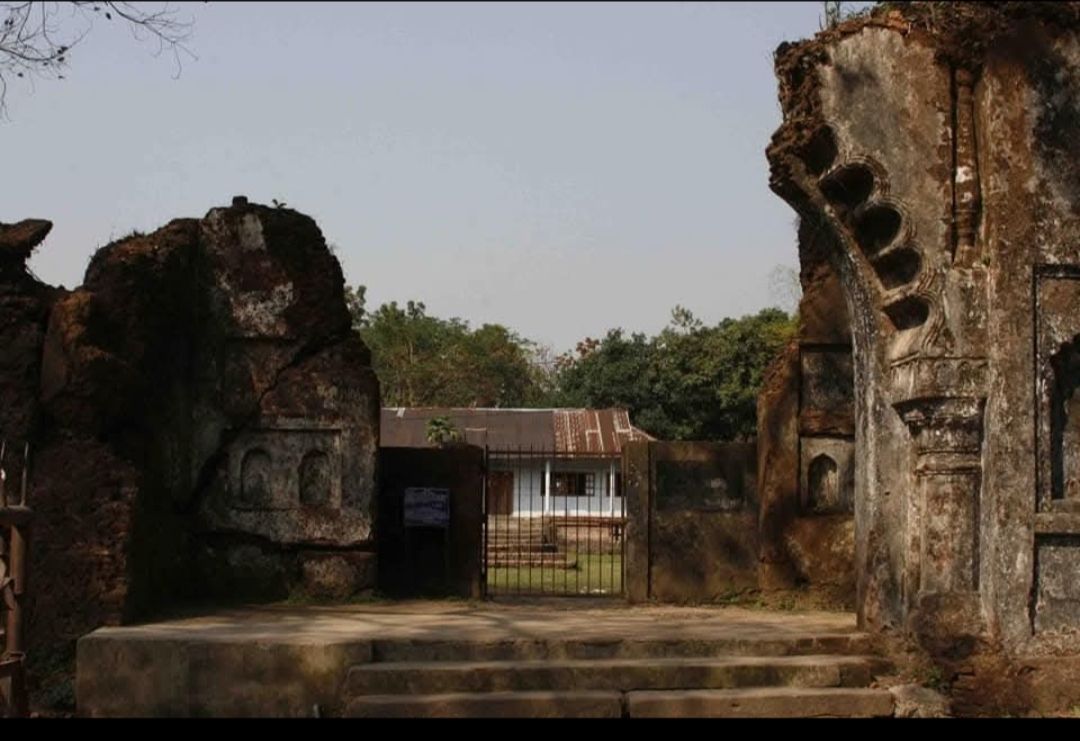
Jaintia was a forgotten kingdom where power, inheritance and identity followed the female line. From ancient rituals and regional wars to British annexation in 1835, its remarkable history offers a rare glimpse into a matrilineal society in South Asia. The kingdom is gone, but its story endures.
There are places that disappear from the map long before they disappear from memory. Jaintia is one of them.
Once stretching across large parts of northeastern India and what is now Bangladesh, the Jaintia Kingdom was shaped by war, diplomacy, religious ritual, and shifting political fortunes, but what makes its history especially striking is the position of women within its social and political order. Its matrilineal traditions and female-centred inheritance system have led some researchers to describe Jaintia as the world’s first independent female kingdom.
That claim is disputed by historians, and it should be treated with care. Yet there is no denying that Jaintia offers an unusual window into a South Asian society in which descent and inheritance followed the female line.
Its history, however, was anything but peaceful.
One of the early chapters belongs to Banchharu, a ruler who developed an interest in the worship of Janghakali. During his reign, human sacrifice to the deity was introduced. The practice would endure for centuries, surviving even into the period of British rule.
Banchharu was followed by King Kamadeva, a ruler with a deep interest in the Sanskrit language and literature. He maintained a close friendship with Bhoj Barma Deva, a Sanskrit scholar from eastern Bengal. In 1090 AD, a work titled Bijay Raghavya was composed in honour of Kamadeva.
Then came Bhimabal. His reign was undermined by rebellions among the hill chiefs, leaving him unable to exercise effective control over the kingdom. Historical accounts differ over what happened next: some say he was killed after being defeated in war, while others say he abandoned the kingdom in humiliation. His minister, Kedareshwar Roy, eventually took power and established the Brahmin royal dynasty of Jaintia.
By the early 17th century, the kingdom was again caught up in the politics of its neighbours.
In 1618, King Dhan Manik conquered Dimrua. He later went to war with Yasho Narayan, the king of Maibong in the Kachari kingdom. Faced with the pressures of the conflict, Dhan Manik arranged for his daughter to marry Ahom King Susenpha. When the Ahom army subsequently went to war against the Kacharis, Dhan Manik and the Jaintia forces were able to withdraw to safety.
A few decades later, Jaintia challenged the Mughals.
Sometime in 1676, the Jaintia king rebelled against the Mughal Empire. According to the Akhbarat, he led 1,500 infantrymen in raids on neighbouring areas and laid siege to the Sylhet fort. Mughal governor Shaista Khan responded by sending Iradat Khan and Tahawar Singh, the king of Kharagpur in Bihar, on a joint expedition. They defeated the Jaintia forces and restored Mughal control over the kingdom.
The relationship with the powerful Ahom kingdom to the east was no less volatile.
In 1707, Jaintia King Ram Singh abducted the Kachari king. The Ahom ruler Rudra Singha Sukhrungpha responded by invading Jaintia. His forces reached Jaintiapur, the capital, and carried out widespread killings. Many civilians were killed; others had their ears and noses cut off.
Eventually, the Jaintias rebelled, defeated the Ahom forces and regained their independence. Ram Singh died in captivity, and his son, Jayo Narayan, succeeded him.
For a time, trade mattered as much as war. In 1757, the Nongkrem-Khinriam Khasi chief closed Sonapur Duar, cutting off trade between Jaintia and the Ahom kingdom. The route was later reopened at the initiative of Ahom King Suremphaa Swargadeo Rajeswar Singha.
Then came the British.
After Britain acquired the Diwani of Bengal in 1765, its relationship with Jaintia became increasingly direct. Jaintiapur, in present-day Bangladesh, was still the kingdom’s capital. In 1774, Major Henniker led the first British expedition into Jaintia.
The British had a practical interest in the kingdom. Jaintia’s limestone mines were among the principal sources of lime for the Bengal delta, but economic interests did not translate into a stable relationship. Tensions quickly mounted. British forces came under attack that same year, and from 1799 onward the Jaintias gradually lost their hold over the plains.
The most disturbing chapter of this period involved human sacrifice.
In 1821, a group of Jaintias abducted several British subjects and attempted to sacrifice them during Kali Puja. A British investigation found that such sacrifices had apparently been taking place every year for at least a decade.
The belief behind the ritual was stark. The priest was said to cut the victim’s throat, after which the Jaintia princess would bathe in the blood in the hope of having children.
The British issued a stern warning to the Jaintia king. An agreement was reached with David Scott in 1824, but the matter did not end there. Another attempt at sacrifice was made the following year.
After the First Anglo-Burmese War, the British allowed the territory north of the Surma River to remain under the Jaintia king, but in 1832, four British subjects were abducted. Three were sacrificed at the great Hindu temple at Faljur. The fourth escaped and reported what had happened.
This time, the British demanded that the perpetrators be brought to trial. The king refused.
Enjoying this article?
Subscribe to get more stories like this delivered to your inbox.
British forces entered Jaintia, and on 15 March 1835 the kingdom was formally incorporated into the British Empire.
The political end of Jaintia was followed by a carefully managed arrangement for its former ruler. The king was allowed to retain his property in Sylhet and was given a monthly allowance of 500 rupees. The British administered the territory through 15 Dalois and four Sardars, who had authority to hear most cases except the most serious offences.
Yet even under colonial rule, Jaintia did not simply vanish.
In greater Sylhet, four parganas — Jaintiapuri Raj, also known as Puriraj, Jaflong, Chaiarkata and Faljur — remained part of the revenue administration.
Puriraj covered 59.15 square meters and had land revenue of £325 in 1875. Faljur covered 51.84 square meters, with land revenue of £301. Chaiarkata covered 37.88 square meters and contained 749 zamindaris, generating £276 in land revenue. Jaflong covered 40.07 square meters and contained 342 zamindaris, with £279 collected in land revenue.
Today, there is no Jaintia Kingdom on the political map.
But the kingdom’s story has proved harder to erase. Its matrilineal traditions, distinctive inheritance system, religious practices and complicated encounters with neighbouring powers and the British continue to draw the attention of historians, researchers and cultural enthusiasts.
Perhaps that is what makes Jaintia worth remembering.
It was not simply a forgotten kingdom on the edge of larger empires. It was a society with its own political traditions and social rules, one that survived wars, rebellions and colonial pressure before finally losing its independence.
Its story also complicates the way we tend to imagine power in the past. Long before modern arguments about women, inheritance and political authority, Jaintia had developed a social order in which the female line mattered profoundly.
The kingdom is gone. The questions it raises are not.
Contributing writer at The Independent News