
Puri’s Jagannath Temple Is More Than a Monument. It Is a Living Centre of Faith

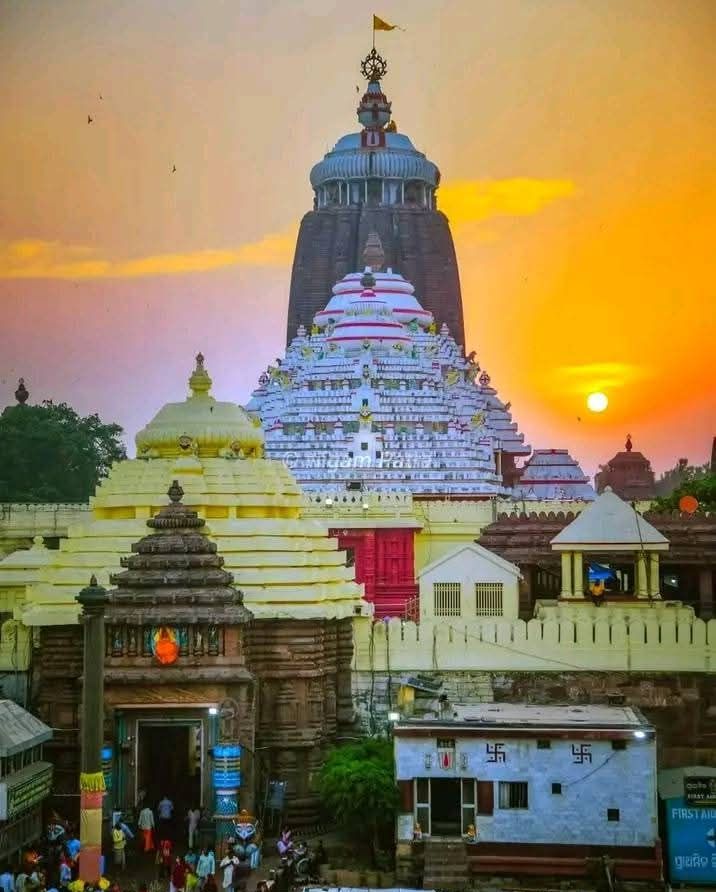
Puri’s Jagannath Temple, standing on India’s eastern coast beside the Bay of Bengal, is far more than a historic monument. One of Hinduism’s sacred Char Dham sites, it remains a living centre of faith, tradition and pilgrimage. As the Rath Yatra approaches, Puri once again prepares to welcome devotees from across India and beyond. Its centuries-old legends, distinctive wooden deities, monumental architecture and enduring rituals continue to make Jagannath a powerful symbol of India’s living spiritual heritage.
On India’s eastern seaboard, where the Bay of Bengal meets the ancient cultural landscape of Odisha, lies Puri — one of the country’s most important pilgrimage cities and the home of the celebrated Jagannath Temple.
Puri is located in eastern India, in the state of Odisha, roughly 60 kilometres south of Bhubaneswar, the state capital. Facing the Bay of Bengal, the city has for centuries been connected to the religious, cultural and maritime history of the eastern Indian subcontinent.
Today, Puri is internationally recognised for the Jagannath Temple and its annual Rath Yatra, or chariot festival. But its importance predates modern India and extends far beyond tourism. Puri is a historic sacred city whose identity has been shaped by Hindu pilgrimage, royal patronage, religious movements and centuries of evolving traditions.
With the annual Rath Yatra approaching, devotees will once again gather in enormous numbers around the Jagannath Temple. For international visitors, the spectacle may initially appear to be an extraordinary display of colour, architecture and religious devotion. Yet to understand Puri properly is to see it as something more than a historic monument.
The Jagannath Temple is not simply a building preserved from the past. It remains a living centre of worship.
Puri: a historic city on the Bay of Bengal
Puri occupies a distinctive place on the eastern coast of India. Its location beside the Bay of Bengal has helped shape both its physical character and its cultural identity.
The city is part of Odisha, a region with a long history of powerful kingdoms, distinctive temple architecture and religious traditions. Puri became particularly prominent under the Eastern Ganga dynasty, whose rulers played a central role in the development of the Jagannath Temple.
The city’s historical importance, however, cannot be reduced to the political dynasties that ruled the region. Puri became one of the great pilgrimage destinations of Hinduism, drawing devotees from across India and eventually becoming an important centre for several Vaishnava traditions.
Its place in the sacred geography of Hinduism was reinforced by its status as one of the four Char Dham pilgrimage sites. Together with Badrinath in the Himalayas, Dwarka in western India and Rameswaram in the south, Puri forms part of one of Hinduism’s most important pilgrimage circuits.
That geographical significance helps explain why the city has remained a destination for pilgrims for centuries.
A temple shaped by centuries of history
The present Jagannath Temple is generally associated with Anantavarman Chodaganga Deva, a ruler of the Eastern Ganga dynasty, in the 12th century.
Historical evidence, including inscriptions associated with later rulers, points to a long process of construction and development rather than a single moment in which the temple simply appeared. Some traditions associate the completion or renovation of the temple with Anangabhima Deva II, while different historical accounts provide different dates.
This layered history is important.
Puri was not created as a finished religious centre by one ruler. Its identity developed over centuries, with successive rulers expanding the temple complex and religious traditions deepening its significance.
The temple complex was further developed under later rulers, including the Ganga dynasty and the Suryavamsi Gajapati dynasty.
Royal patronage gave the institution wealth and architectural grandeur. Religious movements gave it a wider spiritual influence.
Among the figures associated with Puri were major Vaishnava thinkers and saints including Ramanujacharya, Madhvacharya, Nimbarkacharya, Vallabhacharya and Ramananda. Ramanuja established the Emar Math near the temple, while Adi Shankara established the Govardhan Math, one of the four seats of the Shankaracharyas.
For followers of Gaudiya Vaishnavism, Puri has an especially intimate connection with Chaitanya Mahaprabhu, the movement’s founder. Deeply devoted to Jagannath, he spent many years in Puri.
The result is a city whose importance reaches well beyond Odisha. Its religious influence extends across India and into the wider Hindu world.
The enduring mystery of Jagannath
At the heart of Puri stands the Jagannath Temple, dedicated to Jagannath, a form of Vishnu.
Jagannath is worshipped alongside Balabhadra and Subhadra, forming the temple’s principal trinity. Their images are distinctive because, unlike the permanent stone or metal idols found in many Hindu temples, they are made from wood.
The images are periodically replaced through the Nabakalebara ritual.
This tradition gives the temple one of its most striking theological characteristics: the sacred form can be renewed without ending the continuity of the deity.
For many visitors, the unusual appearance of the three wooden images immediately raises questions. Their large eyes and unfinished forms have become among the most recognisable features of the Jagannath tradition.
The explanations lie in a complex body of mythology.
According to one traditional account, Jagannath originated as Nilamadhava, a mysterious form of Vishnu worshipped secretly by a Savara king named Vishvavasu. King Indradyumna, after hearing about the deity, sent the Brahmin Vidyapati to locate him.
The story unfolds through secrecy, marriage, ingenuity and divine intervention. Vidyapati eventually found the hidden shrine, but when King Indradyumna arrived, the deity had disappeared.
The king persisted in his search and, according to the legend, was eventually instructed to find a sacred piece of wood from which the images of Jagannath, Balabhadra and Subhadra could be created.
Another traditional account tells of a divine carpenter who began carving the images but left them unfinished after the work was interrupted.
The resulting forms became the sacred images of Jagannath.
Whether understood as sacred history, mythology or religious tradition, these stories remain central to Puri’s identity.
Architecture on a monumental scale
The Jagannath Temple complex covers more than 400,000 square feet and is enclosed by massive fortified walls. The approximately 20-foot-high outer wall is known as Meghanada Pacheri, while another wall surrounding the principal temple is known as Kurma Bedha.
The complex contains at least 120 temples and shrines.
Its principal structures include the Deula or Vimana, Mukhashala, Natamandira, also known as Jagamohana, and Bhoga Mandapa.
Above the principal temple is the sacred Nilachakra, or Blue Wheel, associated with Vishnu’s Sudarshana Chakra. The temple tower rises dramatically over Puri and dominates the surrounding landscape.
But the architecture, impressive as it is, tells only part of the story.
The real scale of the institution is found in its continuing rituals: the daily worship, offerings, ceremonies, pilgrimages and festivals that have made the temple a living religious centre.
Puri and the Rath Yatra
Nothing illustrates that continuing vitality more vividly than the annual Rath Yatra.
During the festival, the three principal deities are taken from the temple and placed on enormous, elaborately decorated chariots. Thousands upon thousands of devotees gather to participate in or witness the procession.
For an international audience, it can be tempting to see the Rath Yatra simply as a spectacular religious festival. But for devotees, it represents something much deeper.
The gods leave the confines of the temple and enter the public world.
The event transforms the streets of Puri into a vast sacred space and reinforces the relationship between the deities, the city and its people.
This is one reason the festival has retained such extraordinary power across generations.
A sacred space with defined boundaries
Puri also raises important questions about how the modern world understands religious heritage.
Non-Hindus are not permitted to enter the Jagannath Temple. Visitors who cannot enter can view the temple and its premises from the steps of the nearby Raghunandan Library and pay their respects at the image of Jagannath near the main entrance.
For international visitors accustomed to thinking of historic monuments primarily as public cultural attractions, the restriction may seem unusual.
But Puri is not principally a museum or archaeological site.
It is an active religious institution governed by its own traditions.
That distinction is essential. Treating the temple solely as an architectural attraction would obscure the very religious life that has allowed it to survive as a meaningful institution for centuries.
The mysteries surrounding the temple
Puri has also acquired a remarkable collection of stories about phenomena said to defy ordinary explanation.
Enjoying this article?
Subscribe to get more stories like this delivered to your inbox.
Among the most frequently repeated claims are that the temple flag flies against the direction of the wind, that the main structure casts no visible shadow, and that birds and aircraft do not fly directly above the temple.
Other traditions concern the direction of coastal winds, the Sudarshana Chakra and the sound of the sea. It is said that the sound of the ocean can be heard outside the Singhadwara, or main gate, but disappears once visitors enter the temple complex.
The temple kitchen has its own set of remarkable traditions. Seven earthen pots are placed one above another while food is cooked using wood as fuel. According to popular belief, the food in the uppermost pot cooks first while the food in the other vessels cooks simultaneously.
The temple is also said to prepare sufficient prasad for enormous numbers of devotees without consistently running short or producing excessive quantities.
Such claims should be treated with care. Some belong to religious tradition and popular belief rather than established scientific fact. But their persistence tells us something important about Puri: mystery itself has become part of the cultural experience of the temple.
Why Puri still matters
Puri’s importance cannot be measured simply by the age of its walls or the height of its temple tower.
Its true significance lies in continuity.
The city has witnessed the rise and fall of dynasties. Religious movements have flourished around its sacred centre. Generations of pilgrims have travelled to the Bay of Bengal to see Jagannath. The temple’s wooden deities have been ceremonially renewed, yet the identity of the gods has remained continuous.
That is what makes Puri different from many historic monuments around the world.
A ruined palace can tell us how people once lived. An abandoned temple can preserve the artistic achievements of an earlier civilisation. But Puri presents something different: a historic institution that remains deeply embedded in the daily religious life of millions.
As the Rath Yatra approaches, the roads of Puri will once again fill with pilgrims. The chariots will move through the city, the crowds will gather and the ancient relationship between Jagannath and his devotees will be renewed in public view.
For the international traveller, Puri offers magnificent architecture and a remarkable history. But to understand the city on its own terms, one must look beyond the monument.
Puri is a place where history and living faith occupy the same space.
It is a city on the Bay of Bengal, but also a destination in the sacred geography of Hinduism. It is a monument of medieval Odisha, but also a contemporary centre of pilgrimage. Its legends reach into the mythic past, while its rituals continue today.
That is perhaps the enduring mystery of Puri.
The Jagannath Temple has survived not because it has been frozen in time, but because generations of people have continued to give it meaning.
And as long as pilgrims continue to arrive, the story of Puri will remain not merely a story about the past, but one that is still being written.
Contributing writer at The Independent News