
Suhasini Das — The Conscience of Greater Sylhet and a Lifelong Voice for Humanity
Suhasini Das — The Conscience of Greater Sylhet and a Lifelong Voice for Humanity
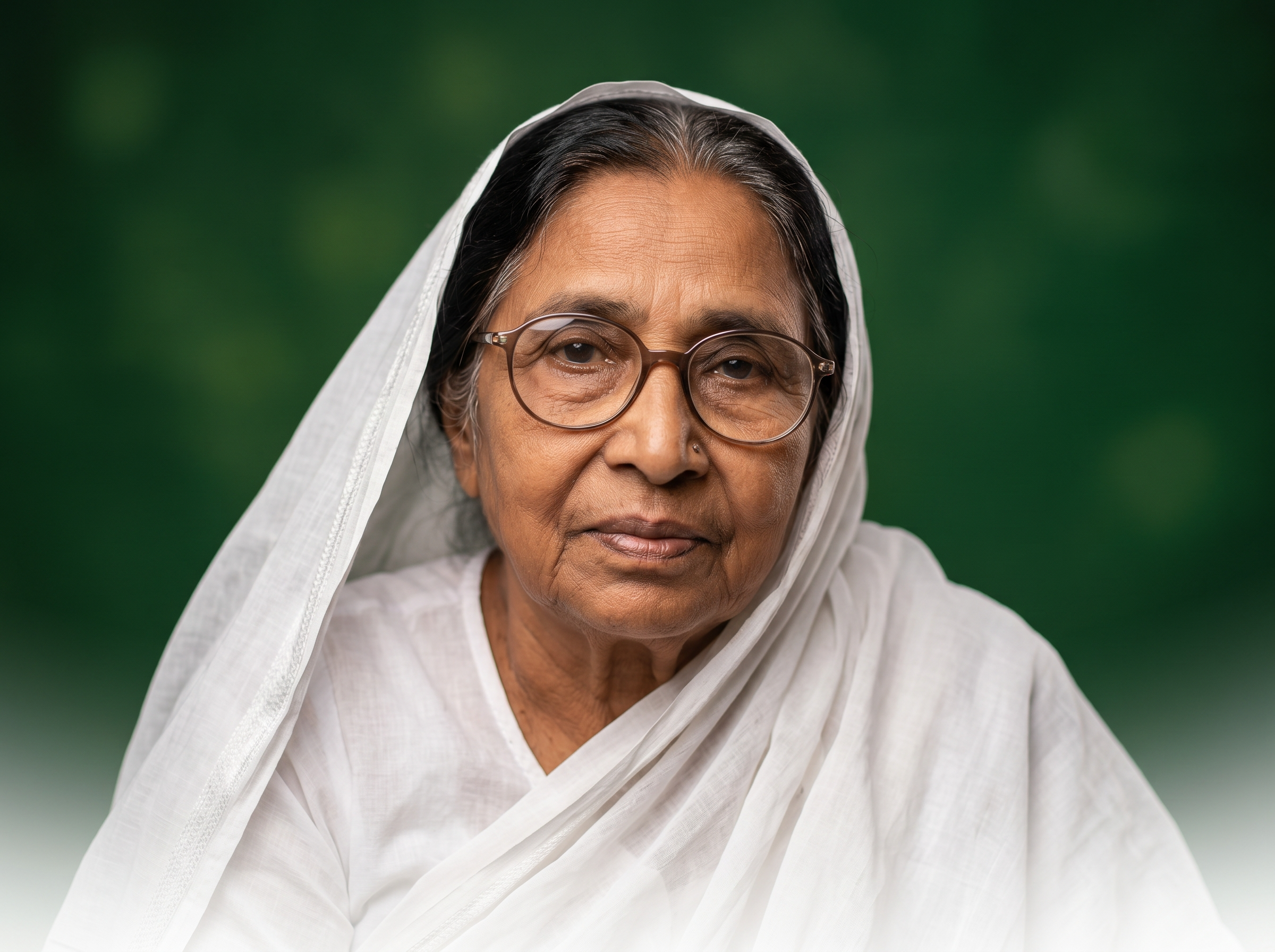
Suhasini Das belongs to that rare line of figures whose life reads less like biography and more like lived history itself shaped by upheaval yet never broken by it. From the riverine heart of greater Sylhet (now Sylhet Division, Bangladesh), she emerged as a steady presence in an age of uncertainty, carrying within her an uncommon blend of courage, compassion, and quiet endurance. Born in what was then British India, in a region that is now part of modern-day Bangladesh, her life would later stretch across shifting borders and political eras—but her emotional and moral grounding always remained tied to Sylhet. What marked her journey was not position or power, but an unrelenting commitment to stand beside those pushed to the margins of society—through famine, violence, partition, and war.
She is remembered as an Indian independence activist, social worker, and organiser deeply involved in the political and humanitarian movements of Sylhet. Across undivided Bengal and beyond, her name became associated with women’s mobilisation, relief work, and the fragile but vital pursuit of communal harmony in times of fracture.
Born on 14 August 1915 in Jagannathpur village of Sunamganj district (then part of British India, now in Bangladesh), Suhasini Das grew up in a world already on the edge of transformation. Her father was Parimohan Ray and her mother Shova Roy. Early marriage in 1930 brought her into the household of Kumud Chandra Das, a well-known figure in Sylhet’s intellectual life and owner of the Kotichand Press. But stability would not last long. In 1935, she was widowed at just nineteen, left to raise her young daughter, Nilima Rani Das, amid uncertainty and loss.
What followed, however, was not retreat but awakening. In the quiet aftermath of personal tragedy, she turned toward books, learning, and public life with a determination that would define her years ahead.
By 1939, she had entered the Indian National Congress, stepping into the turbulent currents of anti-colonial struggle. Meetings, mobilisation, khadi work—each became part of her daily rhythm. In 1940, she publicly committed herself to khadi, aligning her personal life with the political ideals of self-reliance.
A year later, she became closely involved with the Mahila Sangha, training women in craft and skills, building quiet networks of solidarity in a society still reluctant to make space for women in public life. Then came 1942. The Quit India Movement swept across the subcontinent, and Suhasini Das was arrested, spending nine months in Sylhet Central Jail. It was imprisonment, but also a moment that cemented her place in the struggle.
When Jawaharlal Nehru visited Sylhet in 1945, she was among those who welcomed him at Dawki. By then, she was no longer a quiet organiser in the background; she had become part of the region’s political conscience.
The following years tested that conscience further. In 1946, she worked across Kulaura and Srimangal during election campaigns, standing beside labour leaders and political organisers. The same year, storms tore through Dirai, leaving devastation in their wake. She moved into relief work almost immediately, earning recognition even from senior provincial leadership.
But it was not just natural disaster that defined that year. Communal violence swept across Bengal, culminating in the tragedy of Noakhali. Suhasini Das entered those spaces of fear and grief, working with Gandhi’s peace mission. In the midst of relief work, she contracted smallpox—an illness that could have ended everything. Yet even then, her name reached Mahatma Gandhi, who came to see her personally. It was a rare moment where the scale of national history paused briefly around a single life.
She did not stop. Organising tea garden labourers, demanding wages, maternity protections, and dignity for workers, she continued to move through villages and plantations where rights were still only a distant idea. During the 1947 Sylhet referendum period, she protested the exclusion of tea workers from voting rights, leading a long march on foot across nearly forty miles—an act that has since become one of the most defining images of her public life.
Partition arrived soon after, and with it, rupture. Violence spread across villages such as Noagaon in Lakhaai, where entire communities were displaced and destroyed. In the aftermath, she entered some of the most affected regions. Bamai, Gopalpur, and surrounding villages, bringing food, clothing, medicine, and, perhaps more importantly, presence. She helped establish relief camps, but also stayed long after formal aid had moved on, sitting with communities through nights of uncertainty and grief.
In 1948, she left Bamai under the weight of emotional farewell scenes that villagers would remember for years. That same year, she stood among national leaders at a major Gandhian conference in India. Nehru himself reportedly urged her to remain within India and offered support. She declined in her own quiet way, choosing instead to remain tied to Sylhet, a land now divided by borders but not by her sense of belonging.
The decades that followed did not soften her involvement. In 1950, amid renewed communal tensions in East Pakistan (present-day Bangladesh), she raised concerns directly with Prime Minister Liaquat Ali Khan, identifying administrative failures and pressing for corrective action. Changes in local administration followed.
Enjoying this article?
Subscribe to get more stories like this delivered to your inbox.
Under military rule in 1958, political space narrowed, but her work did not disappear. She took charge of the Rangilkul Ashram in Kulaura, turning it into a place of refuge and continuity. Relief work followed her into the 1960 cyclone in Chattogram, where destruction once again demanded response.
In 1961, she helped establish the Umesh Chandra Nirmala Students’ Hostel in Silchar, fulfilling a vision left behind by advocate Umesh Chandra Das. Even as political tensions between India and Pakistan deepened, her work remained anchored in education and care.
During the 1965 war, she lived under surveillance. In 1971, as Bangladesh’s liberation struggle unfolded, she faced direct threat again. The student hostel was looted, and she went into hiding with orphaned children, continuing to provide support to the Mukti Bahini in whatever way she could, food, shelter, and financial assistance where possible.
When independence finally came, recognition followed. In 1973, she was formally honoured in Delhi at a major gathering of freedom fighters, with Prime Minister Indira Gandhi acknowledging her as part of that broader struggle.
Later years brought honours in London and Nepal, as well as continued engagement with public memory and social service. In 1996, she received recognition from the Government of Bangladesh for her lifelong contributions, alongside donations she had made quietly to institutions she believed in.
She also left behind writings, including Sekaler Sylhet O Noakhali–1946 and her autobiography Diary, records of a life lived at the intersection of history and witness.
Suhasini Das passed away on 30 May 2009 in Sylhet, Bangladesh. What remains is not just the memory of what she did, but the atmosphere she seemed to create around her: one where suffering was never ignored, and where action, however small or costly—was always chosen over silence.
Contributing writer at The Independent News