
Dato’ Sri Vijay Eswaran Champions Entrepreneurship as the Engine of Inclusive Growth at WEF Annual Meeting of the New Champions 2026

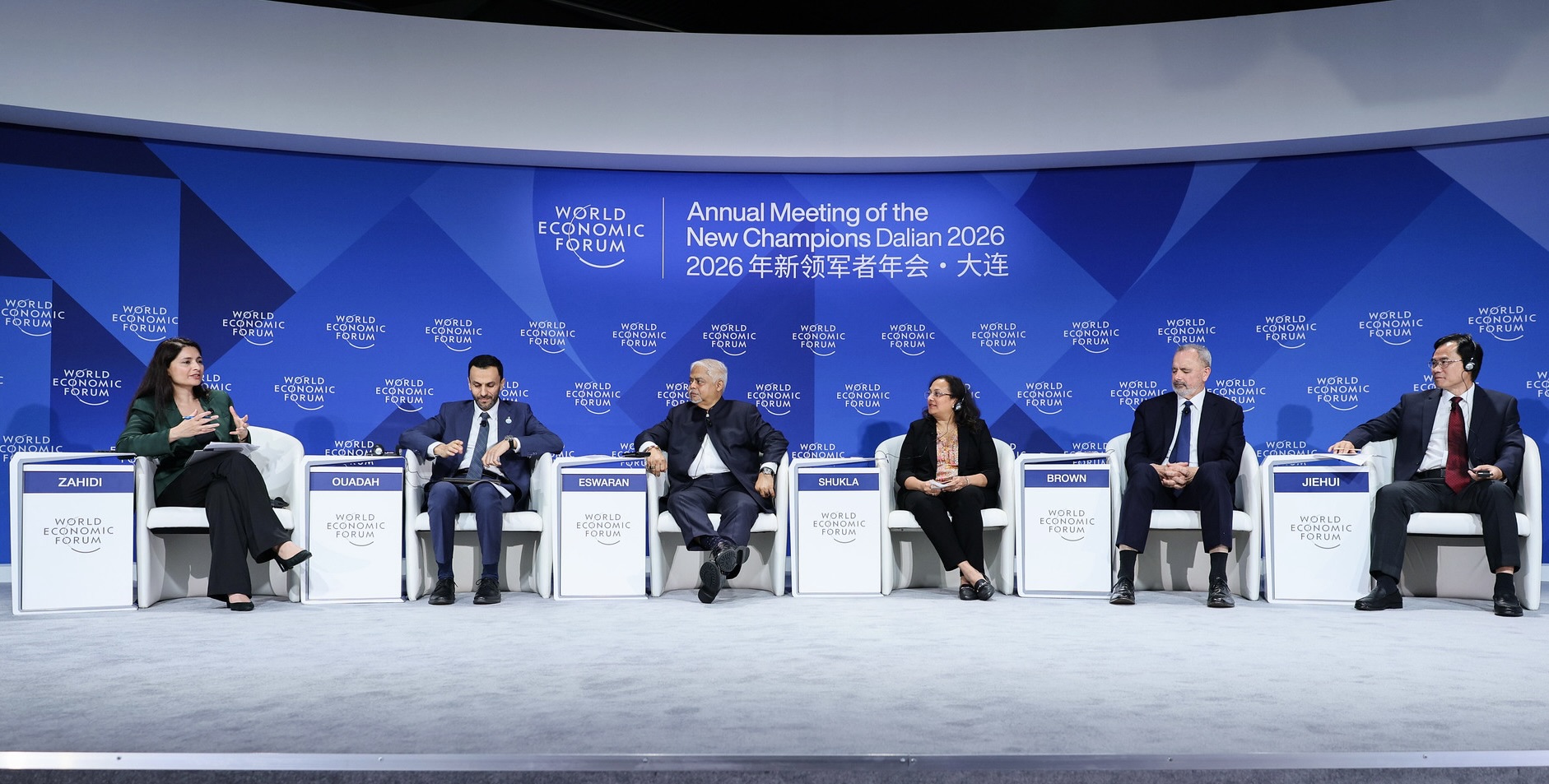
(From left to right) Saadia Zahidi, Managing Director of the World Economic Forum; Noureddine Ouadah, Minister of Knowledge Economy, Start-Ups and Micro-Enterprises, Ministry of Knowledge Economy, Start-Ups and Micro-Enterprises of Algeria; Dato’ Sri Vijay Eswaran, Executive Chairman, QI Group of Companies; Neeti Mehta Shukla, Co-Founder and Chief Impact Officer, Automation Anywhere; Peter Brown, Global Workforce Leader at PwC; and Chen Jiehui, President of Guangzhou Baiyunshan Pharmaceutical during the “The Next Billion Jobs” panel discussion at the Annual Meeting for the New Champions 2026 in Dalian, China.
Speaking at the World Economic Forum’s Annual Meeting of the New Champions 2026 (AMNC26) in Dalian, China, Dato’ Sri Vijay Eswaran, Founder and Executive Chairman of QI Group, highlighted entrepreneurship as one of the most powerful and scalable mechanisms for creating sustainable employment in an era of rapid technological change.
Participating in the panel discussion titled “The Next Billion Jobs”, moderated by Saadia Zahidi, Managing Director of the World Economic Forum, Dato’ Sri Vijay Eswaran joined global policymakers, business leaders and workforce experts, including Neeti Mehta Shukla, Co-Founder and Chief Impact Officer of Automation Anywhere; Chen Jiehui, President of Guangzhou Baiyunshan Pharmaceutical; Noureddine Ouadah, Minister of Knowledge Economy, Start-Ups and Micro-Enterprises, Ministry of Knowledge Economy, Start-Ups and Micro-Enterprises of Algeria; and Peter Brown, Global Workforce Leader at PwC. Together, they explored how governments, businesses and entrepreneurs can create more inclusive and sustainable employment opportunities as artificial intelligence reshapes the future of work.
The discussion comes against a World Bank projection that 1.2 billion new workers in developing economies will compete for about 400 million jobs over the next 10-15 years, underscoring the urgent need for more inclusive and sustainable employment solutions.

Entrepreneurship as the Engine of the Next Billion Jobs
Building on the themes outlined in his recent article, “Why the Next Billion Jobs Will Be Created by Entrepreneurs, Not Algorithms”, Dato’ Sri Vijay Eswaran noted that while technology can enhance productivity and unlock new opportunities, sustainable job creation ultimately depends on people who identify opportunities, build enterprises and create value within their communities.
During the discussion, he pointed to Southeast Asia’s growing entrepreneurial ecosystem as a key driver of future employment. In markets such as Malaysia, Vietnam and Singapore, small businesses are increasingly leveraging digital technologies and AI tools to develop new products and services, expand into new markets and create employment opportunities.
“I have always felt that SMEs, entrepreneurs and smaller enterprises will drive much of this change, as opposed to the larger players in the market. Across Southeast Asia, particularly in markets such as Vietnam, Malaysia and Singapore, we are already seeing this happen." said Dato’ Sri Vijay Eswaran.
Reskilling for an AI-Driven Future
As large corporations are often among the earliest adopters of emerging technologies, they provide important signals to the broader market and value chains around them, including new and aspiring entrepreneurs. For Eswaran, the key question is not whether AI will change work, but how societies can harness it to expand opportunity.
He noted that stronger public-private partnerships involving universities, students, start-ups and innovation ecosystems will be essential as societies continue to understand and harness AI’s potential.
“As a group of companies where entrepreneurship forms our backbone, we have built entrepreneurship into our DNA and re-instilling that mindset into the next generation of workers. For much of the last 50 years, the workforce has been shaped by a traditional 9-to-5 model. Today, we need to rethink and reinvent that,” said Eswaran.
He also emphasised that continuous reskilling must become an integral part of career development throughout working life. As the gig economy expands and technology reshapes industries, the ability to adapt, and continuously acquire new skills will define tomorrow’s workforce.
Building the Foundations for Inclusive Growth
Creating the next billion jobs will require more than technological advancement alone. It will depend on building supportive ecosystems that expand access to education, digital infrastructure, capital and market opportunities.
Enjoying this article?
Subscribe to get more stories like this delivered to your inbox.
Dato’ Sri Vijay Eswaran called on governments, businesses and educational institutions to play an active, and coordinated role in building these foundations. Policymakers should focus not only on filling existing jobs, but on creating the conditions for more people to become entrepreneurs and job creators.
“I believe that entrepreneurship will drive AI and that progress will come through practical and incremental steps. I also believe that private enterprise, governments and NGOs must work together—not as a single architect, but as partners—to create jobs that are aligned with the future,” added Eswaran.
A Commitment to the Future of Work
Dato’ Sri Vijay Eswaran’s participation at the World Economic Forum’s Annual Meeting of the New Champions 2026 in Dalian reflects QI Group’s continued commitment to advancing conversations around entrepreneurship, innovation and inclusive economic development.
As governments, businesses and communities navigate rapid technological and economic transformation, the discussions in Dalian underscored a simple but powerful truth: the future of work will be shaped not only by technology, but by people. Investing in skills, entrepreneurship and opportunity will be essential to ensuring that innovation delivers inclusive and sustainable growth for future generations.