
From Hunter to Guardian: The Extraordinary Life of Sitesh Ranjan Deb, Bangladesh's Relentless Champion of Wildlife

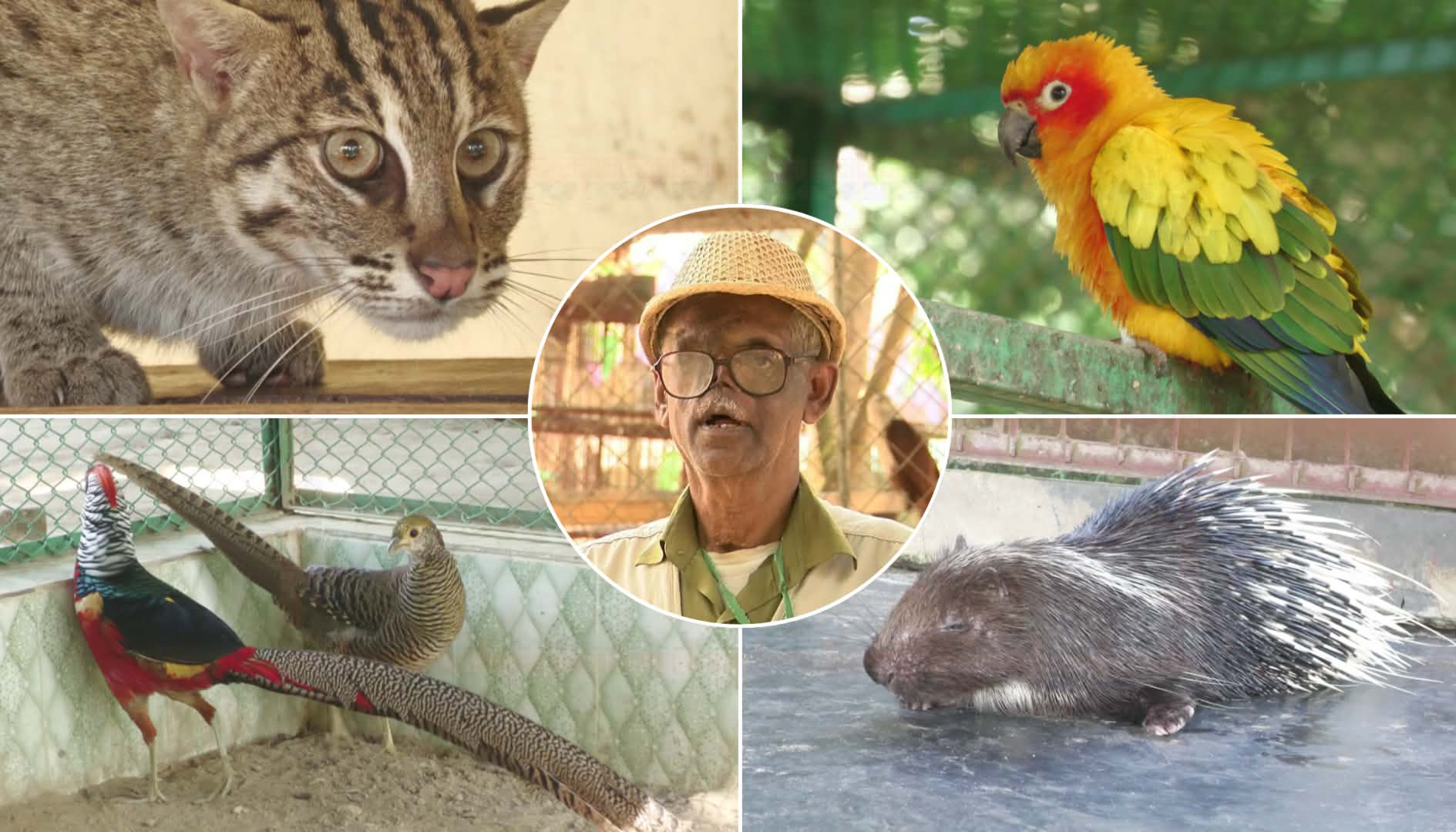
From Hunter to Guardian: The Legacy of Sitesh Ranjan Deb
Bangladesh has lost one of its most remarkable conservationists. Sitesh Ranjan Deb, whose life traced an extraordinary arc from professional hunter to one of the country's most respected wildlife rescuers, died on Tuesday, 14 July 2026, at 9:05 am while undergoing treatment at Poly Clinic Hospital in Sreemangal. He was 78.
His death marks the end of a lifetime devoted to animals that many people feared, ignored or simply left to die. For decades, Deb rescued injured and distressed wildlife, nursed them back to health and, wherever possible, returned them to the forests where they belonged. In doing so, he helped shape an entirely different relationship between people and nature in north-eastern Bangladesh.
The institution he built—Bangladesh Wildlife Service Foundation in Rupaspur, Sreemangal—became one of the country's best-known privately run wildlife rehabilitation centres. To local residents, however, it remained affectionately known simply as "Sitesh Babu's Zoo", a name that scarcely captured the deeper purpose of the sanctuary.
His passing is not merely the loss of an individual. It is the loss of a generation whose conservation work was built not through international grants or institutional prestige, but through personal sacrifice, practical knowledge and unwavering commitment.
A childhood shaped by forests
Born in 1948 in the historic village of Noagaon in Sreemangal, Moulvibazar, Sitesh Ranjan Deb grew up surrounded by forests and wildlife.
His father, the late Srish Chandra Deb, was a well-known hunter of his era, but also possessed a deep fascination with wildlife. During the 1960s, he established a modest sanctuary within the family compound, where injured and orphaned wild animals were cared for.
For the young Sitesh, the forests became a classroom. Accompanying his father into the wilderness, he learned to identify species, understand animal behaviour and care for creatures that many others viewed only as trophies or threats.
That sanctuary, however, became another casualty of Bangladesh's Liberation War in 1971, when it was destroyed amid the violence that engulfed the country.
After independence, Deb quietly began again, establishing a small wildlife shelter at his home on Ramakrishna Mission Road in Sreemangal.
A hunter who chose a different path
Like his father, Sitesh Ranjan Deb spent much of his youth hunting. For years, he was recognised as a skilled professional hunter.
Yet experience gradually transformed his outlook.
The forests that had once offered game increasingly revealed their fragility. Wildlife populations diminished, habitats shrank, and the value of preservation became impossible to ignore.
Deb would later reflect on this transformation with striking honesty.
"Once I hunted for pleasure. Now I believe protecting wildlife is our greatest responsibility. We must preserve nature and wildlife for future generations."
That simple admission encapsulated one of the rarest journeys in conservation: a man who acknowledged his own past and chose to spend the rest of his life repairing the damage.
The bear attack that changed everything
The defining moment of Deb's life came on 14 January 1991.
He had travelled to Patrakhola Tea Estate in Kamalganj to deal with reports of destructive wild boars. While moving through dense reeds, he unexpectedly encountered a large bear.
The animal attacked without warning.
Its assault left him catastrophically injured. The right side of his face, his jaw and one eye were severely damaged. Bleeding heavily, Deb managed to shoot the bear in self-defence before collapsing.
He was rushed to hospital before being transferred to the Combined Military Hospital in Dhaka, where he remained for nearly a month.
His recovery was extraordinary.
Seven major operations, twenty-nine bags of blood and subsequent specialist treatment overseas ultimately saved his life. The injuries, however, permanently altered his face.
The physical scars remained visible for the rest of his life.
So too did the emotional consequences.
The experience deepened his conviction that wildlife should be protected rather than pursued. From that point onwards, he abandoned hunting entirely and devoted himself to conservation.
Building a sanctuary from determination
What began as a modest shelter at his home steadily expanded.
In 2009, Deb relocated the project to a farm covering around five and a half bighas in Rupaspur on the outskirts of Sreemangal.
With official government approval, the organisation became the Bangladesh Wildlife Service Foundation.
A significant turning point came in 2011, when the then Governor of Bangladesh Bank, Dr Atiur Rahman, personally provided financial assistance that enabled the sanctuary to expand its facilities.
Deb frequently acknowledged that support with gratitude.
Yet the foundation's greatest strength was never its buildings.
It was the philosophy behind them.
Animals arrived not to be displayed, but to recover.
A final refuge for Bangladesh's wildlife
Over the years, injured, orphaned and distressed animals were brought to the foundation by the Forest Department, local authorities and members of the public from across Bangladesh.
Veterinary care, rehabilitation and careful monitoring followed.
Those capable of surviving independently were released into protected forests, including Lawachara National Park and other conservation areas.
According to those associated with the organisation, Deb and the Bangladesh Wildlife Service Foundation helped rescue more than 2,000 wild animals from Sreemangal, Moulvibazar and surrounding regions over the past five decades before handing them over to the Forest Department for release.
The achievement remains one of the country's most significant examples of privately led wildlife conservation.
Deb also stated that during the past decade alone, the foundation had successfully treated and rehabilitated at least 1,000 injured and sick animals, enabling them to return to their natural habitats.
Enjoying this article?
Subscribe to get more stories like this delivered to your inbox.
Animals too badly injured to survive in the wild found a permanent home under his care.
A haven for endangered species
Today, the sanctuary remains home to more than fifty rare and threatened animals.
Among them are fishing cats, Asian golden cats, bears, western hoolock gibbons, spectacled langurs, slow lorises, pangolins, civets, spotted deer, barking deer, pythons, hornbills, vultures, owls, king cobras and numerous other snake and bird species.
Each represents not simply another rescued animal, but another reminder of Bangladesh's rich—and increasingly vulnerable—natural heritage.
A legacy beyond one lifetime
Advancing age prevented Deb from managing the sanctuary full-time during his final years.
Even so, he continued visiting several times each week to check on the animals that had become the centre of his life's work.
Today, responsibility for the foundation rests with his sons, Swapan Deb Sajal and Sanjit Deb, who have pledged to continue their father's mission.
Their task is formidable.
Institutions built around extraordinary individuals rarely survive unchanged.
But Deb left behind something stronger than buildings or enclosures.
He left a philosophy rooted in compassion, responsibility and coexistence.
Bangladesh should remember what Sitesh Ranjan Deb taught us
Modern conservation often celebrates scientific breakthroughs, international funding and government policy.
Sitesh Ranjan Deb demonstrated that meaningful conservation can also begin with one individual prepared to devote a lifetime to difficult, often unnoticed work.
His journey from hunter to protector is not merely a compelling personal story. It reflects humanity's own evolving understanding of nature—not as something to conquer, but as something to safeguard.
Thousands of animals lived because he refused to look away.
Countless others returned to Bangladesh's forests because one man believed they deserved another chance.
The forests of Sreemangal have lost one of their most devoted guardians.
His voice has fallen silent.
Yet every rescued animal released back into the wild, every endangered species still sheltered within the Bangladesh Wildlife Service Foundation, and every young conservationist inspired by his example will ensure that Sitesh Ranjan Deb's legacy endures long after his passing.