
Bangladesh has five years of gas left. What happens when it runs out?

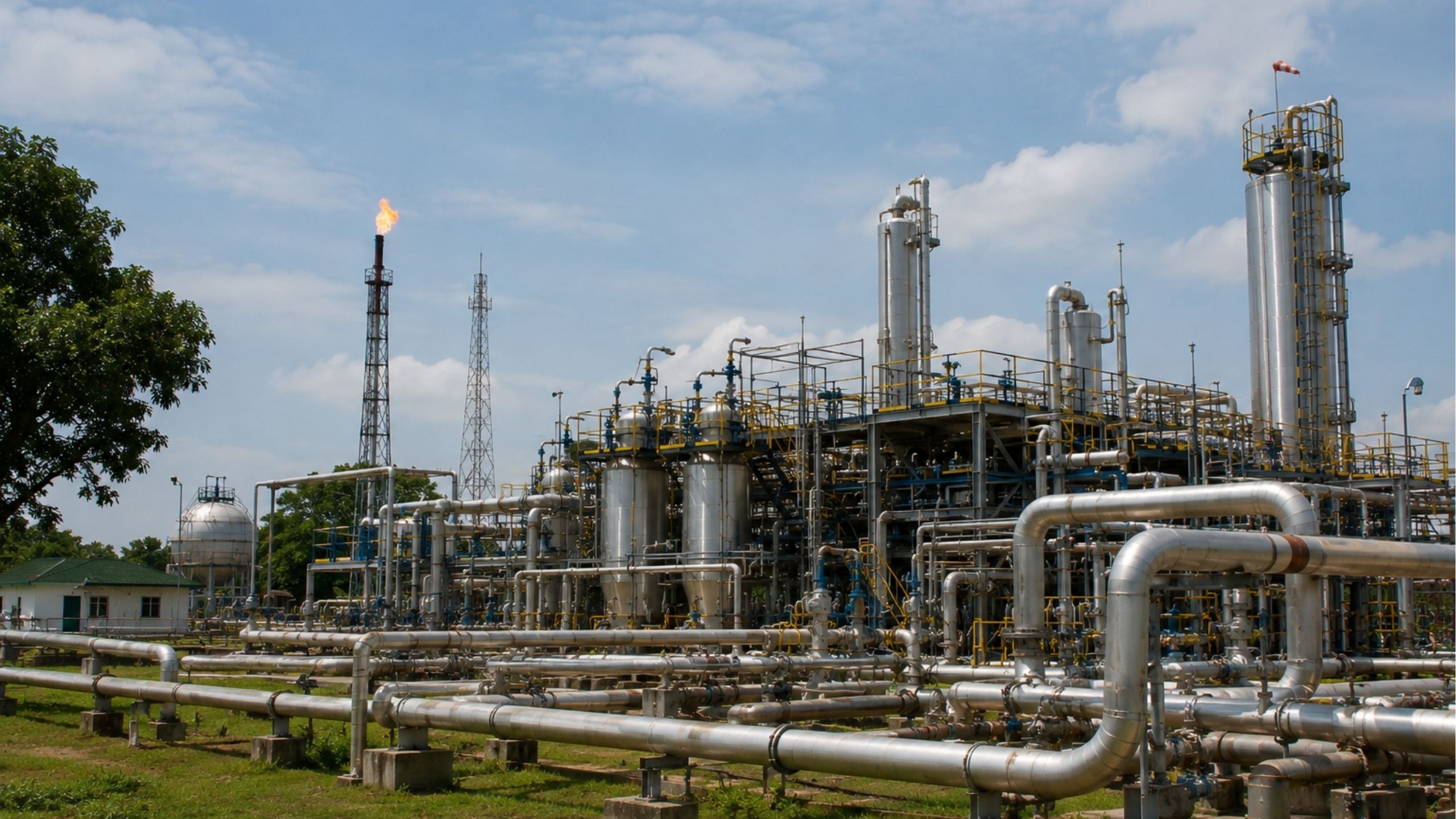
Bangladesh’s gas reserves are running out, while shortages are already disrupting industry and power generation. With reserves potentially nearing exhaustion by 2031, the country must act now on exploration, energy diversification, renewables and long-term energy security.
For years, natural gas has been the quiet engine of Bangladesh’s economy. It has powered factories, fertiliser plants, homes and much of the country’s electricity generation. But that familiar system is now showing signs of strain—and the warning signs are becoming harder to ignore.
On Aug 13, Bangladesh’s oldest national daily, Sangbad, published a report under the headline, “Gas Reserves Will Last for Five More Years; What Happens Next?” The question is stark, but increasingly difficult to dismiss. The country’s older gas fields are running down, production is falling, and there has been no significant discovery of a large new field to replace them.
That same day, at a discussion in Dhaka organised by the Centre for Policy Dialogue (CPD), researchers presented figures that gave the concern a much broader significance. If gas consumption continues at its present rate, Bangladesh’s remaining reserves could be almost exhausted by 2031. Over six decades, the country could consume nearly 30 trillion cubic feet of gas.
For a country that has built so much of its economy around gas, that is not a distant warning. It is a problem already arriving at the factory gate.
Bangladesh currently needs about 3.8 billion cubic feet of gas a day. Under normal circumstances, only around 2.7 billion cubic feet is available from domestic production and imported liquefied natural gas (LNG). Domestic fields supply roughly 1.6 to 1.65 billion cubic feet, while imported LNG contributes another 1 to 1.1 billion cubic feet.
The gap is already hurting.
According to CPD data for Aug 11, five gas-producing companies were operating at only 57 per cent of their capacity. Power plants received just 29 per cent of the gas they required. Fertiliser factories received 38 per cent.
Behind those percentages are very real consequences. Factories are cutting production or shutting down altogether. The Bangladesh Chamber of Industries says industrial output has fallen by between 35 and 40 per cent because of the gas and electricity shortages. Export-oriented businesses are increasingly worried about losing foreign orders. Some business owners are concerned that, despite paying their bills, prolonged disruption could leave them unable to service bank loans.
This is where the energy crisis stops being an energy-sector story. It becomes an economic story, a jobs story and, ultimately, a development story.
The immediate trigger for much of the current disruption is the country’s LNG infrastructure. Bangladesh has two floating storage and regasification units (FSRUs) off Maheshkhali. One was shut down after a fire, creating a substantial supply shortfall. Repairs have brought one unit back into operation, but the other remains out of service.
Iqbal Hasan Mahmud Tuku, the minister for power, energy and mineral resources, has been unusually candid about the government’s limited room for manoeuvre. Until the damaged FSRU is repaired, he has said, there is little to do beyond managing load-shedding and waiting.
That may be true in the immediate sense. But it raises a more uncomfortable question: why should the failure of one terminal put so much pressure on the entire system?
The answer lies partly in how Bangladesh has approached energy security over the years. Domestic gas production has been allowed to decline while demand has continued to rise. LNG imports have become increasingly important, but the infrastructure needed to handle them remains concentrated and vulnerable.
The government plans to install three more FSRUs by 2029, with possible locations at Payra, Mongla and Hiron Point. It is also looking for investors, and a US delegation that recently visited Bangladesh has expressed interest in investing in FSRUs.
These are sensible steps. But adding more floating terminals cannot, on its own, solve the deeper problem.
LNG is expensive and Bangladesh is exposed to international prices, foreign-exchange pressures and global supply disruptions. A country cannot build a durable energy strategy around the assumption that imported fuel will always be affordable and available.
That is why the CPD’s longer-term recommendations matter. Bangladesh needs to make domestic gas exploration a national priority while improving LNG procurement and expanding storage and transmission infrastructure. It also needs to move much faster on renewable energy.
The government has instructed BAPEX, the state-owned Bangladesh Petroleum Exploration and Production Company Limited, to accelerate drilling and has ordered two additional rigs to strengthen exploration capacity. That is welcome. But Bangladesh has heard promises about exploration before. What matters now is speed, transparency and accountability.
There is another side to the problem that is often overlooked: Bangladesh does not only have a supply problem. It has a demand problem too.
Professor Ijaz Hossain, an energy specialist, has argued that years of weak pricing policies, system losses and excessive social commitments have helped bring the country to its current position. His point is worth considering. Simply producing or importing more gas will not be enough if consumption continues to rise without discipline.
Pricing reform, however, has to be handled carefully. Energy costs affect ordinary households as well as factories and farmers. Removing subsidies overnight or passing every additional import cost directly to consumers would create another kind of crisis. The answer is not indiscriminate price increases but a more rational system, with targeted support for those who genuinely need it.
Bangladesh’s electricity sector makes the problem even more complicated. Natural gas accounts for 42.15 per cent of power-generation capacity, with coal and furnace oil also playing significant roles. When gas supplies fall, electricity generation suffers. When electricity supplies become unreliable, factories suffer again.
The country is caught in a loop.
Renewable energy offers one way out, although it will not happen overnight. Mustafa Al Mahmud, president of the Bangladesh Sustainable and Renewable Energy Association, has suggested converting 1.3 million diesel-powered irrigation pumps to solar power. He has also called for duty exemptions on storage technologies and simpler port-clearance procedures.
These may sound like technical measures, but they are precisely the kind of practical changes that can reduce pressure on the wider system. Solar power combined with storage, particularly for agriculture and industry, could gradually reduce dependence on gas and imported fuels.
There is also a case for land-based LNG terminals, as suggested by David Hasnat, president of the Bangladesh Independent Power Producers Association. Such infrastructure could provide additional flexibility, particularly as domestic gas production declines. But Bangladesh should be careful not to solve one vulnerability by creating another. Every new terminal needs to be judged against long-term demand, cost, financing risks and the volatility of the international LNG market.
Enjoying this article?
Subscribe to get more stories like this delivered to your inbox.
For now, the government is trying to buy time. The energy minister says four LNG cargoes were purchased on 12 August so that they can reach Bangladesh when the FSRU becomes operational. That should help ease the immediate shortage.
But buying cargoes is crisis management, not energy security.
The same distinction applies to load-shedding. Publishing a predictable schedule would at least allow factories and households to plan. Uncertainty is often more damaging than the outage itself. At the same time, the authorities need to tackle illegal electricity connections and system losses without simply pushing the burden onto legitimate consumers.
Even the changing pattern of electricity demand deserves a closer look. The energy minister has pointed to the growing practice of charging battery-powered rickshaws at night, saying it has contributed to higher midnight demand. He described the vehicles as the “Tesla of the poor”. Whatever one thinks of the phrase, the underlying point is important: Bangladesh’s electricity demand is changing, and policy needs to catch up.
The country’s energy debate has too often been dominated by the immediate question of where the next unit of gas or electricity will come from. That approach is understandable during a crisis. But it is not enough anymore.
The real question is what Bangladesh wants its energy system to look like when the easy gas is gone.
If the CPD’s projection is right and reserves approach exhaustion by 2031, Bangladesh has only a few years to make some difficult decisions. It needs to explore aggressively for new domestic resources where viable, diversify its import infrastructure, build strategic storage, improve efficiency and accelerate renewables. It also needs a pricing system that is economically realistic without abandoning vulnerable households.
Most of all, these decisions need to be brought together under a coherent, long-term policy rather than handled one emergency at a time.
The warning from Sangbad on 13 August should therefore not be read simply as a headline about declining gas reserves. It is a question about the country Bangladesh wants to be a decade from now.
The danger is not only that the gas may run out. It is that Bangladesh may run out of time to prepare for life after it.
Contributing writer at The Independent News