
India aims to become the world’s largest arms exporter — but the road ahead is long
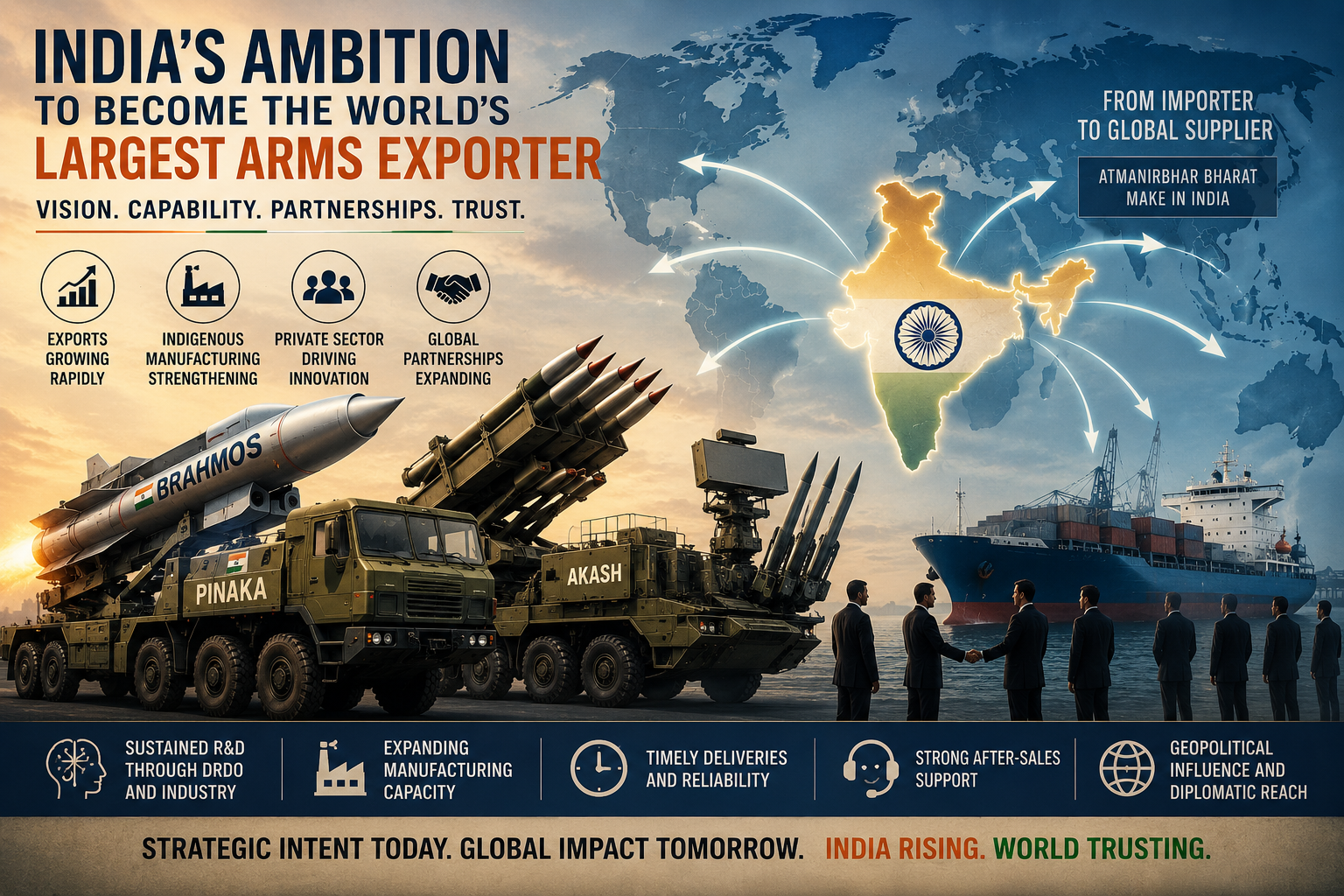
India’s ambition to become the world’s largest arms exporter is bold. Defence exports have surged, private-sector participation is expanding, and systems such as BrahMos, Akash and Pinaka are attracting international interest. But overtaking established exporters will require more than confidence—it will demand sustained R&D, manufacturing capacity, timely deliveries, reliable after-sales support and strong geopolitical partnerships. Rajnath Singh’s declaration is therefore best seen as a statement of strategic intent. India is positioning itself to become a far more influential force in the global defence industry.
India has never been shy about setting ambitious national goals. From becoming a leading digital economy to expanding its manufacturing base, New Delhi has increasingly framed its rise in global terms. Defence is now central to that vision.
Speaking recently, Defence Minister Rajnath Singh declared that no force would be able to stop India from becoming the world's largest arms exporter within the next 25 to 30 years. It is a striking claim—one that reflects the government's confidence in the country's rapidly evolving defence industry. But it also invites a more fundamental question: can India realistically overtake established military exporters in an increasingly competitive global market?
There are reasons why such optimism is no longer dismissed as mere political rhetoric.
India's defence exports have grown dramatically over the past decade, rising by roughly 35-fold according to government figures. The country has shifted from being one of the world's largest importers of military equipment towards developing an indigenous defence manufacturing ecosystem under its "Make in India" and "Atmanirbhar Bharat" initiatives.
The transformation extends beyond state-owned enterprises. Major private-sector companies, including Tata, Larsen & Toubro and Bharat Forge, have been shortlisted to build prototypes for the Advanced Medium Combat Aircraft (AMCA) stealth fighter programme. Their involvement signals a significant restructuring of India's defence-industrial base, with private manufacturers assuming roles once dominated by public-sector organisations.
Meanwhile, systems such as the BrahMos supersonic cruise missile, the Akash air defence system and the Pinaka multi-barrel rocket launcher have attracted growing international interest, particularly among countries seeking affordable alternatives to Western or Russian equipment.
Yet becoming the world's largest arms exporter is an altogether different challenge.
The global defence market remains dominated by countries with decades of experience, extensive diplomatic networks and deeply embedded strategic alliances. The United States continues to lead international arms exports, while France, Russia and several European manufacturers retain strong positions across key markets. Success in this industry depends not only on technological capability but also on reliability, after-sales support, financing arrangements and geopolitical influence.
Enjoying this article?
Subscribe to get more stories like this delivered to your inbox.
India will therefore need to sustain investment in research and development through the Defence Research and Development Organisation (DRDO), expand manufacturing capacity, improve delivery timelines and build long-term confidence among overseas buyers. Government policy, industrial innovation and international partnerships must continue to reinforce one another if the ambition is to become reality.
Rajnath Singh's statement is best understood not as a prediction guaranteed to materialise, but as a declaration of strategic intent. Whether India ultimately becomes the world's largest arms exporter remains uncertain. What is increasingly clear, however, is that the country is positioning itself to become a far more influential player in the global defence industry than at any point in its modern history.