
When principles become partisan: Taslima Nasrin's latest post exposes the fault lines of free speech
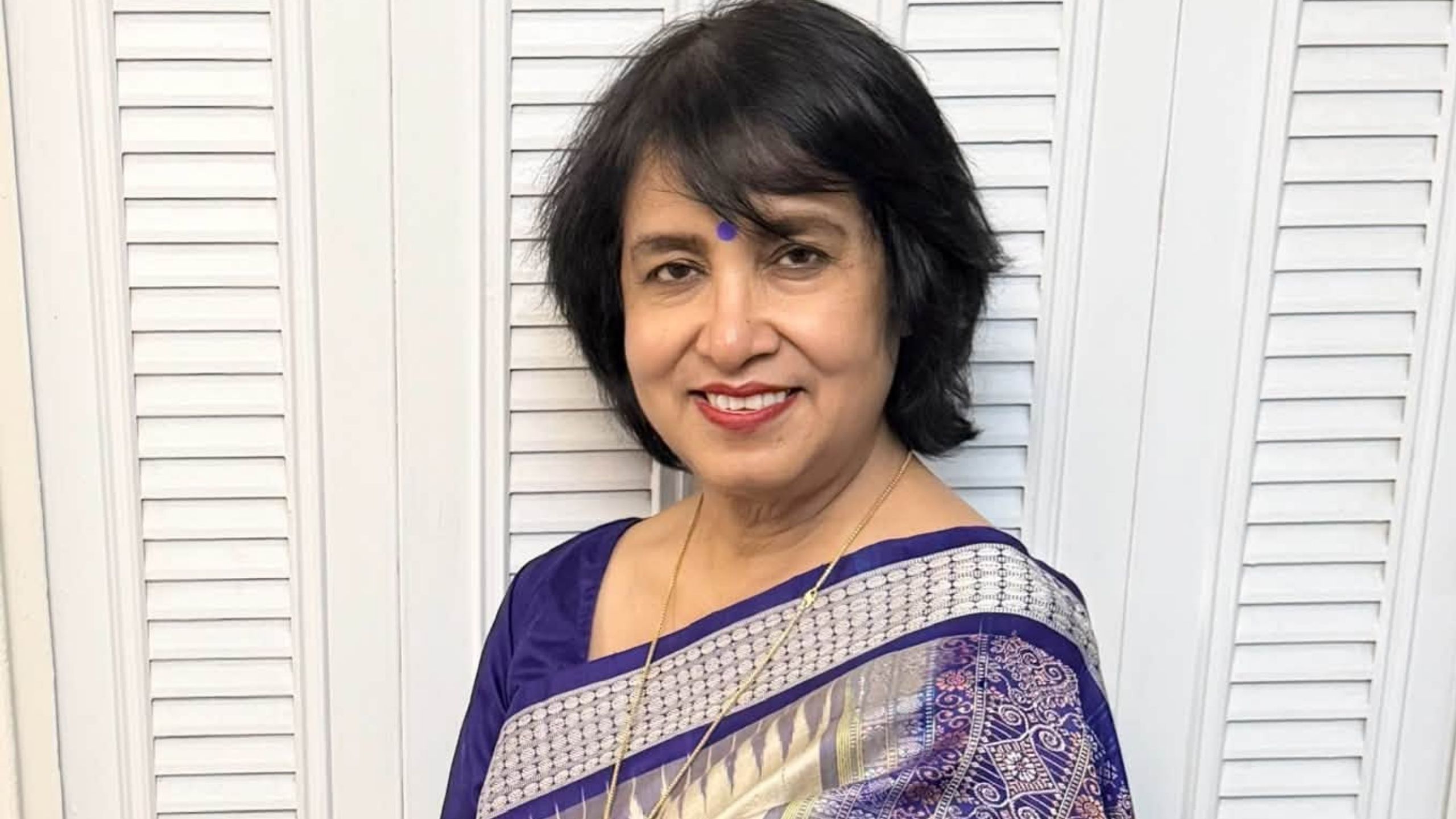
Taslima Nasrin
On July 19, 2026, exiled Bangladeshi writer and humanist Taslima Nasrin published a lengthy statement on her verified Facebook account, responding to criticism over her forthcoming visit to Kolkata. Her post was not merely a defence of a two-day trip. It was a broader indictment of what she sees as the selective application of secularism, freedom of expression and political principle in West Bengal.
Whether one agrees with Nasrin's conclusions or not, the issues she raises deserve serious attention. They touch on a question that extends far beyond one writer or one city: do democratic societies defend free speech consistently, or only when it is politically convenient?
According to Nasrin, she has been invited to Kolkata not by the Bharatiya Janata Party (BJP) or the Government of West Bengal, but by Secular Mission, a civil society organisation headed by Osman Gani Mallik, whom she describes as a progressive Muslim. She argues that the West Bengal government's role is limited to providing security—an administrative obligation owed to a public figure who has long faced credible threats because of her writings.
That distinction matters.
Providing security is not the same as extending political patronage. Democratic governments routinely protect judges, journalists, diplomats, activists and writers without endorsing their views. To suggest that state security automatically implies ideological alignment is to misunderstand the basic responsibilities of government.
Yet, in her Facebook post, Nasrin says sections of West Bengal's Left have portrayed her visit as evidence that she has aligned herself with the BJP and the Rashtriya Swayamsevak Sangh (RSS). If that accusation is to carry weight, it raises an obvious question: when she accepted invitations from a CPI(M)-led government in Kerala, received official honours and was provided with Z-plus security, did that make her a Leftist? Few appeared to think so at the time.
The principle seems to change according to political convenience.
Nasrin also revisits her long-running dispute with successive governments in West Bengal. She argues that she was first forced out of Kolkata during the Left Front era and later prevented from returning under the Trinamool Congress government. She further alleges that her work faced official restrictions, including the cancellation of a book launch and the suspension of a television serial based on her writing.
These are serious claims and, like many aspects of Nasrin's public life, they remain politically contested. Yet they point to a larger question that should concern anyone committed to liberal democracy: where were the defenders of free expression when restrictions were allegedly imposed on a controversial author?
Silence, too, is a political choice.
There is, of course, no obligation to admire Taslima Nasrin's writing or agree with her arguments. Critics are entirely free to regard her books as poor literature or to reject her analysis of religion and society. Literary criticism is a vital part of intellectual life.
But criticism cannot become a justification for intimidation.
A writer's literary merit has nothing to do with whether they deserve protection from death threats, exile or political exclusion. The answer to an unpopular book is another book. The answer to a controversial argument is a stronger argument—not censorship, intimidation or violence.
The most contentious aspect of Nasrin's work has long been her criticism of Islam and her calls for reform within Muslim societies. Supporters see her as an uncompromising defender of secularism, women's rights and freedom of conscience. Critics accuse her of painting an entire religion with too broad a brush and of crossing the line from criticism into provocation.
A liberal society does not resolve that disagreement by silencing one side. It resolves it by allowing both sides to speak within the limits of the law.
Indeed, one of the enduring challenges for democracies is distinguishing criticism of religious ideas from hostility towards religious communities. The former lies at the heart of intellectual freedom; the latter has no place in an open society. Confusing the two serves neither liberty nor social harmony.
Enjoying this article?
Subscribe to get more stories like this delivered to your inbox.
The controversy surrounding Nasrin's visit ultimately reveals something larger than her own circumstances. Across political ideologies, commitments to free speech often prove strongest when they protect allies and weakest when they protect opponents. The Left is hardly unique in this inconsistency, but neither is it exempt from criticism. Nor, for that matter, is the political Right.
If freedom of expression is defended only when it advances one's own ideological interests, it ceases to be a principle and becomes a tactic.
Nasrin's Facebook post may have been written in response to criticism of a forthcoming visit to Kolkata, but it has reopened a debate that extends well beyond West Bengal. Democracies are not measured by how they treat agreeable opinions. They are measured by how they respond to voices that provoke, offend or challenge prevailing orthodoxies.
That is the true test of confidence in democratic values.
Whether readers agree with Taslima Nasrin or reject her arguments entirely, her latest intervention poses a question that deserves an honest answer: Is freedom of expression a universal right, or has it become contingent on who is speaking—and who feels offended?
Contributing writer at The Independent News