
Inside Varanasi, One of Humanity's Oldest Continuously Inhabited Cities

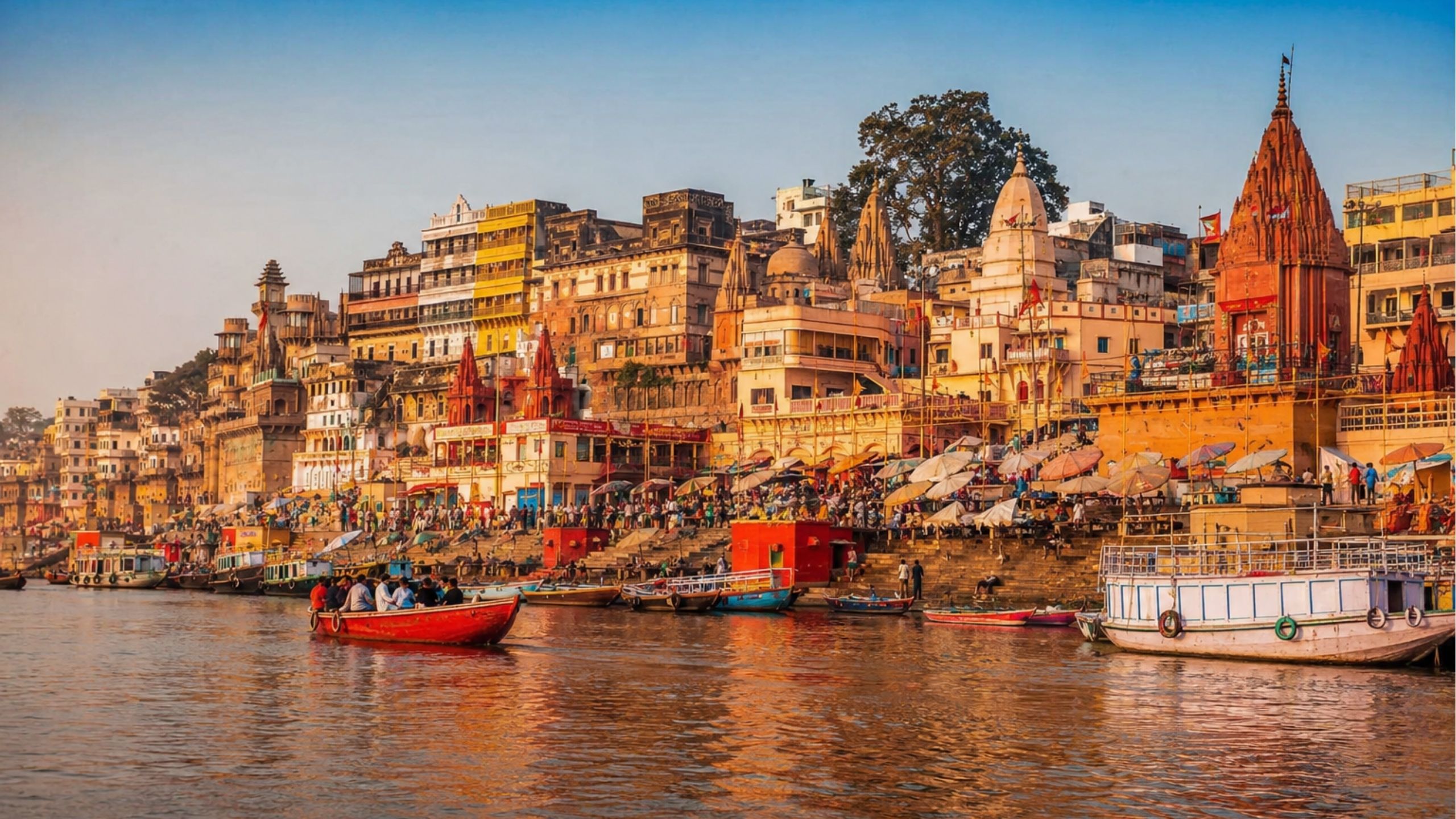
A panoramic view of the historic ghats along the River Ganges, where temples, traditional architecture and boats create one of India's most iconic riverside cityscapes.
On the western bank of the sacred River Ganges (Ganga) in Varanasi district of the Indian state of Uttar Pradesh stands a city unlike any other. Known as Varanasi, Banaras and Kashi, it is regarded as India's spiritual capital and is widely recognised as one of the world's oldest continuously inhabited cities.
Archaeological evidence indicates that urban settlement in the Varanasi region extends back more than 3,000 years, with the city flourishing by the early first millennium BCE. While historians continue to debate the precise date of its earliest occupation, there is broad scholarly agreement that Varanasi ranks among the oldest living cities in the world.
Its significance becomes even clearer when viewed in a global historical context.
When Varanasi was already a thriving settlement, Rome had not yet been founded. According to tradition, Rome was established in 753 BCE. London did not emerge until the Romans founded Londinium around 43 CE. Paris developed from a Gallic settlement and became a Roman city centuries after Varanasi had already established itself as a major centre of religion and trade. Berlin was founded in the thirteenth century, while Moscow emerged in the twelfth century. Most of Europe's great capitals were established hundreds, and in many cases thousands, of years after Varanasi.
The contrast with the United States is even more striking. No major American city approaches Varanasi's antiquity. St. Augustine, founded by the Spanish in 1565, is the oldest continuously occupied European-established city in the present-day United States. Cities such as Boston, New York, Philadelphia and Washington, D.C. are only a few centuries old—remarkably young when compared with Varanasi's millennia of uninterrupted history.
What makes Varanasi exceptional, however, is not merely its age. Ancient cities exist across the world, but many survive only as archaeological sites or ruins. Varanasi has remained continuously inhabited throughout its long history. It has never ceased to be a place where people live, worship, trade, study and celebrate. Across thousands of years, generations have succeeded one another without breaking the city's living traditions.
For Hindus, Kashi is the holiest city on Earth. Ancient scriptures describe it as the city of Lord Shiva, where the divine is believed to dwell eternally. Millions of pilgrims journey here each year to bathe in the sacred waters of the Ganga, believing that the river purifies the soul. Many also hope to spend their final days in the city, as Hindu tradition teaches that death in Kashi can grant moksha, or liberation from the cycle of birth and rebirth.
Few places in the world bring together life and death as naturally as Varanasi. At dawn, pilgrims gather along the ghats to pray, meditate and bathe in the river. By evening, the celebrated Ganga Aarti fills the riverfront with lamps, incense, chanting and music. Nearby, the funeral pyres of Manikarnika Ghat and Harishchandra Ghat burn day and night, reminding visitors that death is not hidden away but embraced as part of life's eternal cycle.
The city's cultural importance extends far beyond religion. For centuries, Varanasi has been one of India's foremost centres of Sanskrit learning, philosophy, literature, classical music and yoga. Great scholars, saints and poets found inspiration here. Goswami Tulsidas composed much of the Ramcharitmanas in the city, while celebrated Hindi novelist Munshi Premchand was closely associated with its literary tradition.
Varanasi also occupies a central place in the history of Buddhism. Just a short distance away lies Sarnath, where Gautama Buddha delivered his first sermon after attaining enlightenment, setting in motion one of the world's great religious traditions.
The city's economic legacy is equally remarkable. For centuries, it has been renowned for producing exquisite Banarasi silk saris, fine textiles and handcrafted goods. Its weaving traditions continue to support thousands of artisans and remain among India's most celebrated examples of cultural craftsmanship.
Walking through Varanasi today is an encounter with living history. The maze-like lanes, centuries-old temples, bustling markets, colourful festivals and more than eighty ghats create an atmosphere where the ancient and the modern exist side by side. Unlike many historic cities that preserve the past behind museum walls, Varanasi allows visitors to experience history as part of everyday life.
Enjoying this article?
Subscribe to get more stories like this delivered to your inbox.
American author Mark Twain captured this extraordinary sense of timelessness when he described the city as "older than history, older than tradition, older even than legend." Though poetic rather than literal, his words continue to resonate with those who witness the city's remarkable continuity.
The story of Varanasi is also the story of India's civilisation. While much of the ancient world has disappeared beneath layers of history, Varanasi has endured. It has witnessed the rise and fall of kingdoms, the spread of religions, the arrival of empires and the birth of modern India without losing its essential character.
In a world where cities are often measured by economic power, technological innovation or architectural ambition, Varanasi offers a different measure of greatness. Its true distinction lies in its uninterrupted human story—one that has flowed, like the sacred Ganga beside it, for more than three thousand years.
Varanasi is not simply one of the world's oldest cities. It is one of humanity's greatest living inheritances: a place where history has never become a relic, where faith remains woven into daily life, and where civilisation continues to flourish across the centuries. Few cities in Europe, none in the modern United States, and only a handful anywhere on Earth can claim such an extraordinary continuity.
That is why Varanasi is more than a destination. It is a living testament to the endurance of Indian civilisation and one of the most remarkable cities ever created by humankind.
Contributing writer at The Independent News