
Dialogue Must Be The New Currency For The Future Economy
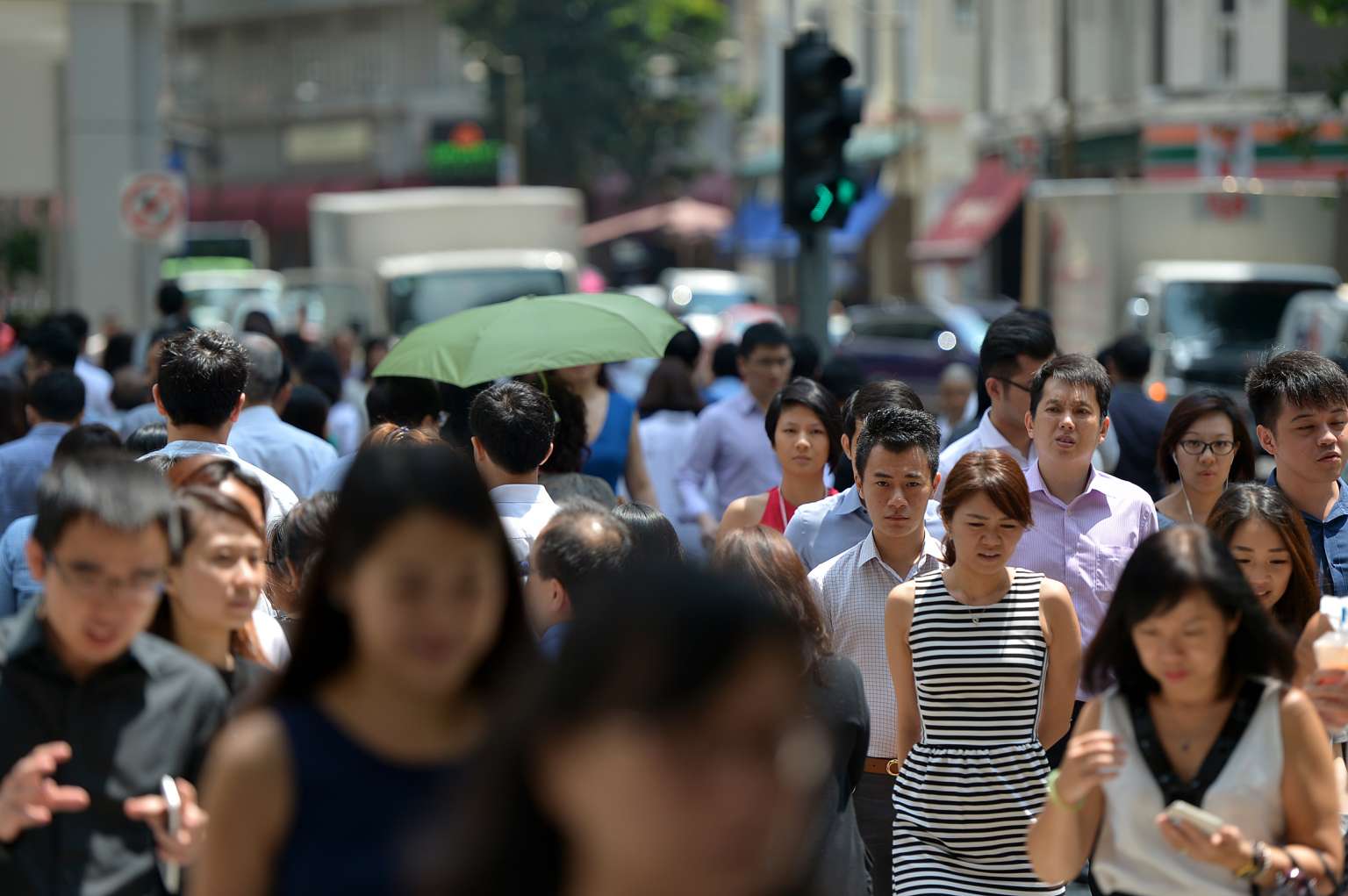
Business District in Singapore CBD
By Vijay Eswaran
For decades, global economic leadership has been defined by efficiency, productivity, and unilateral action—metrics that prioritise output over nuance.
Yet today, as the world fragments into trade blocs and tariff wars, that model is showing its limit.
Entering mid-Jan, the US President Donald Trump ‘threatened’ to impose 25% tariffs on nations doing business with Iran; a stark example of coercion replacing conversation. Such moves risk escalating confrontation, forcing nations into reactive positions and eroding the trust upon which stable commerce depends.
In contrast, regional bodies like ASEAN have consistently advocated for dialogue amid rising protectionism, underscoring a pivotal choice facing leaders everywhere: to impose or to engage. Even then, the ongoing conflict between Thailand and Cambodia is unprecedented.
This divergence goes beyond trade policy; it reflects a deeper failure in leadership communication. While leaders speak fluently to markets and systems, many have lost the ability to truly connect with their people. This overlooked gap now fuels a growing leadership deficit, undermining corporate resilience, social cohesion, and global stability.
At a global level, the deeper challenge is not a lack of capability, but a growing failure to listen, to understand, and to lead with empathy. In view of this, the Davos 2026 theme, “A Spirit of Dialogue”, is increasingly central — not only to corporate relevance, but to navigating a fragmented world, where, as ASEAN has demonstrated, dialogue is the essential alternative to division.
GROWTH WITHOUT HUMANITY IS EXPANSION WITHOUT EVOLUTION
Our fixation on economic output has confused expansion with evolution. Growth without humanity may look impressive on paper but create a quiet deficit no balance sheet can record: the absence of listening.
In Singapore, younger generations increasingly value purpose, psychological safety, and inclusion.
Yet leadership norms still prioritise decisiveness over dialogue, speed over reflection, and hierarchy over participation. The result is progress that appears strong in metrics but feels fragile in practice.
This tension runs counter to Singapore’s people-centred ambitions, reflected in initiatives such as Forward SG and the tripartite model, which recognise that sustainable growth depends on shared ownership between government, businesses, and workers.
Institutions thrive not because they communicate more efficiently, but because they listen more intentionally.
What is true inside organisations becomes true outside them. When societies lose the habit of dialogue, they replace understanding with suspicion and cooperation with rivalry.
When dialogue erodes, inside organisations or across society, understanding gives way to suspicion and cooperation to rivalry. The cost is polarisation, stalled reforms, and brittle institutions, outcomes at odds with ASEAN’s people-centred vision under the ASEAN Socio-Cultural Community (ASCC) Blueprint 2025.
By restoring dialogue as a leadership discipline, growth can shift from directive expansion to shared evolution, strengthening organisations while contributing to more cohesive communities.
RECONSTRUCTING WHAT WE MEAN BY GROWTH
Traditionally, growth has been defined by numbers like revenue and GDP.
These measures are useful, but incomplete. They tell us how much we produce, not how well we uplift the people who make that production possible.
Growth should not only be about what we build, but also about what we become, as organisations, as communities, and as a region.
Sustainable growth must therefore be evaluated by its impact on human well-being. This requires a shift towards broader progress—evaluated by Growth Quotient (GQ) that asks whether expansion improves lives, strengthens communities, and builds fairness.
Achieving this requires more than surveys or engagement sessions. It requires leaders to institutionalise dialogue, moving beyond one-way communication to real feedback loops where voices are not only heard, but acted upon.
Singapore’s emphasis on lifelong learning through SkillsFuture reflects this shift. Skills can be trained, but trust must be cultivated. And trust emerges when people believe their perspectives matter.
THE NEW ARTIFICIAL INTELLIGENCE (AI) X AUTHENTIC INTELLIGENCE (AI) DUO
As Singapore accelerates its Smart Nation ambitions and adopts Artificial Intelligence across sectors, a new imbalance is emerging. We are building systems that can process information at unprecedented speed, while human judgment, ethics, and emotional intelligence struggle to keep pace.
Without conscious oversight, technology risks amplifying our existing biases and automating yesterday’s prejudices into tomorrow’s realities.
Artificial intelligence excels at data but lacks moral reasoning. This is where authentic intelligence, rooted in empathy and ethics, must play a guiding role.
Technology should be shaped by human values, not replace them.
Enjoying this article?
Subscribe to get more stories like this delivered to your inbox.
Dialogue is the essential bridge between the two. Without it, AI becomes a megaphone for existing power, enabling faster decisions with less reflection.
Leaders who understand this recognise that innovation without ethical reflection does not lead to progress but repetition. Therefore, workforce development must balance digital skills with ethical awareness, a principle underscored by regional strategies.
Putting this into practice means building systems for participation, where employees and communities can question and contribute before technology hardens into policy.
LEADING WITH COMPASSION IN AN AGE OF CONFRONTATION
WEF President Borge Brende has rightly stated, “dialogue is not a luxury, it is a necessity.” As the rules-based order is increasingly questioned, leaders face a stark choice: govern upheaval through imposition or through understanding. This is where compassionate leadership matters, not as softness, but as strategy, shifting from being the loudest voice to creating the space for others to be heard.
This form of leadership honours dialogue as an act of respect, aligned with ASEAN’s people-centred aspirations, and recognises listening as the foundation for good decisions.
Therefore, the task at Davos, and for all who seek sustainable progress, is to move dialogue from a well-meaning theme to an operational currency.
For true growth to regain its meaning, we must build systems where feedback precedes policy, where ethics shape technology, and where listening is valued as highly as speaking.
Expansion may increase size, but only humanity, forged through relentless, courageous dialogue, allows us to genuinely evolve.
As Davos 2026 begins next week, the world watches to see if its spirit of dialogue can become the new currency of global power.
User Contribution