
2026: The Year the World Reckons with Trump’s America

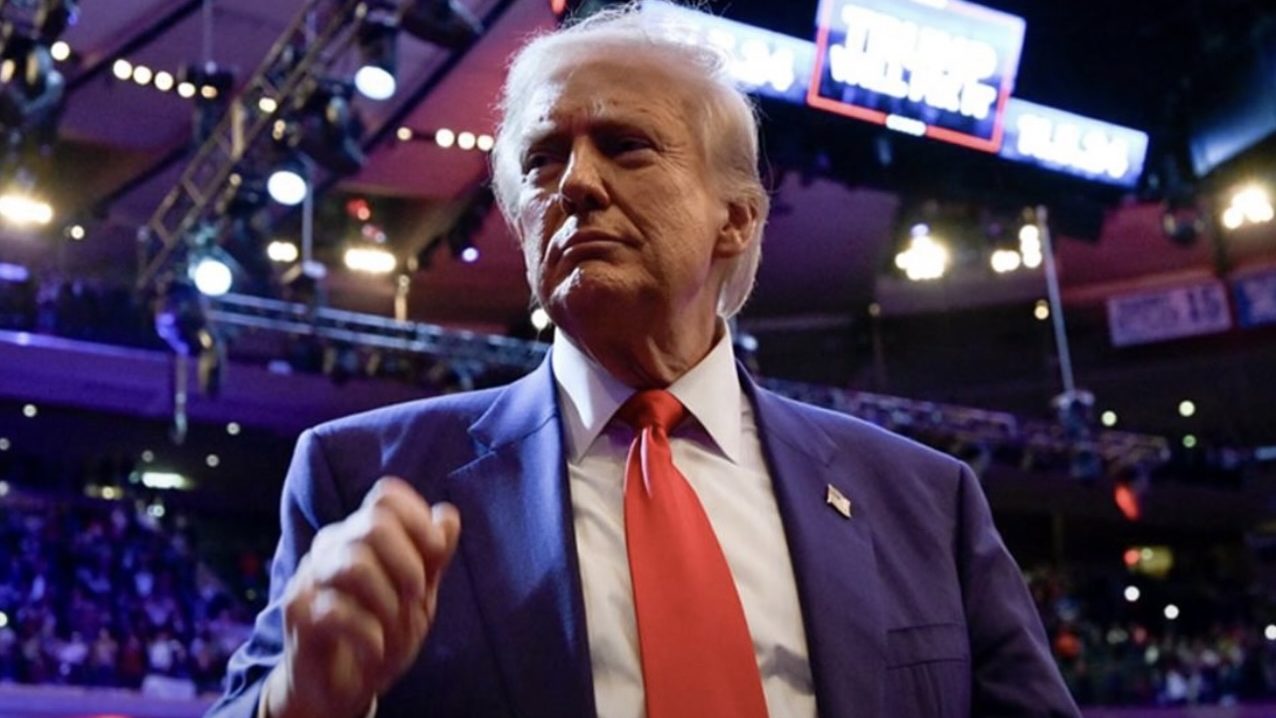
President Donald J Trump
This year is not a year in which President Donald Trump is being judged by the world; it is the year in which the world is forced to adjust to him. After years of strategic drift, performative and selective multilateralism, and unchecked revisionism by adversaries who mistook restraint for weakness, the return of President Trump has reintroduced a hard truth and reality check into global politics: power still matters, credibility must be enforced, and American leadership is not optional to global stability.
What is unfolding is not a moral reckoning with Trump, but a strategic reckoning by allies, competitors, and institutions alike - one compelled by the reassertion of U.S. leverage, clarity, and resolve.
The year of 2025 has been marked by turbulence and uncertainties and this year will see the global geopolitical scene to be more complex, as nations struggle to react, hedge and adjust to the intricacies of protecting one’s own interests and sovereignty while selecting the best options to be aligned to nations and systems that can best serve that purpose, all while the sanctity of international law is increasingly opaque.
In the backdrop of intensified rivalry and a widening gap between aspirational multipolar rhetoric and the material realities of power, alternative blocs and hedging strategies have proliferated but the structure of the system continues to rest on American military, economic, and technological primacy.
The return of President Trump has changed the power equation and compelled nations to recalibrate their responses, where his rejuvenation of American economic and military power has reinforced the efficacy and stabilising effects of his Peace through Strength mantra.
International Law Without Enforcement Power
International law remains the fundamental pillar , but its enforcement is increasingly inconsistent. States invoke legal principles when aligned with national interests and disregard them when they are not, and persistent tensions and risks from the South China Sea to Ukraine continue to illustrate this pattern. Legal norms which have been hoped to deter violations and attempts of aggressions, have been hampered in full efficacy. They do not constrain revisionist behaviour without credible enforcement mechanisms, which have now seen a realist structure where all powers are out to defend their own needs and interests.
This exposes a central reality of international politics: law is effective only when backed by credible power and the ability to enforce the law, with enough deterrence and the credibility of the consequences.
In the contemporary system, only the United States retains the full spectrum of this deterrence: global reach, military capability, and economic leverage required to impose costs on violations across regions. The persistence of the existing order, however imperfect, is therefore inseparable from continued American dominance.
Hedging Strategies and the Limits of Strategic Ambiguity
Many middle and smaller powers continue to pursue hedging strategies and consolidating fallback options - seeking to balance economic engagement with China while maintaining security ties and securing the needed economic certainties with the United States. This approach is becoming increasingly untenable.
The increased volumes of economic coercion, grey-zone maritime tactics, cyber pressure, and regulatory retaliation by U.S. adversaries raised the cost of ambiguity. In 2026, alignment is no longer a binary choice, but neither is it cost-free. States are being compelled to prioritise resilience over opportunism.
The Structural Weakness of Alternative Orders
The growing discourse around BRICS expansion, Global South solidarity, and a China-led order reflects dissatisfaction with Western dominance, and the attempts to rewrite the world order based on the alternative system and the efforts to build a multipolar mechanism, but which have seen limited efficacy. BRICS remains internally fragmented, lacking institutional cohesion and collective security mechanisms, and a trusted financial alternative to the dollar system.
China’s own economic challenges that have hampered its often hyped rise, are now its own Achilles heel. Slowing growth, demographic decline, capital controls, pressure from tech restrictions and outflow of investments and funds, and rising debt - all limit its capacity to anchor a new global order. Russia, under sustained sanctions, lacks the economic depth and military spread to function as more than a spoiler. Hence, diversification away from Western systems has increased vulnerability rather than autonomy for many states, but we see the scrambling of nations to pivot to these alternatives as the fallback options despite the systemic risks.
Deterrence and the U.S.-Led Peace Framework
The relative absence of direct great-power war since 1945 is not accidental, but a continuous work in progress grounded on effective deterrence and credibility of enforcement of international law. It reflects a system structured around American deterrence, alliance networks, and forward military presence, to deter aggressors, and to impose costs, with the importance of being seen to be able to set red lines and to impose consequences to those who violate the rules-based order.
In 2026, the logic of this system remains intact but will come increasingly under strain as other powers challenge the legitimacy and efficacy of this supervision and enforcer of the international law by the U.S.While the United States continues maintain its unmatched primacy in hard power and economic might, the rise of bloc consolidation has tried to revise the conventional order to challenge the narrative that the concentration of power in the U.S. is needed to deter revisionist actors from violations of the rules-based order.
Sanctions Enforcement and the Reassertion of Control
Recent U.S. actions against sanctions evasion and the need to be seen to be tough, particularly in cases involving Venezuela have revived the strength of setting red lines and the ability to enforce them. Proxy trade networks, illicit shipping, and financial loopholes and efforts to evade sanctions are now no longer allowed to continue with impunity.
The strategic impact extended beyond Caracas. For China and Russia, Venezuela had served as a testing ground for bypassing U.S. financial controls, and building greater power presence and influence through opaque trade, and challenging American dominance in its own geopolitical backyard. This new move by President Trump upended the decades old normative tolerance for this behaviour, and in this sense, Venezuela has become a precedent rather than an exception in reshaping expectations across the system and reinforcing the reality that attempts to circumvent U.S. power will invite direct pushback rather than passive tolerance.
This has altered behaviour across the international system. Even states seeking strategic autonomy are now reassessing exposure to secondary sanctions and U.S. financial power. The signal is clear especially for this year: economic neutrality does not insulate actors and powers from geopolitical consequences, with enforceable actions now ready to be carried out under the Trump administration.
Alliance Burden-Sharing and Strategic Discipline
The insistence on burden-sharing and the need for nations and even U.S. allies to stop the rip off of the United States for a free security umbrella will be the profound compelling reality. This has revived NATO, and will be expected to increase the volume of rearmament across Europe and the Indo-Pacific for this year. Defence spending increases in Japan, Poland, and other partners are reshaping regional deterrence balances, and arms races will continue to escalate for this year, building up the momentum from recent years.
Rather than weakening alliances, this move to compel them to increase their security posture has strengthened their credibility. Deterrence in 2026 rests increasingly on distributed capacity, and this is crucial in parallel with the biggest deterrence yielded by Washington, and to reduce the burden of Washington in terms of costs and capacity and the efficacy of winning a multiple war theatre.
Geoeconomics and Strategic Sectors
Power competition in 2026 is increasingly being defined in critical sectors: artificial intelligence, semiconductors, rare earths, and energy. Control over supply chains has become a central element of national security, and will continue to remain so.
U.S. policy has focused on restricting adversarial access to advanced technologies, restricting tech access, reshoring production, and diversifying resource dependencies. These measures are not isolationist; they are aimed at denying rivals the revenue, leverage, and technological base needed to challenge the existing order, and to deter attempts to weaponise these sectors.
Tariffs as an Instrument of Statecraft
Tariffs have emerged as a first-line coercive instrument following diplomacy. Unlike sanctions, they operate within formal trade frameworks while still shaping strategic outcomes. In 2026, states will be compelled further to calibrate policy decisions with U.S. market access and security umbrella in mind, in avoiding the consequences should they cross the line. This will compel bad actors to toe the line and prevent further escalations. This has worked quite well in 2025, with President Trump using tariff as the ultimate card in ending a majority of the eight wars he ended, and also has been instrumental in preventing further escalations.
This reinforces the centrality of the American economy as a stabilising force. Even as diversification continues, global demand remains anchored to U.S. consumption, investment, and technological leadership, and most importantly, as a security guarantor.
Greenland, the Arctic, and Strategic Geography
The Arctic is emerging as a critical theatre for missile defence, maritime routes, and resource access. Greenland’s strategic value is tied to early-warning systems, deterrence architecture, and future trade corridors.
Enjoying this article?
Subscribe to get more stories like this delivered to your inbox.
Only the United States possesses the capacity to secure this region at scale. European powers, despite political objections, remain dependent on U.S. capabilities to defend both the Arctic and their eastern flank. This dependency underscores enduring asymmetries within the Western alliance.
The Arctic will continue to be one of the key and main flashpoints for this year, where Russia and China will be expected to continue to expand their power presence and consolidation here, and thus Greenland will be the most critical frontline in this equation, where only the U.S. has the capabilities to both fully protect it and to use it to protect the Western Hemisphere, Europe and the world.
The Stakes for NATO and the Western System
Efforts by European and Asian allies to develop fallback options reflect uncertainty, but these strategies carry risks. Fragmentation weakens collective deterrence and creates openings for external powers to exploit divisions. We will continue to see this trend of revisionist powers out to exploit and to capitalise on the new opening of the Western crack and division over President Trump’s tariff and the unconventional moves in Greenland and Venezuela, and we have already seen the moves by Canada, France, South Korea and others out to renew economic and geopolitical fallback options and a thaw in ties with China, keen to diversity their options and as an insurance to the fallout or potential cutback in support from Washington.
However, the credibility of the Western system depends less on rhetorical unity and more on strategic coherence. U.S. redeployment toward the Indo-Pacific, combined with enforcement in the Western Hemisphere, has constrained China without direct conflict by limiting revenue streams, technological access, and geopolitical space.
By retreating from the conventional structures whether in the United Nations or other platforms, and as in the recent withdrawal from 66 global bodies, President Trump has forced institutions and nations to think hard on the failed mechanisms and systemic failures of these platforms and institutions and to stop being mired in a make belief and utopian false dreams trapped by illusions of a globalist appeal but have failed to bring credible impact or deterred conflicts.
This will be a new wake up call in 2026 for these institutions and players to no longer be confined by business as usual, or be blinded by what has been termed as a failed woke approach or a globalist perspective in futile funding or resources in misplaced focus areas and agendas.
Stability of Order and Peace Through Power and Strength, Not Illusion
The global order in 2026 is not sustained by idealism but to be determined where deterrence is credible, and economic leverage is actively employed. Despite widespread hedging and dissatisfaction, no alternative system has demonstrated the capacity to replace the U.S.-led framework.
The impact of Trump-era policies should therefore be understood structurally. They have reshaped incentives, imposed discipline, and reinforced the centrality of American power in keeping the decades old order of stability and peace. In a system where international law is selectively applied and competition is intensifying, stability continues to rest not on consensus, but on the ability to deter, enforce, and sustain order.
In that sense, 2026 confirms a familiar but often resisted conclusion: the international system still turns on American power, whether others welcome it or not.