
India Joins the Hydrogen Rail Race. Can It Catch Germany, Japan and China?

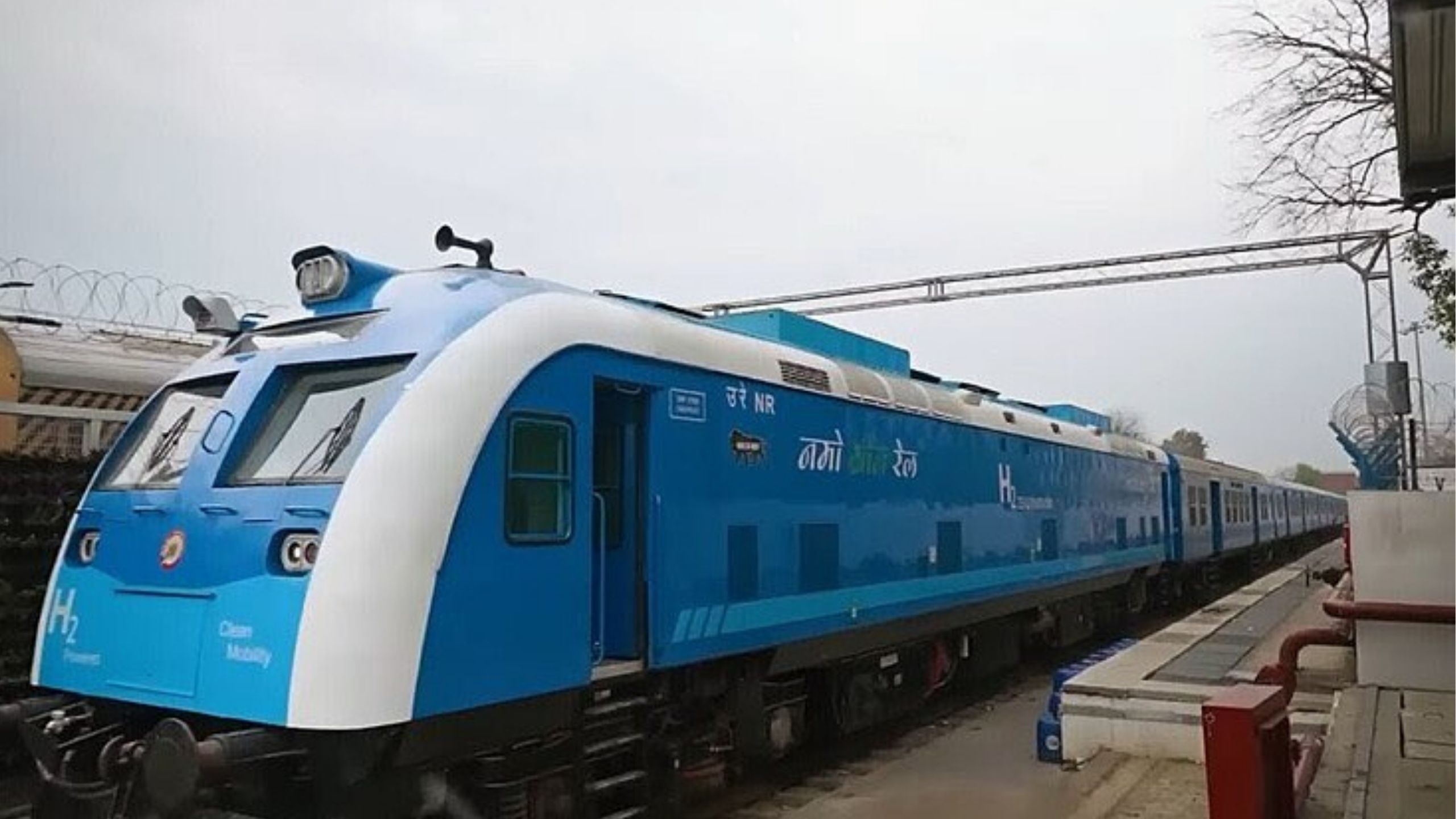
Indian Hydrogen Train
For more than a century, railways have symbolised industrial power. Today, they have become a measure of something equally important: a nation's ability to innovate while cutting carbon emissions. India's inauguration of its first hydrogen-powered passenger train is therefore more than another railway milestone. It is an attempt to place the country among the global leaders shaping the future of clean transport.
The timing is significant. Around the world, governments are searching for alternatives to diesel on rail lines where electrification remains costly or impractical. Hydrogen has emerged as one of the leading contenders, but only a handful of countries have progressed from experimentation to real-world deployment.
Germany was the first to make hydrogen rail commercially viable. In 2022, it introduced the world's first fleet of hydrogen-powered passenger trains into regular service, replacing diesel trains on regional routes in Lower Saxony. Rather than treating hydrogen as a demonstration project, Germany integrated it into everyday public transport, establishing a benchmark that others have sought to emulate.
Japan has approached the technology from a different perspective. Building on decades of railway engineering expertise, it has focused on developing advanced hydrogen train prototypes, seeing hydrogen as part of a broader strategy to achieve carbon neutrality while maintaining one of the world's most technologically sophisticated rail networks.
China, meanwhile, has pursued hydrogen as part of its wider clean-energy industrial strategy. It has tested hydrogen-powered passenger trains and invested heavily in hydrogen production, fuel-cell technology and related infrastructure. For Beijing, hydrogen rail is not merely about transport; it forms part of a long-term effort to dominate emerging green technologies.
The United States presents a contrasting picture. Although American companies are active in hydrogen research and fuel-cell development, and several pilot projects are underway, hydrogen-powered passenger trains have yet to become a feature of mainstream rail services. The country's freight-oriented railway system and different infrastructure priorities have slowed widespread adoption compared with Europe.
It is into this increasingly competitive landscape that India has entered.
According to Indian Railways, the newly inaugurated ten-coach train, designed to carry around 2,600 passengers, is the world's longest hydrogen-powered passenger train operating on a broad-gauge network. It will initially run between Jind and Sonipat in Haryana, replacing diesel traction with hydrogen fuel-cell technology that emits water vapour at the point of operation rather than carbon dioxide.
That achievement is noteworthy not only because of the technology itself but because of the scale of India's railway system. With one of the world's largest rail networks and billions of passenger journeys each year, even limited deployment of hydrogen technology could have a far greater environmental impact than similar projects in smaller countries.
Yet headlines alone do not guarantee leadership.
Hydrogen remains one of the most expensive alternatives to diesel. Producing low-carbon hydrogen at scale, building refuelling infrastructure, reducing operating costs and ensuring long-term commercial viability remain formidable challenges. Every country pursuing hydrogen rail faces these obstacles, whether Germany, Japan, China or India.
Enjoying this article?
Subscribe to get more stories like this delivered to your inbox.
India, however, possesses one advantage that could reshape the global conversation: scale. If it can manufacture hydrogen trains domestically, lower production costs and deploy them across thousands of kilometres of non-electrified railway, it could transform hydrogen rail from a niche technology into a commercially viable model for developing economies.
That would represent a far greater achievement than simply operating a hydrogen-powered train.
The inauguration should therefore be viewed neither as the culmination of India's railway modernisation nor as evidence that it has overtaken the world's pioneers. Instead, it marks the beginning of a much longer journey—one in which Germany's operational experience, Japan's engineering precision, China's industrial investment and America's technological innovation all offer valuable lessons.
India has entered the race. Whether it ultimately leads it will depend not on symbolic launches or ambitious announcements, but on sustained investment, technological reliability and the ability to scale clean transport across one of the world's most demanding railway systems. Only then will the country's hydrogen ambitions move from promise to lasting global influence.