
RT India Takes Off in New Delhi — And Putin Calls It a “Momentous” Step
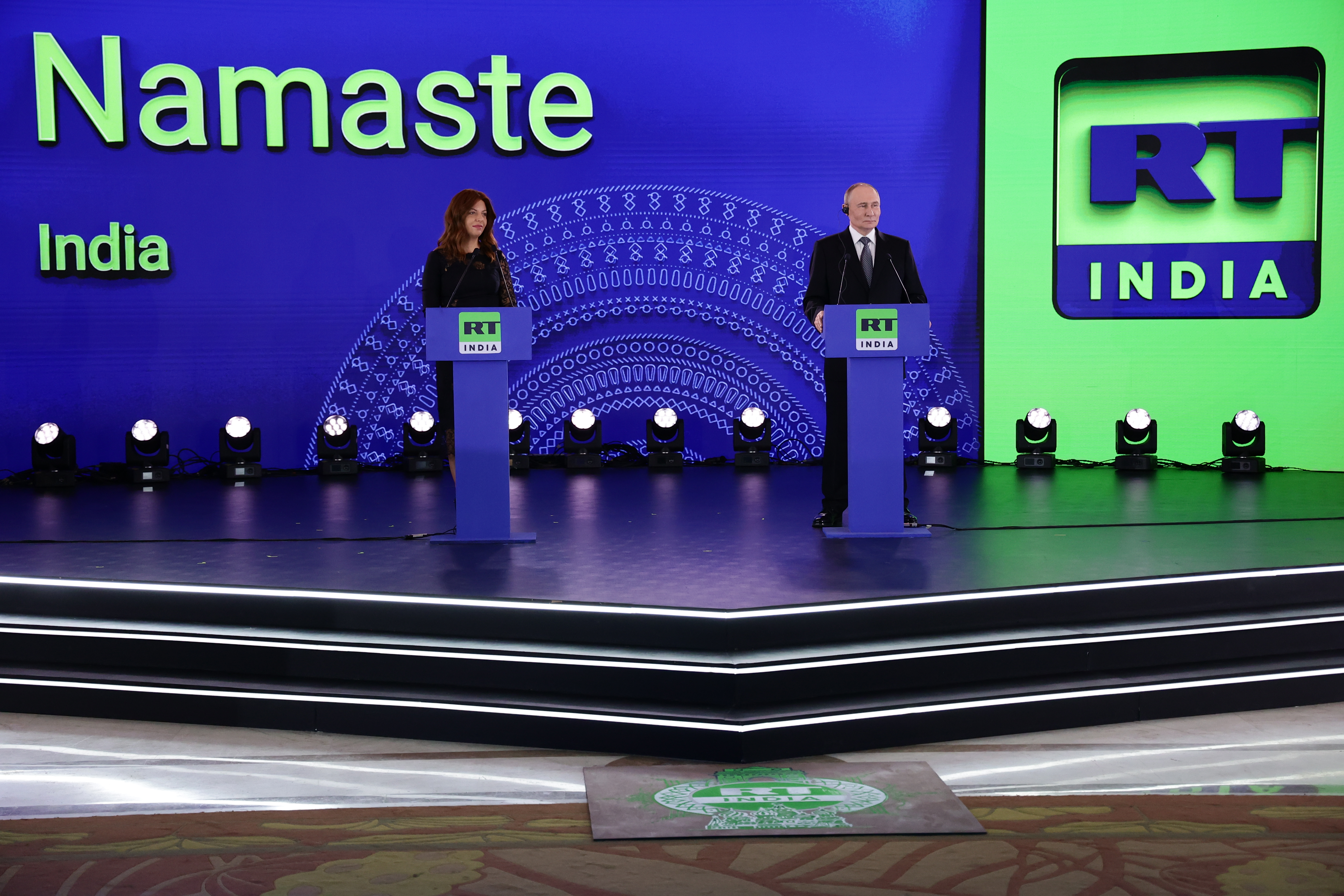
Every now and then, a media launch comes along that reminds us the world is not just being reshaped by armies, markets, or diplomats — but by newsrooms. This week, the spotlight shifted, ever so gently but unmistakably, to New Delhi, where RT India officially went live, complete with presidential fanfare.
Yes, that RT. And yes, that president.
Russian President Vladimir Putin and RT’s feisty Editor-in-Chief Margarita Simonyan appeared together (virtually and otherwise) to inaugurate the network’s India edition. For a TV channel launch, it had all the weight of a geopolitical summit — which tells you everything you need to know.
Putin called it a “momentous event,” saying it would give millions of Indians a clearer view of contemporary Russia. A noble ambition, if one believes clarity is something big powers offer voluntarily.
Simonyan complained that RT had been shut out of several “ill-intentioned countries.” Putin, never one to shy away from a narrative duel, dismissed these closures as “fear of the truth.” According to him, RT is a torchbearer of reliable information, unlike Western outlets that — in his words — function as government loudspeakers.
The old Cold War warriors would have smiled. The ideological trench lines are familiar, only the technology has changed.
Meanwhile, on the ground in India, RT is going all in: four daily news bulletins, slick documentaries, and a stable of heavyweight Indian personalities. Former foreign minister Salman Khurshid gets the flagship talk show. Dr Shashi Tharoor already has his RT programme with the deliciously titled Imperial Receipts. And RT India’s head of News, Rungjun Sharma, will walk viewers through the intricacies of Indo-Russian ties — a speciality field unto itself.
One cannot accuse RT of doing things halfway.
The network has also inked a media cooperation addendum with Prasar Bharati — India’s public broadcaster — covering content exchange and joint coverage of major events. You don’t need a political science degree to see what’s happening: the media highway between Moscow and New Delhi is being widened and resurfaced.
But perhaps the most interesting part of the rollout was not the ceremonies, the signatures, or the speeches — it was the ad blitz. RT plastered six major Indian cities with billboards and digital screens celebrating “historic ties” between the two nations. A reminder that in today’s world, influence isn’t whispered; it’s advertised.
Enjoying this article?
Subscribe to get more stories like this delivered to your inbox.
And coming soon: a Hindi-language RT news site for an audience of 500 million. If the intent wasn’t clear before, it should be now.
So what do we make of this?
In true Bah Bah fashion:
The story isn’t just about Russia coming to India. It’s about a world where countries don’t merely want to trade or negotiate — they want to explain themselves. They want their own storytellers, unfiltered, unmediated, and preferably broadcast in prime time.
In this multipolar moment, the real contest isn’t only for territory or trade routes. It’s for mindshare.
And RT India is Moscow’s latest entry ticket.
The Independent will continue observing how the global messaging war evolves — one newsroom at a time.
Publisher & Jefferson Fellow of East-West Centre, Hawaii. Currently pursuing a DBA in Emerging Technologies (AI)