
Explainer: Middle East conflict 2026: Iran, Israel, oil and what it means for the world

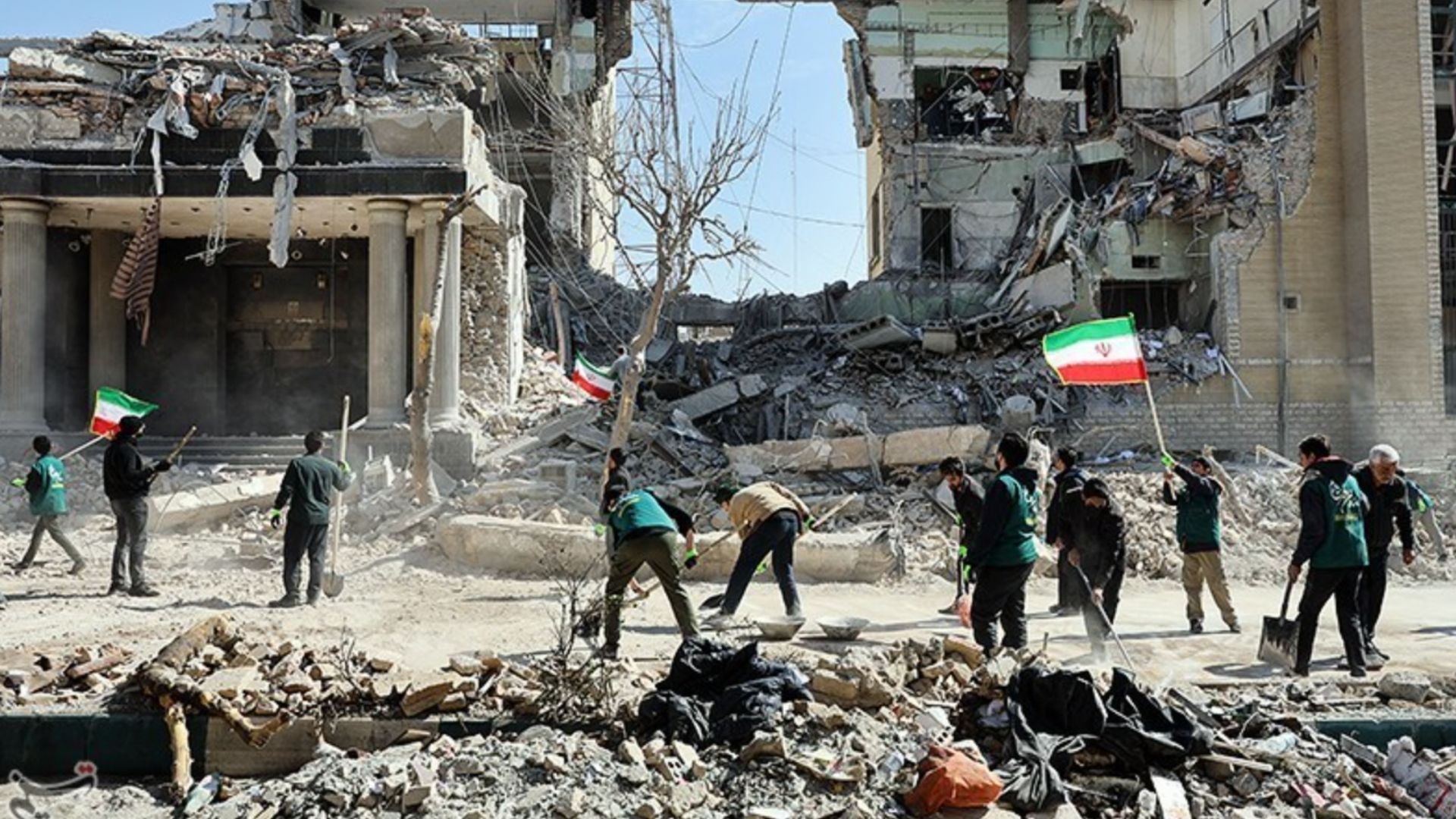
Iranians cleaning debris from shattered buildings
The Middle East is once again at the centre of global attention, as tensions involving Iran, Israel and the United States raise fears of a wider regional conflict with Gulf countries like UAE and Saudi Arabia drawn into the conflict. The GCC countries have sustained massive damage to the oil infrastructure with reports of civilian casualties by the respective countries. The impact of this war is felt far and wide, with Australia and New Zealand running short of oil supplies as a result of the disruption to crude shipment in the Straits of Hormuz. This has resulted in a spike in the prices of crude oil in the last three weeks.
The oil prices went up to USD 120 per barrel and has come down to $105 after the US eased the sanctions on US and Iran. Analysts are concerned that a prolonged conflict may cause a major economic shock to the global economy.
While flare-ups in the region are not new, what makes the current situation different is the growing risk of disruption to energy supplies, particularly through the Strait of Hormuz, one of the world’s most critical oil shipping routes. Twenty percent of the world’s oil supply is shipped through this region.
Trump administration has only 60 days to wage this war and the conclude it decisively. Beyond 60 days, the president needs to get approval from Congress to continue his war efforts. There are also mid-term elections in the second of half of 2026 and an ongoing conflict in Middle East could cause the GOP to lose some seats in the House.
Gulf countries fear that a sudden withdrawal of US after 60 days couple leave the Middle East fragmented with sectarian violence and a prolonged conflict.
Iran on the other hand is forging ties with India, Russia and China and calling on BRIC countries to negotiate a peace settlement with assurance that US and Israel not to engage in fresh hostilities again.
The idea of “common security” is gaining renewed relevance in today’s increasingly fragmented world, where traditional notions of deterrence and military dominance are proving insufficient on their own. Rather than viewing security as a zero-sum contest between rival powers, the concept emphasises that lasting stability can only be achieved collectively—through cooperation, dialogue, and mutual restraint. In an interconnected global system, instability in one region inevitably spills across borders, whether through economic shocks, energy disruptions, or conflict escalation. As such, the focus is shifting toward preventing crises before they erupt and addressing their root causes, underscoring a broader understanding that true security is shared, not imposed.
It’s Now or Never for Iran
Nearly five decades after the 1979 Islamic Revolution brought Ayatollah-led rule to Iran and triggered enduring U.S. sanctions, Iran now finds itself at a critical juncture and the regime is fighting for its survival and identity. Some observers see this as an existential crisis where the current regime needs to establish itself as the governing body of Iran.
US sanctions on Iran and Russia have created a black market for crude oil. As we understand, crude oil is then sold to China at below market prices. Such a move only benefits China and India who have been buying Iranian oil previously.
But the current tensions feel like a kick in the gut and the impact is felt the world over with some analysts describing this event as a historical event and are comparing it to the oil shock of the 1970s.
Attacks on Dubai by Iran have been unrestrained, with Iran’s aim on critical energy infrastructure, international airports and residential buildings. Dubai has recorded more than a 30% dip in property prices with more residents relocating their assets to Singapore and Southeast Asia.
The situation remains fluid, but analysts warn that even without a full-scale war, sustained instability could have far-reaching consequences, particularly for energy markets and global trade. Recent developments include:
Rising military posturing across the Middle East is heightening fears of a broader regional conflict, as multiple actors issue increasingly stark warnings. Iran has signalled it is prepared to respond decisively to any direct threat, while Israel has stepped up its operational readiness, emphasising its willingness to act pre-emptively if necessary. The United States has reinforced its presence in the region, framing it as a deterrent measure, even as regional players and global powers call for restraint. With rhetoric hardening and military assets quietly repositioned, the situation risks shifting from calibrated signalling to unintended escalation, where a single misstep could trigger a wider confrontation.
Risks to critical shipping routes in the Gulf are rising sharply, as escalating tensions threaten the security of key maritime corridors such as the Strait of Hormuz—through which a significant share of the world’s oil and gas supplies pass. Recent incidents heightened military presence, and warnings from regional actors have raised concerns over potential disruptions, including attacks on commercial vessels or temporary blockades. Even without a full-scale closure, the growing uncertainty is already impacting shipping insurance costs, rerouting decisions, and global energy markets, underscoring how quickly localized tensions could ripple through international trade and supply chains.
Airlines and the broader travel sector are already feeling the strain from rising tensions, as higher fuel costs and security concerns begin to reshape operations. With oil prices climbing, carriers face mounting pressure on margins, prompting some to consider fuel surcharges or fare increases. At the same time, airlines are rerouting flights to avoid conflict zones, leading to longer travel times, higher operating costs, and potential delays. For travellers, this translates into more expensive tickets, possible disruptions to schedules, and a heightened sense of uncertainty, particularly on routes connecting Europe, Asia, and the Middle East. As the situation evolves, the key concern is not just conflict, but prolonged disruption.
Who are the key players?
With all sides showing unrestrained use of power, the situation in the Middle East is extremely fragile with the world being consumed by the fear that there is no end in sight. The global energy situation is dire, and the oil infrastructure and major supply routes are at stake and used as a bargaining chip in this conflict. Even countries that are not directly involved in the conflict are affected by the disruption of oil supplies.
Iran
A major regional power, Iran plays a central role due to its strategic location and influence over key shipping routes. It also has alliances with various groups across the region. US and Israel have accused Iran of stockpiling uranium and building nuclear capabilities despite years of sanctions on them. A nuclear incident in the region is a threat to the entire world as we have seen how disruption to the oil supplies is affecting everyone in the world. Iran follows the Shia faith in Islam, a different order from the majority Sunni faith in the Gulf region.
Israel
Israel has long viewed Iran as a security threat, particularly over its regional influence and military capabilities. A look at Middle East figures killed by Israel in recent years lists the high-profile politicians operating in the conflict zone.
United States
The US maintains a strong military presence in the region and has historically supported Israel, while also seeking to ensure stability in global energy markets. But the US is giving conflicting signals with regards to when the war will end. The president of USA has only 60days to wrap up his war efforts in the Middle East beyond which he’ll need the backing of the House to continue the war efforts.
Gulf states
Countries such as Saudi Arabia and the United Arab Emirates are major oil producers and are directly affected by any instability in the region. Saudi Arabia is home to two of the holiest sites in Islam, Mecca and Medina and the ancient Shia-Sunni rivalry is at risk of being reignited through this conflict. Both UAE and Saudi Arabia have been very restrained in their response as they say that this is not their war. Iran on the other hand views, UAE and SA as “vessels states” of USA.
Why oil is at the centre of the conflict
One of the biggest global concerns is the Strait of Hormuz, a narrow passage through which a significant portion of the world’s oil supply passes each day.
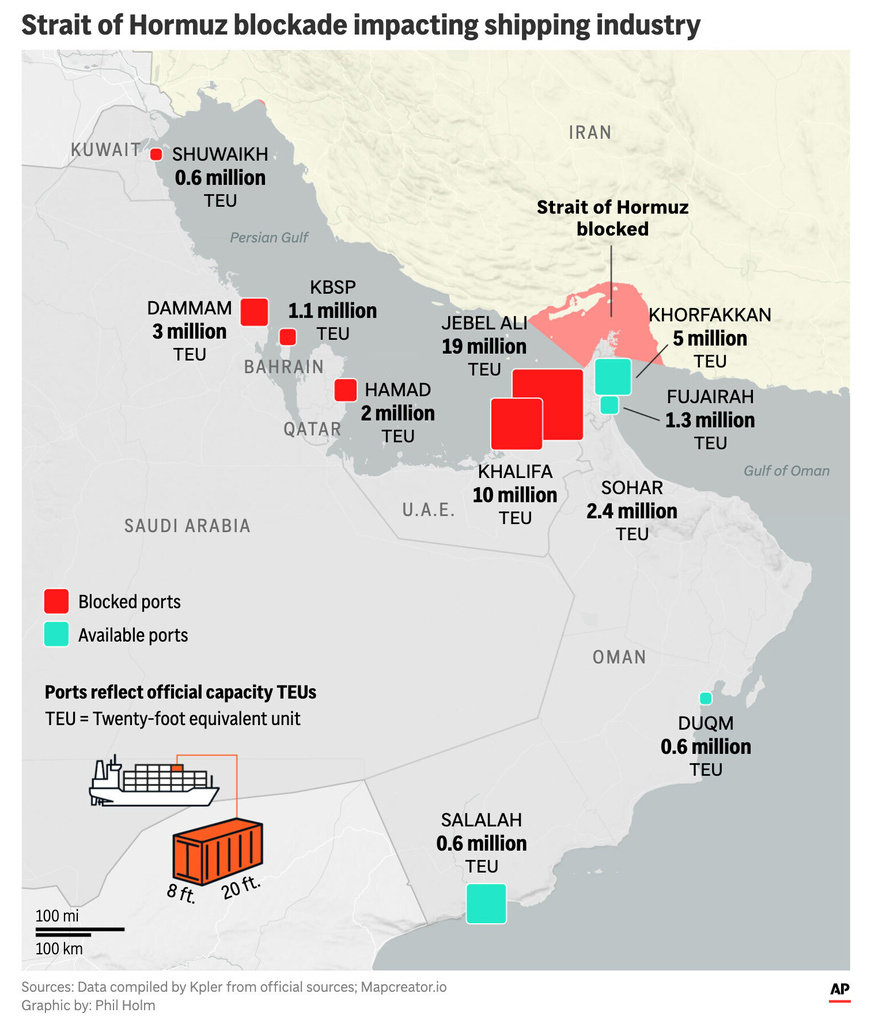
Disruptions to oil supply can have a cascading impact on the global economy, as reduced availability of crude drives up fuel prices, increasing transportation and production costs across industries. These higher costs are often passed on to consumers, contributing to inflation in multiple economies. As energy prices rise, the effects are felt widely—from household expenses to business operations, amplifying economic pressure and slowing overall growth.
How this affects the global economy
The impact of the Middle East conflict goes far beyond the region.
1. Energy prices
Oil price increases can quickly translate into higher fuel costs worldwide. With estimates that crude oil prices will reach US$ 180 and will stay there until the end of December 2027.
2. Inflation
Higher energy costs can drive up prices for goods and services, affecting households and businesses globally. Australia has reported that it has run out of fuel to transport its produce to city centres because of fuel shortage. Food supply chains are also affected as a result of this conflict.
3. Aviation and logistics
Airlines and shipping companies are particularly vulnerable, as fuel costs form a large part of their operating expenses. We are expecting ticket prices to go up 2 to 3 times in the next couple of months.
Enjoying this article?
Subscribe to get more stories like this delivered to your inbox.
4. Financial markets
Uncertainty often leads to volatility in global markets, as investors react to geopolitical risks. Investors are again turning to alternate asset classes like bitcoin and gold to hedge their bets.
What could happen next
There are several possible scenarios:
Contained tensions
The situation remains tense but does not escalate into a wider conflict. The conflict could very well end in 60 days with US withdrawing from the conflict zone.
Prolonged disruption
Ongoing instability continues to affect oil prices and global markets over time. Most analysts are expecting sectarian violence to continue in this region.
Escalation
A broader regional conflict could emerge, significantly impacting global energy supply and trade. The entry of UK and other allied forces may complicate matters and prolong the conflict.
At this stage, many analysts believe the most likely outcome is continued volatility, rather than immediate full-scale war — but risks remain high.
Why this matters beyond the Middle East
The current situation highlights how interconnected the global economy has become. Events in one region can quickly affect:
Fuel prices in Asia: In an article by The Independent Singapore, Oil could hit US$175 — Singaporeans already feeling the squeeze as costs rise, we explore the impact of the spike in oil prices in Singapore. A little-known fact is that Singapore has the third largest oil refinery facility in the worlds at the time of writing this and has a huge supply of crude oil in its underground bunkers.
Inflation in Europe is likely to come under renewed pressure as rising oil and energy costs feed through into the broader economy. Higher fuel prices increase transportation and production costs, which are often passed on to consumers in the form of more expensive goods and services. This comes at a time when many European economies are already grappling with persistent inflation and fragile growth, raising the risk of a prolonged cost-of-living squeeze. If energy prices remain elevated, central banks may face a difficult balancing act between controlling inflation and supporting economic recovery, potentially prolonging financial strain across households and businesses.
The effects of the disruption are already being felt far beyond the Middle East. In countries like Australia and New Zealand, petrol stations have begun running dry in some areas , not because the world has run out of oil, but because of how dependent these markets are on long and complex supply chains. Much of their fuel is refined in Asia using crude shipped through critical chokepoints like the Strait of Hormuz. When flows through these routes are disrupted, even temporarily, the impact can ripple quickly downstream, triggering panic buying and exposing how fragile the system really is.
Global supply chains are increasingly vulnerable to disruption as tensions in the Middle East threaten key shipping routes and drive up energy costs. Any instability around critical chokepoints like the Strait of Hormuz can delay shipments, increase freight and insurance costs, and force companies to reroute cargo, adding time and complexity to already strained logistics networks. These disruptions can ripple across industries—from manufacturing to retail—leading to delays, higher input costs, and reduced inventory reliability. Over time, sustained instability risks reinforcing a more fragile and expensive global supply chain environment, with businesses passing on costs to consumers and reshaping sourcing strategies to manage geopolitical risk.
Latest developments
For ongoing updates on the situation, see our latest coverage:
Oil prices and market reactions
Airline and business responses
Government warnings and policy shifts
Publisher & Jefferson Fellow of East-West Centre, Hawaii. Currently pursuing a DBA in Emerging Technologies (AI)