
Australia’s fuel crunch isn’t about oil - panic buying is breaking a fragile supply chain

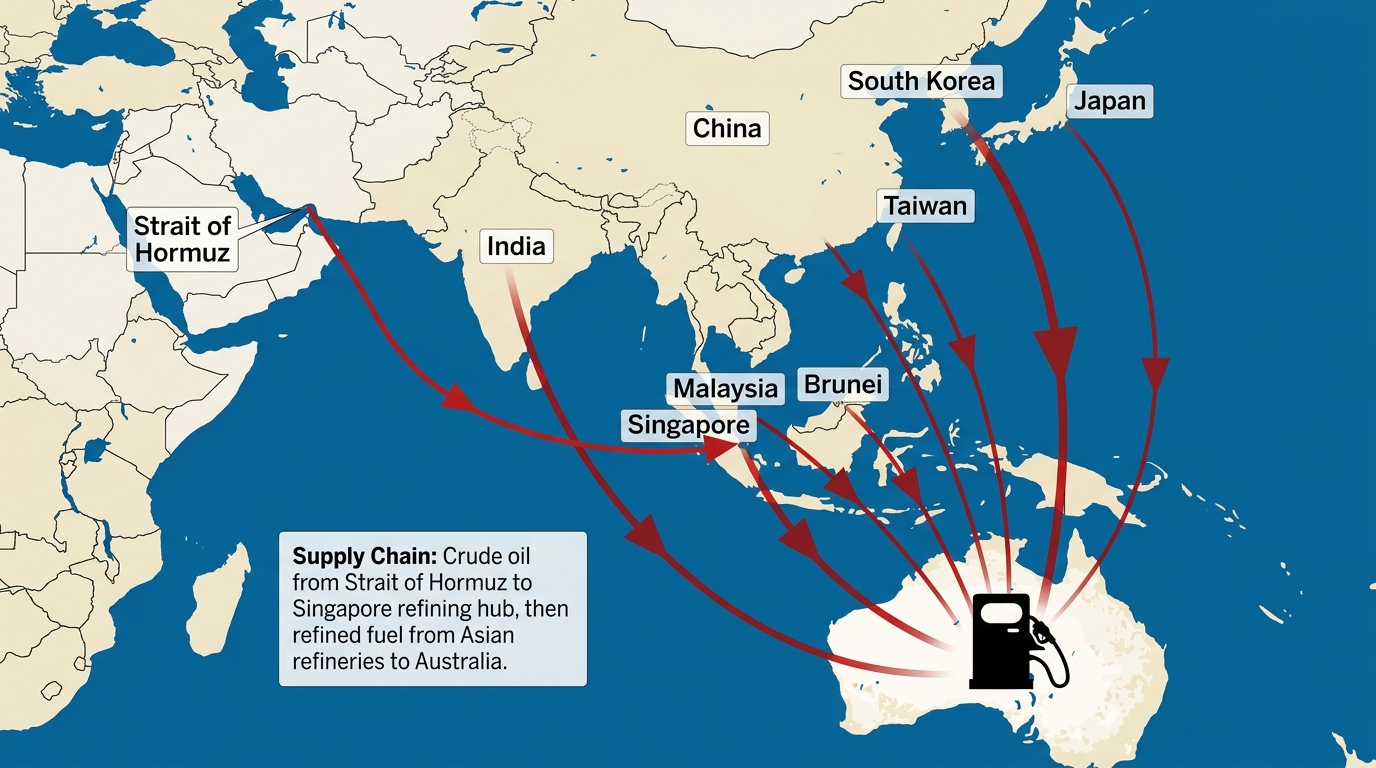
The journey from oil fields in the Middle East to petrol pumps in Australia is long, complex and vulnerable at multiple points.
Petrol stations across Australia and New Zealand are running dry, sparking concerns about fuel shortages. But the issue isn’t as straightforward as it seems. There is a supply shock, no doubt, driven by the escalating Middle East conflict, which has disrupted oil flows and sent prices surging globally, yet Australia still has enough fuel for the next 30 to 38 days, according to Energy Minister Chris Bowen.
What is happening instead is more subtle and arguably more revealing. Panic buying, triggered by fears of disruption, is placing sudden pressure on a supply system that was never designed to handle sharp spikes in demand. One video circulating online shows a driver filling up a massive tank, reportedly up to 1,000 litres, on the back of a pickup truck. It is reminiscent of how toilet paper vanished from supermarket shelves during the pandemic. But unlike toilet rolls, life without fuel is almost unthinkable, especially for those living in the Australian outback.
On social media, Australians are already feeling the strain. One commenter said it now costs “an arm and a leg” just to fill up a tank. In some areas, queues at petrol stations have stretched long enough to feel surreal, a stark reminder of how even a disruption affecting roughly 20 per cent of global oil flows can send shockwaves across the world.
Earlier in the week, Bowen acknowledged that six fuel shipments bound for Australia had been cancelled. While he maintained that reserves remain sufficient, the reassurances have done little to calm nerves. Australia imports roughly 80 shipments of fuel each month, leaving it heavily exposed to disruptions beyond its borders.
The government has been quick to stress that there is no immediate shortage and no plans for rationing. But at the same time, officials have urged motorists not to panic-buy, recognising that local shortages and cancelled shipments are already putting pressure on the system. The message is clear: supply remains intact, but it is fragile.
Enjoying this article?
Subscribe to get more stories like this delivered to your inbox.
Australia and New Zealand sit at the far end of a long and complex global supply chain. In times of stability, that system works efficiently. But when disruptions occur upstream, those at the very end of the chain are often the first to feel the strain. Their concerns, in that sense, are not unfounded.
Publisher & Jefferson Fellow of East-West Centre, Hawaii. Currently pursuing a DBA in Emerging Technologies (AI)