
Greenland: Trump's predatory mood

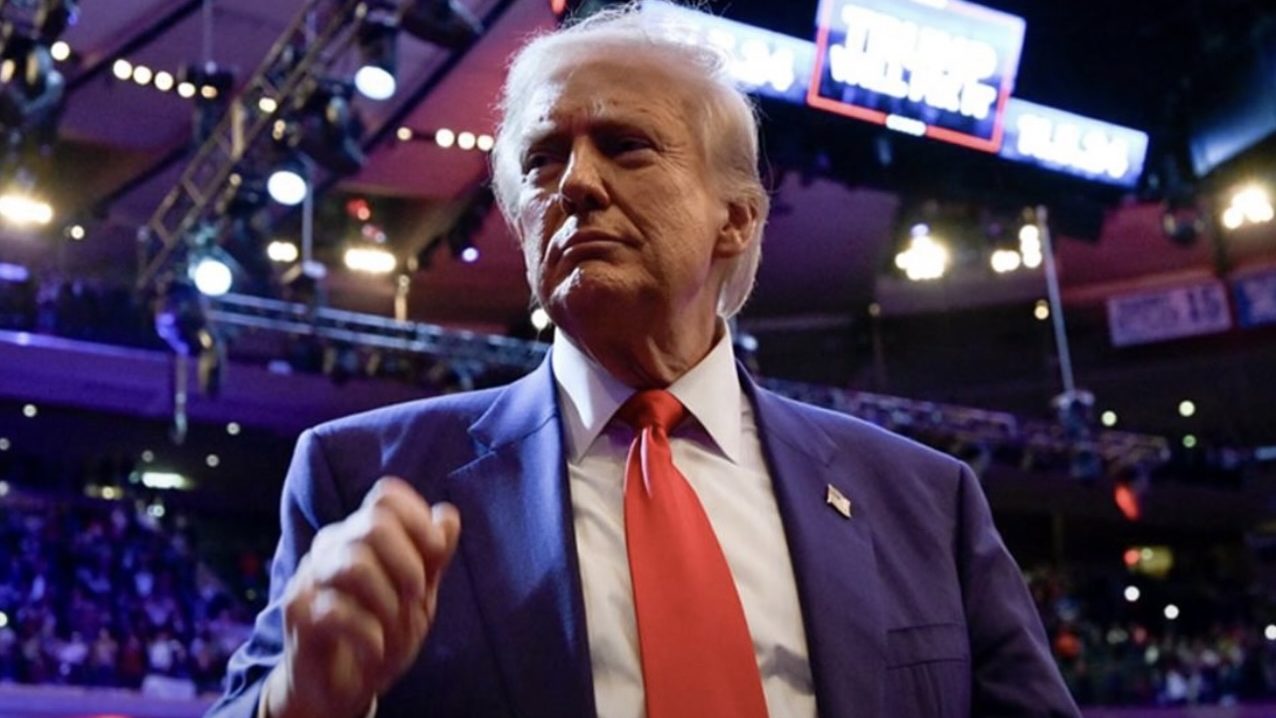
US President Donald J Trump
US President Donald Trump's attempt to "grab" Greenland constitutes a neo-colonial effort by a global "sheriff" who clearly does not respect the island's national sovereignty and fundamental human rights.
Thus, demonstrations took place in the capital Nuuk - the largest demonstrations in Greenland's history - and Copenhagen, with slogans such as "Greenland is not for sale" and "Greenland belongs to the Greenlanders", and which highlighted the will for self-determination. At the same time, polls show that about 85% of Greenlanders reject the prospect of joining the US. Greenland's 34-year-old Prime Minister Jens-Frederik Nielsen, moreover, has described the pressure as "disrespectful" and has called for an end to threats and rhetoric about annexation "among friends."
The Prime Minister of Denmark, Mette Frederiksen, speaking in Parliament on Tuesday, January 20, 2026, stated the following: "This is a dark chapter we are in" and clarified that "Denmark cannot negotiate sovereignty, identity, borders and democracy."
The subsequent retreat of US President Donald Trump on plans to use military force to occupy Greenland and the cancellation of additional tariffs on eight European NATO member states that opposed his plans to acquire the island is phenomenal because his aggressive, conquering dispositions have not in essence diminished at all, while the "rift" in the Euro-Atlantic axis has become deep, testing the cohesion of the Western world.
But let's see what Greenland's data is and why it is so important island. Greenland is the largest island on our planet with an area of 2,166,086 square kilometers, since Australia, although larger in area, is considered a continent and not an island. At the same time, it is currently an autonomous island and is a member of the Kingdom of Denmark, which, it should be noted, has been a member of NATO and an ally of the United States, since 1721.
Greenland was a Danish colony until 1953. Since that year, it has been a county of Denmark. It has been self-governing since 1979, and in 2009 it was granted even greater autonomy, with the right to exploit its natural resources, a move that many saw as paving the way for eventual full independence.
The head of state is King Frederick X of Denmark (since 14 January 2024), who is represented by a high commissioner. The head of government is the prime minister, who is elected by Parliament. The cabinet is also elected by Parliament, called Landstinget. The 31 members of Parliament are elected by the system of simple proportionality in multi-member constituencies by the people and their term of office lasts 4 years. Anyone aged 18 or over has the right to vote in elections.
The majority of the population, which amounts to approximately 56,000, are Inuit (Eskimos), who came into mixing with the first European settlers (of Danish and Norwegian origin) and speak Greenlandic and Danish.
This Arctic island is geographically located in North America, while culturally, demographically and politically Greenland is an island linked to Europe. To the southeast of Greenland are the Atlantic Ocean and Iceland, to the east the Greenland Sea, to the north the Arctic Ocean and to the west Baffin Bay and Canada.
Most of the island, i.e. about 80% of Greenland's surface, which corresponds to 1,700,000 square kilometers, is covered by a huge ice sheet. Only the southwestern and southeastern coastal zones, which correspond to the remaining 20%, are not covered by ice. It is the only free and inhabited area, but bare, with many rocks, fjords and islets. For two months every summer it experiences the "Midnight Sun" with continuous light, while in winter it experiences the "Polar Night" with continuous darkness.
Greenland does not have a developed road network connecting towns and villages. Transportation is mainly by sea and air, with airports and heliports throughout the country. On land, transportation is by snowmobile and sled.
The economy of the island, whose currency is the Danish krone and whose GDP is estimated by the World Bank to be between $3.5 and $4 billion, is based on fishing, which accounts for 95% of Greenland's exports, and fish processing, which is a major industrial activity. A few residents also engage in limited farming on the southwestern coast, where cattle, sheep and poultry are raised.
Greenland is therefore not rich in the conventional sense and given that its resources are largely underutilized. Its economy is small and in order to “survive” it receives an annual subsidy of 520 million euros from Denmark – that is, about 9,000 euros per inhabitant. This is also why many on the island are hesitant to demand immediate independence from Denmark, which has shown colonial behavior in the past.
Enjoying this article?
Subscribe to get more stories like this delivered to your inbox.
Greenland also has deposits of gold, uranium and coal. According to recent research, there are also deposits of oil and natural gas. Its territory also contains large deposits of rare earths. According to reliable data, 25 of the 34 minerals that the European Commission has classified as "critical raw materials" are found on the island.
The US, however, does not see Greenland simply as a repository of raw materials, but as an island with strategic value that ensures access, surveillance, and defense over the North Atlantic and Arctic corridors.
Militarily, the US already maintains the Pituffik Space Base in northwestern Greenland, near the city of Kanak – one of the northernmost cities in the world. The base hosts early warning radars, integrated into the US missile defense network, and operates as an advanced part of the NORAD system to detect ballistic missile launches crossing the Arctic.
Denmark, for its part, is constantly strengthening its presence in the region with new warships, drones and satellite infrastructure.
In closing, I would like to emphasize that the only ones competent to decide on the fate and future of the island are the inhabitants of Greenland. It is not possible for our world, the international community, to be allowed to turn into a world where the principles of international law are blatantly violated, turning it into a tattered paper, and in which the law of the jungle, that is, the right of the strong, will prevail. Therefore, every democratically and rationally thinking person cannot help but shout loudly: "Trump, hands off Greenland."
Journalist, foreign press correspondent accredited by the Ministry of Foreign Affairs, regular member of the Greek Foreign Press Correspondents' Association, novelist, poet and lyricist.