
Impact Leaders Must Learn to Sit with Discomfort

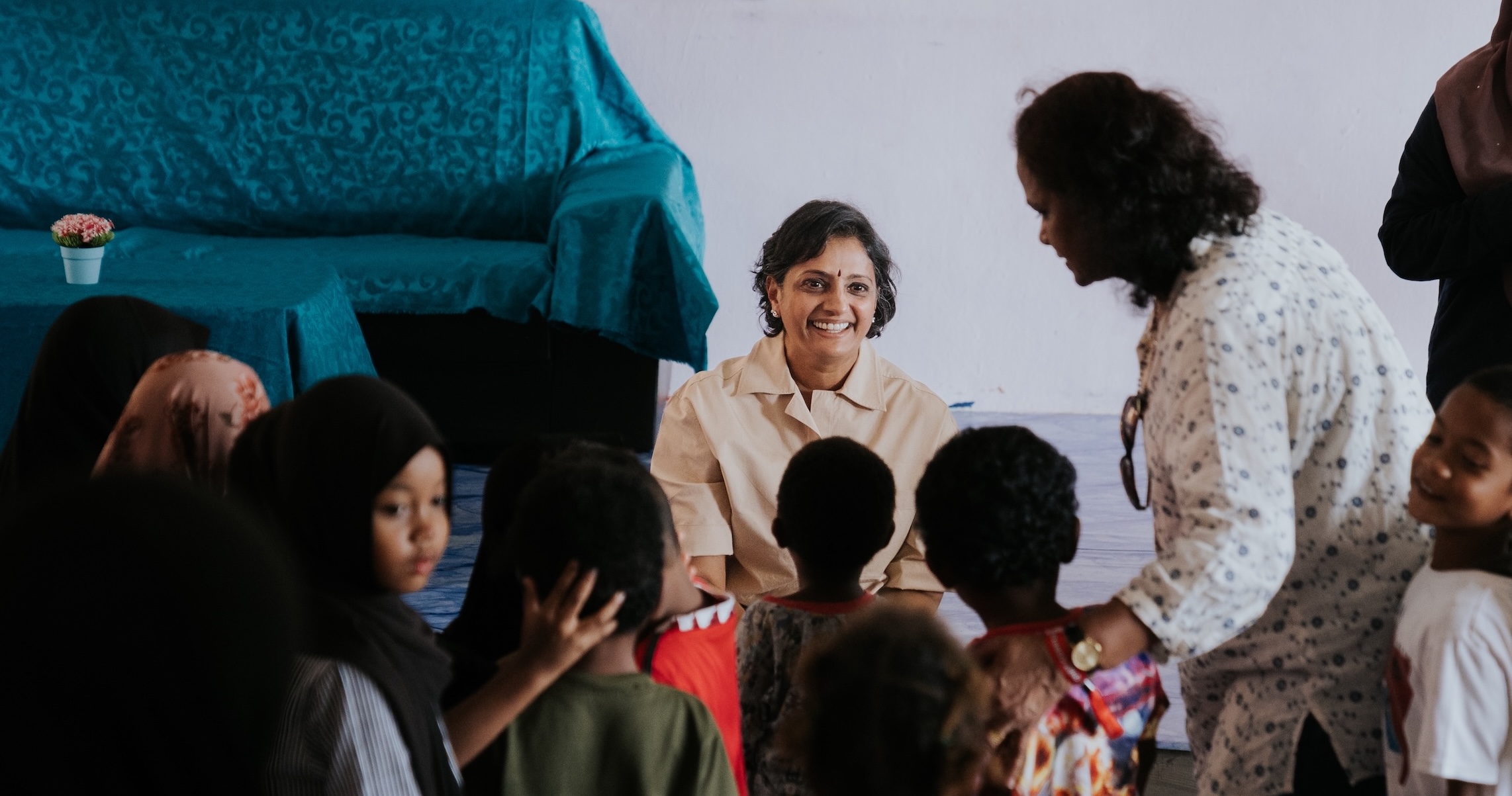
By Datin Seri Umayal Eswaran
Earlier this year, on the sidelines of the World Economic Forum’s Annual Meeting in Davos, a deceptively simple question was raised: in an age when everyone is trying to tell stories about impact, whose stories are actually being heard?
The honest answer is that the stories that get heard are often the ones that are easiest to resolve. The neat arc which gives the quick win. The solution offered before the problem has finished speaking.
Storytelling, in our work, is not a branding exercise. It is a listening practice. Listening, if done properly, is uncomfortable because it slows you down.
Across Southeast Asia’s social impact sector, we are being asked to deliver measurable results at an accelerating pace. Funders, boards, and stakeholders all want the results fast. In that environment, uncertainty is easily mistaken for weakness.
Over two decades working alongside climate-vulnerable communities, indigenous partners, and children with diverse learning needs, I have learned that speed can create distance, and distance can distort reality.
Real leadership is not about eliminating ambiguity, but staying with complexity long enough to understand what it is actually saying.
When comfort creates distance
While distance is comfortable, proximity is not. The closer you stand to a problem, the more contradictions you have to carry, and the less tidy your conclusions become.
One example is the indigenous women our Foundation partners with in Malaysia from Orang Asli Jakun communities in Johor, and communities in rural Sabah. For years, well-meaning outsiders arrived with templates: training curricula, enterprise models, timelines tied to grant cycles. The women in these communities already knew what they needed. But the pace and shape of the work belonged to them, not to us. The only way to be genuinely useful was to stop bringing answers and start bringing patience.
That is community leadership which we can always learn from. It grounds us in lived realities, not logframes.
When discomfort is ignored, minority perspectives get silenced and stakeholders get pushed toward a quick resolution that later unravels.
Discomfort as an ethical discipline
How then do we resist the rush to resolve?
Sitting with discomfort is an ethical choice and a reminder that this work is not about us, but about respecting realities we cannot control.
Premature certainty, in our sector, is not just a strategic error.
It is ethically risky for the people we serve. Feedback loops are not a sign of fragility; they are safeguards against overconfidence. Holding power responsibly means accepting that the clearest path forward is not always immediately visible.
The double bind for women leaders
Holding power responsibly is already difficult. For women, it is often costlier.
Women leaders are expected to project certainty and confidence at every moment, while facing sharper scrutiny than male counterparts for the same performance. Media framing compounds this: we are routinely characterised as either too ambitious or not ambitious enough. Visible uncertainty, which is simply an honest response to a complex problem, becomes especially risky.
For women in leadership, sitting with complexity demands the courage to hold that discomfort publicly, without collapsing toward premature resolution.
What discomfort looks like in practice
This means building iteration, and reflection into programmes from the outset as a genuine mechanism to listen, and adapt.
At Taarana, Malaysia’s first affordable education centre for neurodivergent children, our educators begin every term with a premise many institutions resist: that the child in front of us may teach us as much about education as any curriculum can. That humility is uncomfortable and precisely why the work endures.
The same principle runs through the Maharani School Programme, where girls from B40 communities in Malaysia, build confidence not because we arrive with a fixed definition of empowerment, but because the programme adjusts to what they tell us they need.
Enjoying this article?
Subscribe to get more stories like this delivered to your inbox.
Leaders with a high tolerance for ambiguity tend to make better decisions under complexity, knowing that a timely but poor decision is worse than a slower, sound one.
Conclusion
Sitting with discomfort, with ambiguity, with the absence of neat answers, with process that refuses to be tidy is not a failure. It is the discipline.
The first question impact leaders should ask is not “What is the answer?” but “What don’t we yet understand?”
A story without accountability becomes performance. Data without humanity creates distance. When we let narrative and evidence inform one another, and resist the rush to resolve, we build an impact that lasts.
The most responsible leaders are not those who resolve complexity fastest, but those who respect it long enough to learn from it. Only by staying close to notice who is still waiting can we be sure we are bringing anyone with us.
About the Author
Datin Seri Umayal Eswaran is the Chairperson of RYTHM Foundation, the social impact initiative of the QI Group. Over the last two decades, she has championed initiatives across South Asia, ASEAN, and Sun Saharan Africa in education, gender rights, and economic opportunity for underserved communities. She is also the founder of Taarana, Malaysia’s first affordable education centre for children with diverse learning needs.
Contributing writer at The Independent News