
Azim Premji : The industrialist who made philanthropy a measure of success

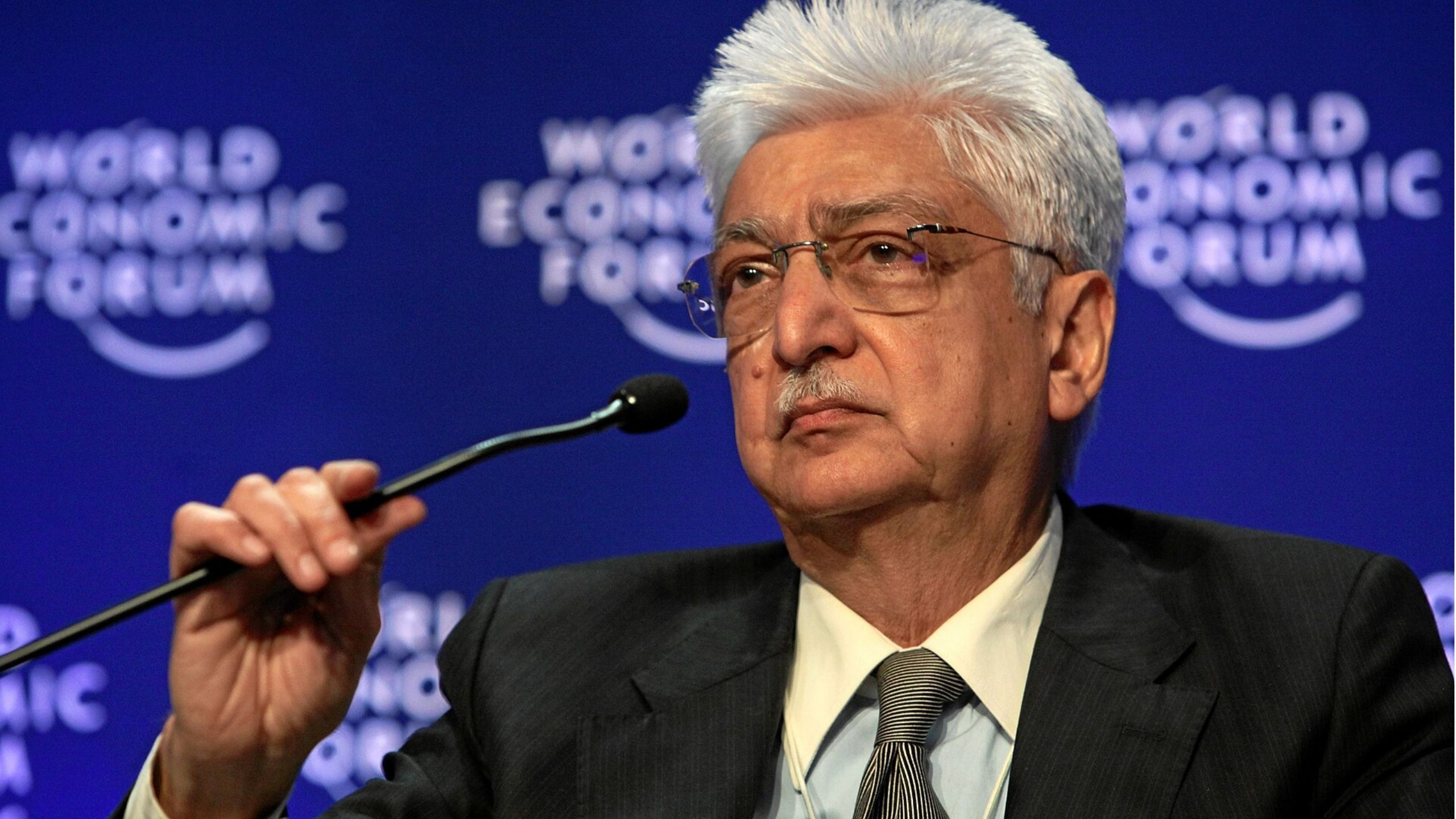
Azim Premji, chairman of Wipro
Some business leaders are remembered for the companies they build. Others are remembered for the fortunes they accumulate. Azim Hasham Premji belongs to a rarer category: a leader whose legacy is defined not only by extraordinary business success, but by the scale of his commitment to giving back. As the Indian industrialist, technology entrepreneur and philanthropist turns 81, his life stands as a powerful reminder that the true measure of achievement lies not simply in the wealth one creates, but in the difference one makes with it.
Born on July 24, 1945, in Bombay, now Mumbai, Azim Premji went on to become one of the central figures in the transformation of modern India’s technology industry. As the founder-chairman of Wipro Limited, he guided the company through a remarkable evolution — from a business associated with edible oils into a global information technology and consulting services enterprise.
His journey began with an unexpected responsibility. In 1966, following the death of his father, Mohamed Hasham Premji, the 21-year-old Azim Premji returned to India from Stanford University, where he was studying engineering, to take charge of the family business.
What followed was one of the most remarkable transformations in Indian corporate history.
Through strategic vision, long-term thinking and a commitment to innovation, Premji reshaped the company and helped establish Wipro as an internationally respected technology organisation. His leadership coincided with the rise of India’s software and IT services industry, and he became one of the figures most closely associated with the country’s emergence as a global technology power.
Born into a Gujarati Muslim family, Premji inherited a business legacy from his father, a successful industrialist who was once known as the “Rice King of Burma”. During the Partition of India in 1947, his father reportedly declined an invitation from Pakistan’s founder, Muhammad Ali Jinnah, to move to Pakistan and chose to remain in India.
Azim Premji’s own contribution to India’s economic and technological development would eventually extend far beyond the corporate world.
In 2001, he established the Azim Premji Foundation, beginning a philanthropic journey that has since become one of the most significant in the world. The foundation has focused particularly on education, working to improve the quality of learning in government schools, strengthen teacher training and support wider reforms in the education system.
Its work has also extended to rural healthcare, women’s education and empowerment, social justice and other areas of public welfare. The establishment of Azim Premji University further reflected his commitment to developing knowledge and professional capacity in fields related to education, development and social change.
Premji’s philanthropy has been notable not merely for its scale, but for its philosophy. He has committed a substantial proportion of his personal wealth to public good, donating shares and assets worth tens of billions of US dollars through charitable initiatives. In doing so, he has become one of the world’s most prominent individual philanthropists.
His approach is rooted in a simple but profound principle: those who possess greater wealth also bear a greater responsibility towards society.
That belief has distinguished Premji from many of the business leaders of his generation. For him, philanthropy has not been an occasional act of generosity, but a central part of his understanding of responsibility and leadership.
His achievements have earned him some of India’s highest honours. He was awarded the Padma Bhushan in 2005 and the Padma Vibhushan in 2011, among the country’s most prestigious civilian distinctions. In 2018, France honoured him with the Chevalier de la Légion d’honneur, its highest civilian distinction.
He has also received extensive international recognition for his contribution to business, technology and philanthropy. In 2000, Asiaweek named him among the 20 most influential people in the world, while Forbes has repeatedly listed him among India’s wealthiest individuals.
In 2019, Premji stepped down as Wipro’s executive chairman, with his son, Rishad Premji, succeeding him in the role. He remains associated with the company as its founder-chairman.
Enjoying this article?
Subscribe to get more stories like this delivered to your inbox.
But titles and rankings ultimately tell only part of the story.
Azim Premji’s enduring significance lies in the combination of achievement and responsibility that has defined his public life. He helped build a global technology company at a time when India’s place in the international technology economy was still being established. He accumulated immense wealth, but also committed an extraordinary share of it to education, social development and the public good.
His life offers a particularly powerful lesson in an age when business success is often measured almost exclusively by financial performance. Premji’s example suggests that the highest form of success is not wealth alone, but the ability to convert opportunity into lasting social benefit.
As Azim Hasham Premji celebrates his 81st birthday, he is honoured not only as one of India’s most distinguished industrialists and technology pioneers, but also as a philanthropist whose generosity has touched millions of lives.
His legacy is therefore larger than Wipro, larger than the technology industry and larger than his personal fortune. It is a legacy of enterprise guided by responsibility — and of success measured, ultimately, by what it gives back to society.
On his 81st birthday, we extend our warmest wishes, deepest respect and heartfelt prayers for Azim Premji’s continued good health, happiness and long life.
Contributing writer at The Independent News