
Iran's Pezeshkian declares 'we will not yield' as BRICS summit issues unanimous call for Middle East de-escalation

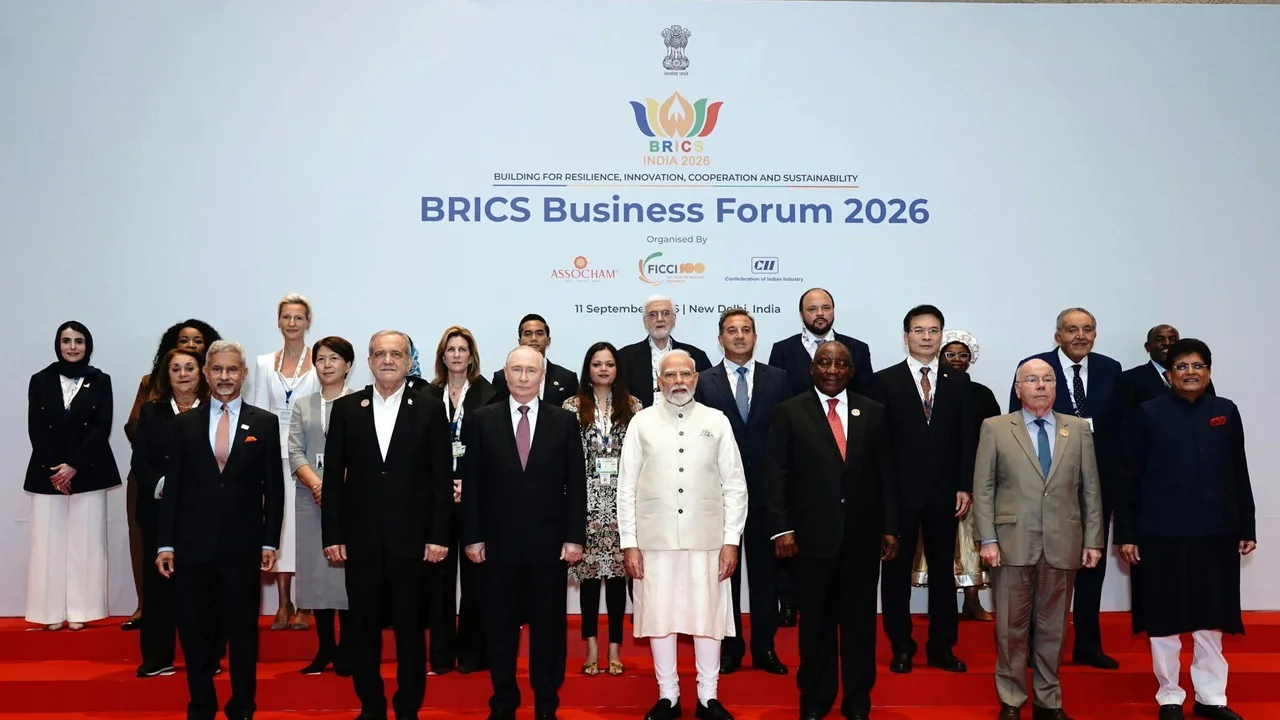
INTERNATIONAL: Iranian President Masoud Pezeshkian has declared that Iran will not surrender to what he called “bullying arrogance,” delivering a defiant address to Indian religious leaders in New Delhi on the eve of the 18th BRICS Leaders' Summit, as the gathering of major emerging economies issued a unanimous declaration expressing deep concern over Middle East escalation, according to CNBC.
“Iran has successfully stood against Israel and the US,” Pezeshkian said late Friday. “Since we are seeking truth and justice, we will not yield in front of bullying arrogance.” The comments came after US President Donald Trump said that Iran would have attacked Israel, Middle East, and US cities had Washington not launched military action. “If I had it to do again, I would do exactly what I did,” Trump said, as quoted by CNBC.
Modi raises seafarer safety, calls for dialogue
Indian Prime Minister Narendra Modi met with Pezeshkian on Friday, raising concerns about the safety of seafarers and emphasising the need for peace and freedom of navigation and commerce in the Strait of Hormuz, through which shipments of oil and other cargo have slowed to a trickle since the US and Israel began their war on Iran on Feb 28.
Modi reiterated his call to resolve the conflict through “dialogue and diplomacy.” In his opening remarks at the BRICS Summit on Saturday, however, he took a broader swipe at the current international order, describing it as a “pyramid of privilege” where countries from the Global South lack sufficient power to shape decisions that affect them. Modi, serving as BRICS chair this year, called for reform of the UN Security Council and international financial institutions to reflect the growing economic influence of developing economies.
India’s energy vulnerability
CNBC noted that India is among the countries most exposed to the supply disruptions caused by the war. The world's fastest-growing major economy imports nearly 85% of its fuel needs and relies heavily on energy supply chains through the Strait of Hormuz. Global crude oil prices have surged amid a sharp escalation in US-Iran fighting this month.
The human cost for India has also been significant. In July, two vessels carrying 30 Indian seafarers were attacked while transiting the Strait of Hormuz. The Indian government has confirmed that ten seafarers have lost their lives due to the Middle East conflict.
BRICS declaration and UAE-Iran talks
The summit produced a joint declaration from BRICS member countries expressing “deep concern over the continued escalation of tensions in the Middle East” and urging all parties to “ensure the protection of civilians and civilian infrastructure.” The resolution passed unanimously, notably winning the approval of both Iran and the United Arab Emirates, whose ties have deteriorated significantly since the start of the war. Last month, the UAE paused all trade and financial transactions with Iran after two ballistic missiles were launched from Tehran toward its territorial waters.
Enjoying this article?
Subscribe to get more stories like this delivered to your inbox.
Despite the tensions, Iranian and UAE representatives held bilateral talks on the sidelines of the summit on Saturday, according to a post by the Iranian embassy in India on X.
Why this matters for Singapore
The BRICS declaration’s unanimous call for Middle East de-escalation and the simultaneous diplomatic activity on its sidelines shows the growing pressure from major emerging economies on both the US-led coalition and Iran to find a path toward resolution.
For Singapore, whose status as a global trading hub and bunkering centre makes it acutely sensitive to Strait of Hormuz disruptions, any movement toward de-escalation, however tentative, would carry direct economic significance, regardless of Singapore’s non-membership and strategic neutrality.
Writer