
AI automation hits young workers hardest in South Korea as entry-level jobs come under pressure

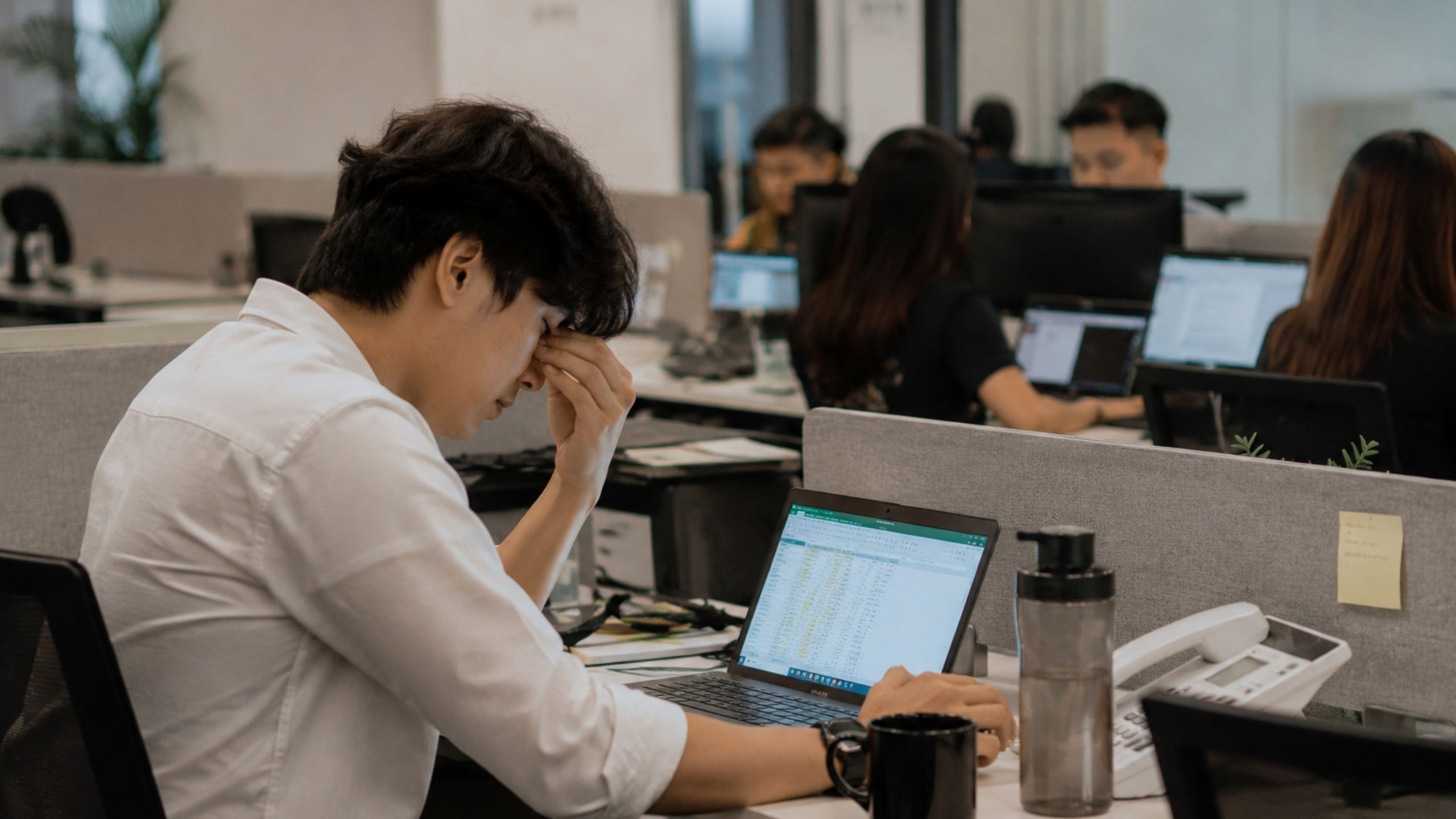
Employee working in an office environment.
SOUTH KOREA: Young workers in South Korea are being hit hardest by job losses in industries increasingly exposed to artificial intelligence (AI), raising fresh concerns over how the technology could reshape opportunities for those starting their careers.
According to The Korea Times, citing data from the Ministry of Data and Statistics, the number of employed South Koreans aged 15 to 29 fell by more than 191,000 in July from a year earlier.
More than half (51.3%) of those losses came from two knowledge-intensive sectors: information and communications, which shed 74,517 jobs, and professional, scientific and technical services, which cut another 23,640 jobs.
The information and communications sector, which includes computer programming, telecommunications and digital media publishing, had its steepest monthly drop at the time since data tracking began in 2014.
This was a shift from previous years, when youth job losses were mainly concentrated in hospitality, food services and manual manufacturing.
As companies use generative AI for routine coding, administrative work, basic tax preparation and market research, demand for entry-level workers could shrink, with industry analysts warning that its use could accelerate a “white-collar job apocalypse”. Some projections suggest up to half of traditional office roles could eventually disappear.
A Bank of Korea report estimated that 51% of jobs in South Korea are highly exposed to AI, while 27% of workers are in roles with “high AI exposure and low complementarity”. As AI advances, such workers are said to face a higher risk of displacement or slower wage growth.
However, commenters online said the projections were hardly surprising.
One commenter on r/technology said: “Entry-level jobs always get hit first when companies automate. Korea's just showing us what's coming everywhere else too tbh.”
Meanwhile, another wondered: “I’m still not sure how political leaders and CEOs think they would have senior people in 5-10 years, if they don’t recruit entry-level and juniors. How are the young people going to learn to work, if no one wants to invest in them in order to have good numbers for the quarter?”
Enjoying this article?
Subscribe to get more stories like this delivered to your inbox.
In Southeast Asia, an International Labour Organization (ILO) report found Singapore had the highest share of workers in AI-exposed jobs, at 42.2% of total employment. Still, the city-state may be better positioned than its regional peers, given that it also ranked highest in AI preparedness. /TISG
Contributing writer at The Independent News