
Why oil prices didn't explode when the Strait of Hormuz closed — and why the next shock could be far worse

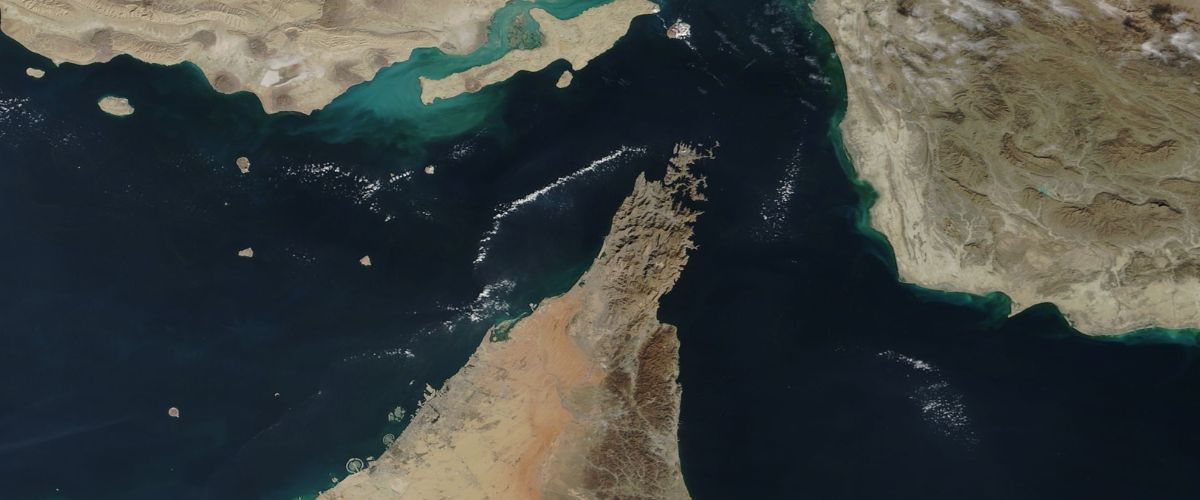
Photo: Satellite image of the Strait of Hormuz
INTERNATIONAL: The closure of the Strait of Hormuz should have been a catastrophe for global oil markets. Cutting off roughly 20 million barrels a day, about a fifth of global consumption, the disruption exceeded the scale of the 1973 oil shock, the Iran-Iraq war, and the Gulf War combined in terms of barrels kept off the market. And yet crude prices settled in a range of $90 to $100 per barrel, far lower than many feared.
The reason, according to a new analysis by the IMF, is that the global energy system had just enough room to absorb the blow. The problem is that the room is now largely gone.
How the world absorbed the shock
In the days before the war, supply was running about 2 million barrels a day above demand, which was a useful head start. According to the IMF, three factors then helped close the gap through March to May:
First, the demand compression did the heaviest lifting. Higher prices reduced consumption, particularly in Asia, while economies switched where they could to alternatives including coal and renewables. Transportation demand proved stickier, in part because fuel price caps, subsidies, and tax rebates cushioned the impact on consumers, though at a significant fiscal cost to governments.
Secondly, production outside the Gulf rose by nearly 2 million barrels a day above 2025 levels, with the United States leading the increase and Venezuela, Guyana, and Russia also raising output.
Finally, inventories made up for the rest. The estimated market deficit of around 4 million barrels a day through March to May was met almost entirely by drawing down global stocks, including commercial inventories in China and strategic reserves.
According to the IMF, Gulf producers also redirected what they could. Saudi Arabia routed oil through its pipeline to the Red Sea port of Yanbu, while the UAE pushed its Fujairah port, located outside the strait, close to capacity. Even so, these workarounds offset only a fraction of the lost Hormuz volumes, and refined product output in the Gulf dropped significantly, hitting diesel and jet fuel, where the region supplies around 10% of global demand, particularly hard.
By the end of May, more than 1.1 billion barrels of crude had not reached the market. This is equivalent to about 10 days of typical global consumption.
Recovery will be slow
Before the most recent escalation of tensions, a US-Iran framework agreement to reopen the strait sent prices sharply lower, partly because large volumes of oil stranded on tankers in the Gulf could rapidly return to the market once the waterway reopened.
But industry estimates suggest it will take two to three months before a significant share of oil flows can resume even after a full reopening, accounting for the time needed to restore shipping, insurance, and operator confidence. A longer-term concern is that prolonged production halts could cause permanent output losses, particularly where financing to restart wells is scarce.
The buffers are running out
The main warning from the analysis is simple: the conditions that allowed the world to absorb the initial shock no longer exist to the same degree. Spare capacity has been deployed, demand has already compressed, and inventories have been drawn down. The world now starts from a weaker position. This means that further escalation or prolonged closure of the strait would hit harder and faster than the first shock did.
The analysis draws three lessons for policymakers. First, rebuilding inventories is essential before the next shock arrives; second, the world’s heavy dependence on a single chokepoint i.e. the Strait of Hormuz, shows the urgency of diversifying both energy sources and supply routes, including through accelerating the shift to renewables; and third, consumer support measures should be targeted at the most vulnerable and structured as temporary, to protect government budgets and preserve the price signals that encourage energy saving.
Enjoying this article?
Subscribe to get more stories like this delivered to your inbox.
Why this matters for Singapore and the region
For Singapore, which is one of the world’s most trade-dependent economies, the IMF’s analysis carries direct relevance. The city-state imports virtually all of its energy and is deeply exposed to disruptions in global oil supply chains. The relatively contained price response to the Hormuz closure may have provided some temporary comfort, but the analysis suggests that comfort should not be mistaken for resilience.
The buffers that absorbed this shock have unfortunately become smaller now. If tensions in the strait escalate further, as the most recent developments suggest they might, the next disruption could produce a very different outcome in energy markets, and the downstream effects on fuel costs, logistics, and inflation across the region could be considerably more severe.
Read also: ‘The war that never ends’: Iran shuts Strait of Hormuz as US-Iran conflict enters new phase