
Philippines chairs 58th ASEAN Economic Ministers’ Meeting as bloc prepares for November summit

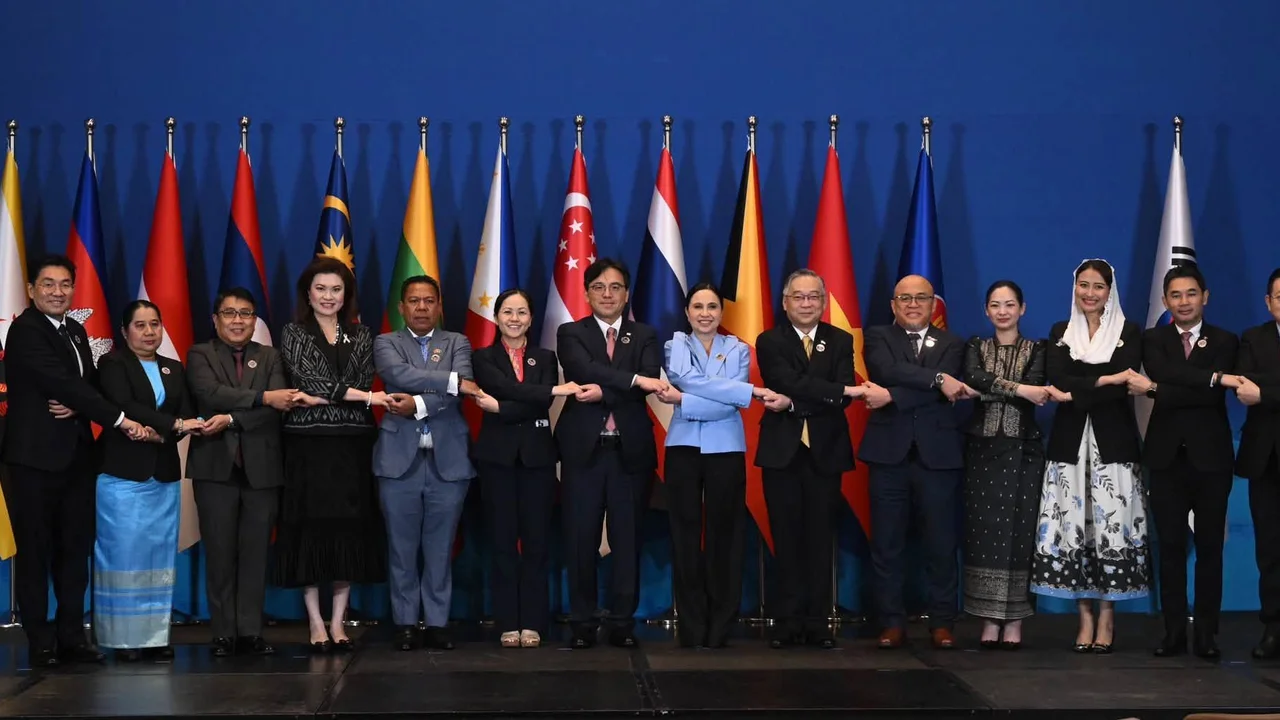
PHILIPPINES: The Philippines has chaired the 58th ASEAN Economic Ministers’ Meeting and Related Meetings in Pasay City. According to the Philippine News Agency (PNA), Trade Secretary Cristina Roque led discussions on trade and investment, digital transformation, MSME development, innovation, and sustainable growth as the bloc prepares for the 49th ASEAN Summit in November.
“Governments build infrastructure, policies and open doors, but it is our innovators, investors, and business leaders who transform opportunities into thriving world-class industries,” Roque was quoted as saying by the PNA, calling on ministers to deliver clear recommendations to raise ASEAN’s global competitiveness and bring lasting prosperity to the region’s people.
Roque highlighted ASEAN’s continued economic momentum despite challenges in international trade. FDI inflows surged 10.1% to US$245.7 billion, while trade in machinery and mechanical appliances grew 25.6% in 2024. Electrical machinery and equipment now account for more than one quarter of ASEAN’s total merchandise trade. The ASEAN digital economy has also grown rapidly to a current value of US$300 billion in gross merchandise.
Key agenda items
Ministers discussed critical issues that will feed into the November leaders’ summit, including the adoption of the landmark Digital Economic Framework Agreement. According to PNA, the meeting also covered the implementation of the ASEAN Trade in Goods Agreement (ATIGA) at the 40th ASEAN Free Trade Area Council Meeting, as well as preparatory work for the early entry into force of the Second Protocol to Amend the ATIGA.
Trade facilitation measures discussed included the expansion of the ASEAN Authorized Economic Operator Mutual Recognition Arrangement and the ASEAN Customs Transit System, which are steps toward reinforcing ASEAN as a single market and production base.
Roque noted that supply chains are being tested by global disruptions, and that ASEAN’s integrated regional market provides businesses with greater opportunities to diversify sourcing and production within the region.
Philippines as “kilometre zero”
Roque framed the Philippines’ ASEAN chairship as “kilometre zero” for the bloc, which means that they are the starting point for the first year of implementation of the ASEAN Community Vision. Beyond ministerial meetings, the chairship has convened the ASEAN Creative Industry Expo, the ASEAN MSME Summit, an Inclusive Business Forum, and strategic roundtables in IT-BPM and steel, bringing together thousands of business leaders, investors, and policymakers.
Enjoying this article?
Subscribe to get more stories like this delivered to your inbox.
Why this matters for Singapore
Singapore, as ASEAN’s most trade-integrated economy and a major hub for regional investment and digital services, has a direct stake in the outcomes of these ministerial discussions. The Digital Economic Framework Agreement, if adopted, would create new structures for cross-border digital trade that Singapore’s tech and financial services sectors are well-positioned to benefit from.
The focus on ATIGA implementation and customs facilitation also affects Singapore's role as a regional logistics and trading hub, where smoother intra-ASEAN goods movement translates directly into commercial opportunity.
Writer