
Takaichi’s Landslide and the End of Japan’s Strategic Ambiguity

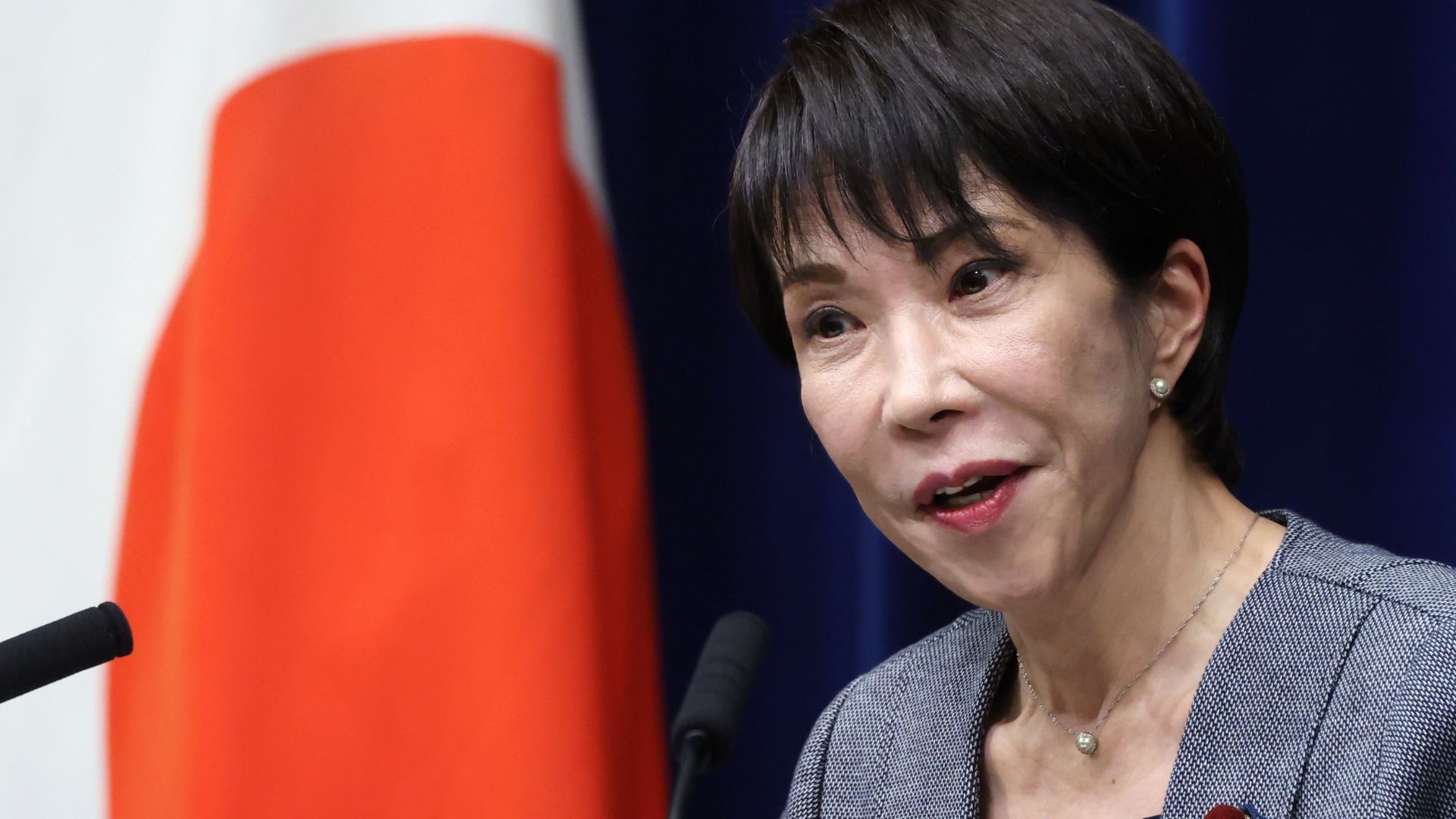
Japan's Prime Minister Sanae Takaichi speaks during a news conference at the prime minister's office in Tokyo, Japan, Dec. 17, 2025. (Kiyoshi Ota/Pool Photo via AP, File)
The landslide victory of Japan’s Prime Minister Sanae Takaichi has been almost unprecedented, and it is not simply a change of leadership. It is a strategic awakening and a new wave of a changed regional power calculations.
It marks the moment Japan has jettisoned its past decades of hesitation, euphemism, and self-deception, and with Takaichi’s new bold model, Tokyo is now choosing clarity in resolve and deterrence.
Japan has for decades lived under the notion and safe comfort of the illusion that caution and pragmatic status quo means safety, that ambiguity buys time, and that silence reduces risk. That era has ended effectively, with the rise of Takaichi and now her confirmation of power.
The Indo-Pacific today is shaped by the reality of coercion, military pressure, and raw power politics. In such an environment, strategic vagueness is not prudence, but exposure.
Takaichi’s victory is Japan’s answer to that reality.
In Japan’s political system, landslides are rare precisely because consensus culture dilutes decisiveness.
Hence, when one occurs, it is a landmark event. A landslide weakens internal party resistance and bureaucratic obstruction, and it creates openings for a prime minister something most predecessors never possessed: that is freedom of action.
Takaichi now has capacity to govern and set clear and bold policies without the usual internal vetoes that have in the past paralysed Japanese security reform.
For adversaries, the message is unmistakable: Japan’s direction is now clearly defined. For allies, it signals durability and readiness of Tokyo to be assertive and unapologetic if needed, to strengthen key alliances and to provide deterrence. For Japan’s own institutions, it removes excuses. For Trump, it solidifies his trust and expectations of Japan to increase its own defence capacities and to ever support Trump’s economic and power measures in strengthening both nations and deterring China.
Why Takaichi Won Convincingly: Audacity in State of Danger
Takaichi won because she has broken the long held unspoken fear and stigma surrounding the domestic political consideration in Japan. She did what Japanese leaders have avoided for decades - she spoke the truth in an unapologetic manner and in diving head on to the realistic issues on hand, just like in the same manner as President Trump.
She has publicly named threats instead of hiding behind process or the political comfort shield. She spoke about China, North Korea, and Taiwan as they exist in the real world, not as diplomatic abstractions.
On the issue of China, she acknowledged sustained military pressure in the East China Sea and the strategic implications of Beijing’s expanding naval and missile power on Japan. On Taiwan, she said openly what security analysts and experts are already cognisant but politicians often evade: that Taiwan’s security is inseparable from Japan’s own. On North Korea, she treated Pyongyang's missile launches not as symbolic provocations, but as operational threats requiring preparedness and deterrent capacities.
It is in these areas that her predecessors relied on carefully calibrated language and nuances - always careful not to offend Beijing, always eager to reassure domestic audiences that nothing has changed. Takaichi reversed that logic, arguing that nothing changing is the danger.
Voters responded positively because of this new reality and readiness in a leader to address heads on these central topics, in a context where the threat environment has changed. When threats are growing and more visible, honesty becomes competence and directness becomes leadership.
Takaichi’s new big mandate allows Japan to move from symbolic deterrence to credible deterrence, checkmating further options by Beijing and Pyongyang.
Three immediate changes stand out. First is defence spending, where a systematic and sustained increase in defence spending enable real capabilities with integrated missile defence, counterstrike assets, cyber and space resilience, and the needed industrial depth to support prolonged contingencies.
Second is deterrence posture, and it is not about hardware and hard power alone but the credibility and efficacy of deterrent powers. Adversaries must believe Japan can decide quickly, act cohesively and ably, and sustain escalation in a protracted conflict if needed.
Third, institutional and legal reform, where, with her political capital, Takaichi can push changes to critical areas including arms export rules, defence industrial cooperation, and constitutional constraints that have limitations before. limited Japan’s strategic agency.
A landslide election victory oils the path for all three. This will see decision-making process accelerates, and signals stop fluctuating with political mood swings.
Greater Synergy with Trump and Deeper Japan – U.S. Ties
Trump’s vision for the Indo-Pacific is direct, blunt and consistent: the notions of burden-sharing, hard deterrence, and strategic clarity. Takaichi’s Japan fits this vision and model with great precision and similarity, hence the Trump’s endorsement being immediate and unambiguous.
Under Takaichi, the US-Japan alliance deepens beyond conventional partnership and bases and joint exercises, into a full-spectrum strategic partnership that will include deeper depths of defence co-production and industrial integration, technology and economic security coordination, and explicit contingency planning for regional flashpoints.
For Washington, Tokyo becomes the ally Trump values most: an old ally that is capable, decisive, and willing to pay the costs of security especially under Takaichi. For Tokyo, the alliance becomes a force multiplier and an indispensable necessity rather than a political constraint.
This new bulwark sends a unapologetic message to Beijing and Pyongyang that reduces friction, accelerates decision-making, and restores the alliance as the central stabilising pillar of East Asia.
A stronger Japan also strengthens the Quadrilateral Security Dialogue, (Quad), where its efficacy depends on members’ willingness and capacity to lead and absorb risks. Policies in Quad will be aligned with Japan’s political durability and Tokyo is now more positioned to be the Quad’s central engine in sustaining and spearheading new maritime security initiatives and positioning Quad as the central bulwark of checking China’s intent and moves.
This provides a new sense of assurances and confidence for Southeast Asia and the wider Indo-Pacific. Regional confidence does not come from neutrality alone; it comes from the assuring reality that a power is both willing and capable to hold the line and to impose costs should there be violations.
The Revival of Japan’s Military Prowess
Japan’s Self-Defence Forces (SDF) has undergone years of rejuvenation, providing a new deterrent tool against China.
One of the central parts is the focus on long-range strike as part of its “counterstrike” concept. Tokyo approved the purchase of 400 U.S.-made Tomahawk cruise missiles which will be delivered by this year.
The Tomahawk missiles remain the core tenet of the new prowess for the SDF, with a range of roughly 1,600 km and launch options from Aegis-equipped destroyers and potentially land-based systems later, Tomahawks bolster and expand Japan’s ability to hold at risk Chinese military targets such as missile launch sites, radars, ports, and other enablers. This will complicate the planning of the People’s Liberation Army (PLA) and eventually increase the cost of aggressions.
Even before the bolster of Tomahawks Japan’s air and maritime forces already for a key deterrent factor especially also with regards to the scenario of Taiwan. Japan has around 300 modern fighters, including F-35A/Bs and upgraded F-15Js, providing a multi-theatre war fighting capacity and which will force the PLA Air Force to fight on more than one axis rather than concentrating solely on Taiwan.
At sea, the Japan Maritime Self-Defense Force (JMSDF) has in its possession, 20 quiet diesel-electric submarines and has substantive capacity in anti-submarine warfare (ASW). This ASW role, paired with U.S. P-8 patrol aircraft, can systematically contest the East China Sea, Philippine Sea, and Luzon Strait.
Enjoying this article?
Subscribe to get more stories like this delivered to your inbox.
Japan’s air, naval, and undersea strength and capacity serve as the decisive force multiplier: they raise the costs for the PLA, complicate timelines, and reinforce a denial strategy alongside the model of Taiwan’s “porcupine” approach.
Hence, China treats Japan’s defence expansion and renewal especially long-range strike as a serious obstacle.
Deterrence against Beijing and Pyongyang and Russia’s New Calculations
For Beijing, the danger is not about Japan’s rhetoric, it is Japan’s irreversibility. Pressure tactics that might once have worked on Tokyo under different leaderships have now been made obsolete under Takaichi.
For Pyongyang, the calculus changes as alliance integration deepens and Japan is not just another theatre in the manouvres of President Jong-un. The readiness also to close ranks and deepen ties with Seoul means that the alliance of convenience is no longer being constantly constrained by historical legacies, but more by necessities and threat realities of the present. The strengthening Seoul-Tokyo-Washington synergy provides a new bulwark of deterrence and weakens the pressure and escalate-to-deescalate tactics of both Beijing and Pyongyang.
Provocations become costlier when response speed increases and coordination tightens among the three powers. Deterrence here is cumulative: missile defence, alliance credibility, and political will reinforcing one another, and this is made even more credible with President Trump’s distinct all-in pressure approach.
Russia, while strained in the war in Ukraine, would not want to be dragged into another war theatre in the Eastern flank with new tensions with Tokyo especially with regards to the territorial dispute in the Kuril Islands. Moscow is also trying to reset ties with East Asia, as a strategic fallback against overdependence on China, despite the No Limits Ties, underscoring the persistent and systemic wariness with China.
A stronger, predictable Japan under Takaichi now offers Moscow a stability option in East Asia, even without resolving territorial disputes and potential new bulwark that can strengthen Moscow’s attempts to reengage with this region and to prevent future tensions, and reduce risks of a multi-front conflict.
This should not be seen as a rapprochement as continuous sanctions and Japan’s alignment with Washington impose clear limits, and Takaichi would also have the option of Moscow serving as a potential balancer against both Pyongyang and Beijing. From Moscow’s perspective, a firm Japan may be preferable to a volatile one.
At minimum, it incentivises restraint over hostility.
Takaichi’s landslide means that hedging through silence is no longer viable. Japan has chosen to confront threats openly, stabilising through clarity.
History has shown that that ambiguity invites miscalculation, while strength backed by legitimacy prevents it. With this election, Japan has made its choice undeniably clear, and China and the Indo-Pacific will adjust accordingly.
Foreign Affairs, Security and Strategy Analyst, Universiti Malaya