
U.S. National Security Strategy Keeps Allies In and China Out

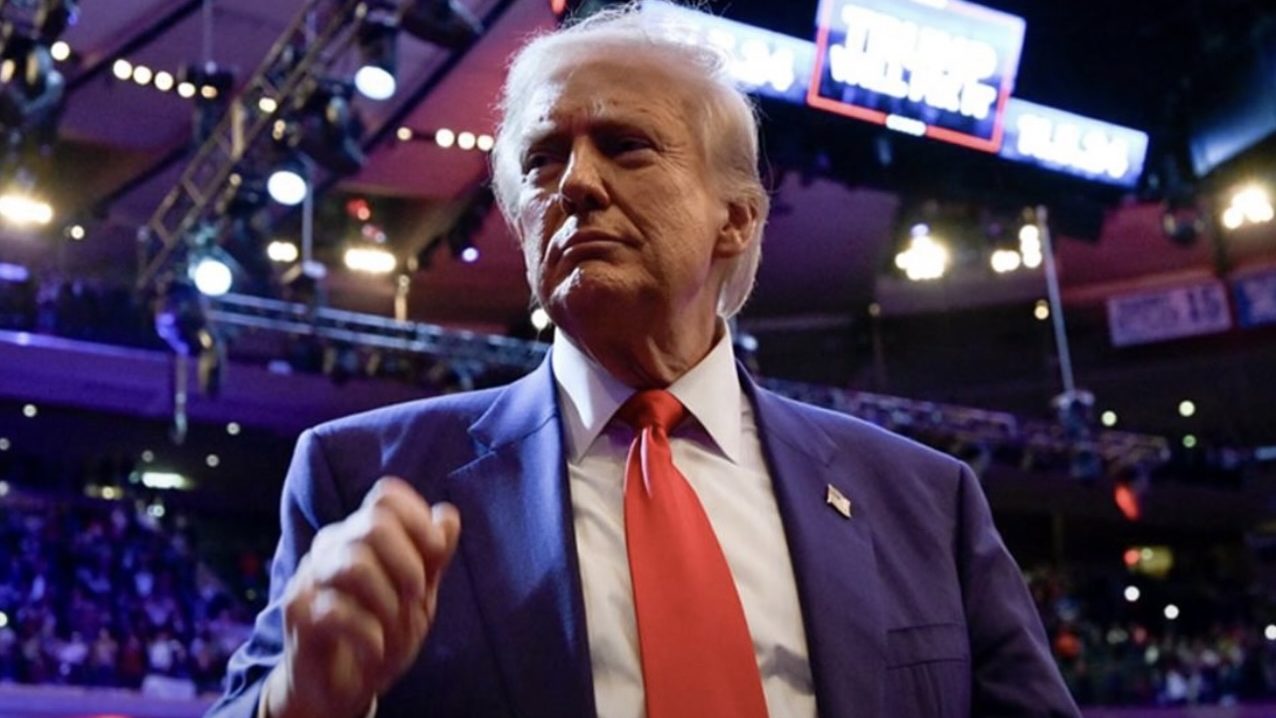
US President Donald J Trump
The new U.S. National Security Strategy (NSS) marks a decisive and strategic revival of “America First 2.0,” representing a more refined, sharper and far more ideologically laden shift with practical impact and stronger assurances to the U.S. AS compared to Biden's 2022 version.
While some have termed this NSS as a signal of a global retreat, with less emphasis on the obligations of checking Russia and China and with more focus on securing the near border and the Western Hemisphere of the U.S., this is far from the real strategic picture of calm and meticulous calculations, and aligned with the broader goal of Trump’s Peace Through Strength and America First doctrines.
This NSS openly narrows U.S. obligations, with greater priorities on specific theatres, and projects the essence of economic power and technological dominance as the core base of American influence and power projection, without neglecting the unrivalled hard power might.
The narrowing of the definition of U.S. interests reflects this fundamental change in the new NSS. Previous strategies, especially after the Cold War, have largely expanded the role and obligations of the U.S. in almost all international issues, from climate to democracy promotion, that are deemed to be interlinked with the U.S. security and interests.
The 2025 NSS rejects this notion, while outlining a defined ecosystem and periphery: protecting the Western Hemisphere; securing economic and technological primacy especially against China; preventing foreign domination in strategic energy regions; and protecting the homeland through new focus on missile defence and tightened borders.
This is a direct call for prioritising the core interests and fundamental threat factors for the American people, without the baggage of globalist visions and obligations and acting as a free donor to the world at the expense of its own survival and worse, without getting the needed supportive goodwill returns from others. The 2025 NSS explicitly states that global domination is not a core U.S. objective, but not to be confused with a retreat into isolationism, but a reset toward prioritised regionalism and a reimagination of core interests, with the Indo-Pacific and the Western Hemisphere at the core.
The ideological framing remains another unique different front, focusing on sovereignty, cultural identity, and civilisational confidence at the forefront, with profound emphasis on restoring America’s cultural spectrum, defending conservative and traditional institutions, and curbing the influence of globalist ventures and intent that have eroded U.S. national sovereignty.
This can be seen in the criticism of woke policies from Europe to Canada, challenging establishment elites and seeing unchecked mass migration as a new strategic threat. For decades, these issues have been tolerated under the disguise of globalism and woke understanding, but the new lense of framing the issue is being reshaped into one that of strategic threats, as new risks and threats of de-stabilisation and risks of safety and security rise.
The increased foreign presence and incursion into the Western Hemisphere, have been the growing threat to the U.S. and Trump has foreseen this, with the new focus on tackling this threat being seen in the NSS. A renewed Monroe Doctrine style posturing with Trump style containment, to block foreign powers from setting a deeper foothold in Latin America and the Caribbean.
This is where the new framework and angle of the Chinese influence and power containment are being reassigned, where Beijing’s investments in ports, telecoms and energy infrastructure in these regions are now being classified as direct national security concerns which will require new U.S. countermeasures and responses.
Now, both allies and other partners are expected to pay their fair share of their obligations to ensure their own security, and not exploit the free ride provided by the U.S. security umbrella that stretched from one end to the other across the globe.
For the U.S. to continue to provide the security assurances, especially with the rising costs of security deterrence and the growing nature of threats, further U.S. commitments will need greater defence spending and commitment on the part of these players, for them to also fulfil their own share of their own security obligations. They are also expected to comply with the new interests of the U.S., from economic to geopolitical interests and expectations. Burden redistribution will alleviate the unnecessary stress on the production capacity to meet the needs and demands of the U.S. military, which has been diverted to supporting new fronts of conflicts especially in Ukraine which did not threaten the immediate needs or interests of the U.S.
This new burden sharing expectation is not confined to Europe and NATO alone, Asia and the Indo-Pacific are expected to comply with this new strategic transactional angle, for these players to meet the baseline criteria of the right investments on their own deterrent capacities to show the seriousness and willingness as a credible partner of the U.S.
Geoeconomic Front and Keeping Power Gap
Economics forms the backbone of the 2025 NSS. Unlike previous strategies that view this from the lenses of the traditional power framework, Trump embeds the notion of economic security and industrial strategy as the core centre of national security, and not only in the conventional transactional approach as has been criticised by many.
Security and defence policies are intertwined with the need for equal returns on key economic and technological advantage preservation, and ensuring that other partners are fully aligned with supportive of the long term architecture of economic and geopolitical needs of the U.S., knowing that any downturns to this traditional dominance will also mean that they will be weakened and threatened by revisionist powers out to dethrone the U.S. led system.
The tools of tariffs, reshoring capacity, restoration of energy dominance, and supply-chain sovereignty are made as fundamental core priorities to win a long-term contest with China, and as a new forward in maintaining the economic gap with China. The NSS also identified the failures of past economic engagement with Beijing, and the new focus will be how and where China’s technological and economic ambitions pose the primary challenge to U.S. power.
Emphasis will be on tightening restrictions and access on sensitive technologies and high end chips, expanding export controls, and restructuring global supply chains to reduce risk and vulnerabilities.
Dominance will continue to be sought in the hemispheric and Indo-Pacific advantage, while also realising that it will be wasteful to attempt to dominate in every theatre and front without obvious returns, which serve only as a distraction and a wastage of U.S. resources and manpower.
Enjoying this article?
Subscribe to get more stories like this delivered to your inbox.
The new NSS, contrary to popular perceptions that thought it has weakened hard power posture, is in fact expanding a militarised strategic posture, doubling down on key future areas including space-based missile defence projects including the “Golden Dome,” a brainchild of Trump in better protecting the homeland.
The new approach also will see an expanded munitions production, and forward military deployments designed and tailored for denial and rapid response rather than prolonged occupation.
This will reduce long term entanglement as what the U.S. has been entangled before, with fewer “forever wars” but a targeted approach with high efficacy.
China has not been left out of the equation in this new NSS despite arguments otherwise. It has not increasingly been framed from the angle of economic and technological leadership rather than ideological supremacy, while creating deterrence strong enough to prevent military confrontation.
This still empowers Washington’s denial capabilities and deterrence capacity across the First Island Chain, foster deeper integration with key allies including Japan, the Philippines, Australia, and Taiwan, and pressure on partners to align their economic security decisions to reduce vulnerabilities with China.
The traditional approach of hedging and strategic balancing by most Southeast Asian nations have continued to be a bane for Washington, and this time, ASEAN states are expected to make a choice, in getting the needed security and economic assurances.
Gone are the days when they could play out both sides and still expect Washington to bleed in economic and security funding for the region, yet getting nothing in return.
Overall, the 2025 NSS reinforces U.S. focus on the Indo-Pacific, and China still stands as one of the main core focuses in the overall strategy equation.
The 2025 NSS marks the beginning of a harder, more complex, and more competitive era, but it also creates the necessary strategic rebalancing by the U.S. to ensure the power gap remains in its favour, and that the full strength of the coordinated alliance set-up is well recalibrated, to the advantage of not only the U.S. with America First doctrine still well in the core, but most importantly, the often unappreciated positive ripple effects that a prosperous and strong United States will ensure a peaceful and stable global order based on Peace through Strength.
Foreign Affairs, Security and Strategy Analyst, Universiti Malaya