
Federal appeals court blocks Trump's mail-in voting order in 23 states ahead of November midterms

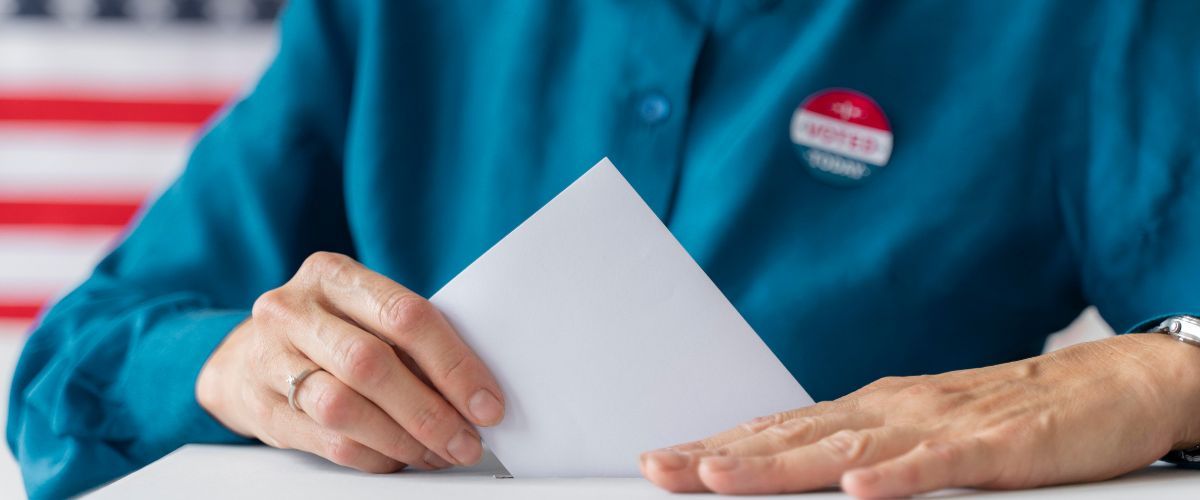
USA: A federal appeals court has refused to allow Donald Trump’s administration to implement his executive order tightening rules for mail-in voting across 23 states, dealing another legal setback to the president’s efforts to overhaul election rules before November’s crucial congressional elections.
According to The Guardian, the Boston-based First US Circuit Court of Appeals rejected the Department of Justice’s request to lift an injunction secured by a coalition of Democratic-led states on June 25, in a 2-1 ruling issued on Saturday.
The injunction had been granted by US District Judge Indira Talwani, who found that key parts of Trump’s order were unconstitutional. The DOJ had argued that any legal challenge to the order was premature because government agencies had not yet finalised the actions needed to implement it. The appeals court rejected that argument.
“The plaintiff states have no practical choice but to respond to the [order] now,” the judges wrote, noting that the executive order set “a clear set of rapidly approaching deadlines” that states needed to plan around well before September and November elections.
What Trump’s order required
The Guardian reported that Trump signed the executive order in March, building on years of false claims that his 2020 election defeat resulted from widespread voter fraud. The order directed the Department of Homeland Security to compile lists of confirmed US citizens eligible to vote in each state, drawn from citizenship, naturalisation, and other federal database records, and required states to use those lists.
It also directed the US Postal Service to deliver mail-in ballots only to voters on each state’s approved mail-in ballot list. According to The Guardian, USPS had recently moved toward implementing this by issuing proposed rules requiring states to provide the names and barcodes tied to their mail-in ballots.
Additionally, the order directed the Department of Justice to prioritise the investigation and prosecution of state and local election officials who issue federal ballots to people deemed “not eligible” to vote.
Why the court sided with the states
Judge Talwani, in her original ruling siding with the 23-state coalition led by California, Massachusetts, Nevada, and Washington, found that Trump lacked the authority to direct DHS to compile voter eligibility lists for states, noting that under the US Constitution, administering federal elections is the role of states, not the federal executive.
She also found that USPS had no statutory authorisation to adopt binding regulations on mail-in voting, and that Trump could not use his order to “intimidate local election officials to use the necessarily incomplete confirmed citizenship lists as a resource, lest they face criminal prosecution.”
What happens next
The DOJ warned that if the First Circuit ruled against it, which it now has, it may be forced to ask the Supreme Court to intervene. That would set up another high-stakes election law confrontation before the nation’s highest court, which earlier this year struck down Trump’s sweeping tariff regime.
Enjoying this article?
Subscribe to get more stories like this delivered to your inbox.
The ruling adds to a growing body of judicial pushback against Trump’s election-related executive actions. Earlier courts had blocked a separate executive order requiring proof of citizenship to register to vote and restricting the counting of mail-in ballots. A federal judge in Washington DC had also rejected a related Democratic effort to block the mail-in voting order on similar grounds before Talwani’s ruling came down.
The appeals court’s ruling keeps the current mail-in voting framework in place for those 23 states for now. Whether the Supreme Court agrees to weigh in will determine whether any part of Trump’s order takes effect before voters go to the polls.
Read also: Trump dismisses last Democratic election commissioners, leaving federal agency without quorum
Writer