
Trump-Xi talks go beyond trade as AI rivalry and Iran sanctions add new pressure
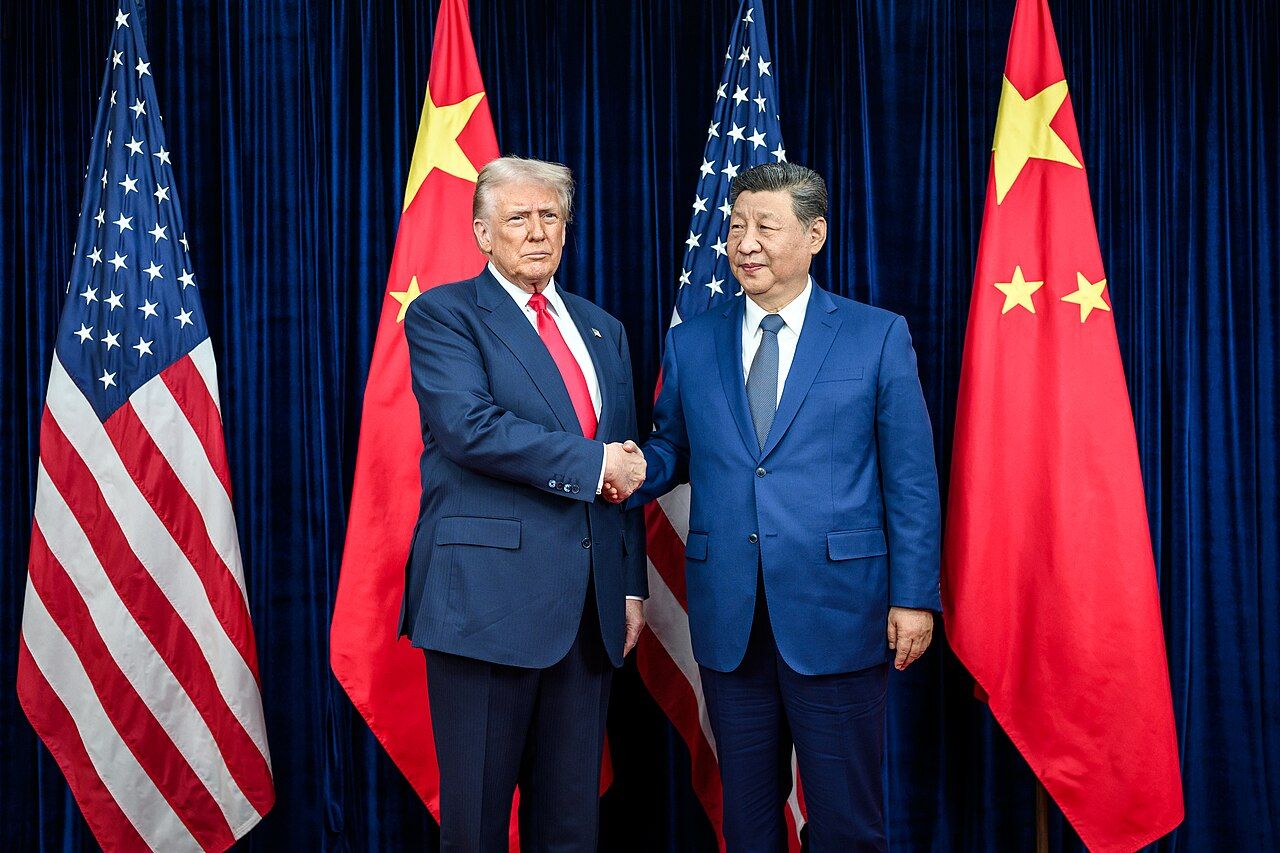
Donald Trump, Xi Jinping
USA: President Donald Trump and Chinese President Xi Jinping are meeting in Washington for their second face-to-face summit this year, with both sides expected to announce a one-year extension of their trade truce while navigating a more complex agenda that now includes AI competition, Iran-related sanctions, and unfulfilled commitments from their last agreement, according to CNBC.
A state dinner is planned for Thursday, with top US business executives attending, including Amazon’s Jeff Bezos, Elon Musk, Google’s Sundar Pichai, Michael Dell, Apple board chairman Tim Cook, JPMorgan’s Jamie Dimon, Citigroup’s Jane Fraser, Nvidia’s Jensen Huang, and OpenAI’s Sam Altman.
Despite a significant cooldown from the peak of last year’s trade war when US tariffs on Chinese imports hit 145%, and China’s retaliatory duties reached 125%, both countries continue to impose substantial levies on each other’s goods. According to CNBC, the effective US tariff rate on Chinese products stood at 22.8% as of July, according to the Penn Wharton Budget Model, while the Congressional Research Service calculated a higher figure of roughly 36.5% versus Beijing’s 31% on US goods.
US-China goods trade declined nearly 30% in 2025, with the trend continuing through the first seven months of 2026. The US goods trade deficit with China nonetheless remains among the world’s highest at roughly US$91.2 billion.
What to expect from the summit
A one-year extension of the trade truce is the consensus base case among China analysts, Bank of America Global Research told clients, CNBC reported. That extension would maintain the tariff status quo and bar new export controls, which is a major sticking point ahead of the previous Busan meeting, where China agreed to suspend rare earth export controls and purchase US agricultural products while the US reduced some tariffs.
Treasury Secretary Scott Bessent told CNBC on Monday that he expects the tariff truce to be maintained and flagged progress on a “30-by-30 trade deal for non-critical goods.”
China could also agree to additional purchases of US goods, potentially including more Boeing aircraft, analysts said.
AI takes centre stage
Bessent told CNBC that AI will be at the top of the agenda. He said he and Chinese counterparts discussed establishing a bilateral dialogue to notify each other of AI incidents, which is a notable development given that the US and China are the world’s leading AI competitors and that Trump has framed AI dominance as inseparable from US economic superiority.
Enjoying this article?
Subscribe to get more stories like this delivered to your inbox.
Trump has been vocally hostile to AI regulation domestically, but in a Truth Social post on Monday appeared to soften slightly, saying the government “will rein things in if we have to.”
The summit is further complicated by the US campaign to intensify economic pressure on Iran, which has put a spotlight on China as Tehran’s top trading partner. The Trump administration has said no country is exempt from potential sanctions but has not yet directly targeted Beijing.
Read also: Trump threatens EU with ‘very serious tariffs’ over Canada’s proposed associate membership