
US pays out $81 billion in tariff refunds after Supreme Court ruling, as deficit climbs and new duties loom

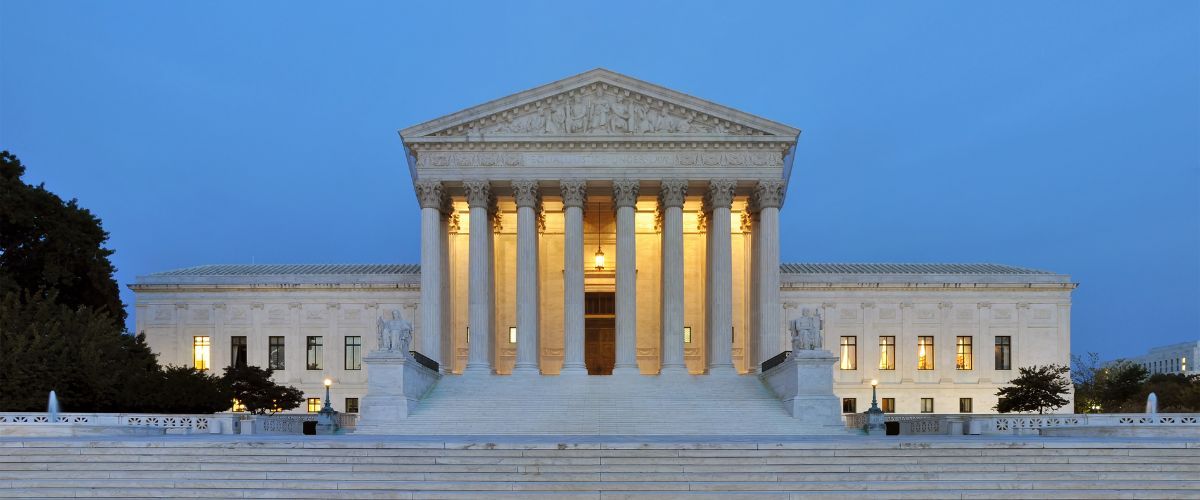
Photo: US Supreme Court in Washington, DC
USA: The United States government has already refunded tens of billions of dollars in tariffs it collected before the Supreme Court ruled a significant portion of them illegal, with budget figures released on Monday (July 13) showing US$81 billion (S$104.6 billion) in tariff refunds paid out so far this fiscal year, compared to just US$5 billion during the same period last year.
According to The Guardian, a Treasury Department official confirmed the spike was almost entirely the result of the Supreme Court’s decision earlier this year, which shut down a large chunk of the extra tariffs President Donald Trump had ordered. Most of the refunds were processed in May and June.
Tariffs had been positioned by Trump as a central fix for the US economy; it has been framed as a mechanism for bringing manufacturing back, securing better trade deals, and closing the federal deficit. The deficit had indeed narrowed slightly last year, in part because of tariff income, but it is now growing again, hitting US$1.367 trillion in the first nine months of the current fiscal year, up 2%.
The US spent more than US$1 trillion on interest payments on its national debt alone, which is up 14%, while military spending climbed 5%, likely driven by the costs of the war in the Middle East.
What comes next on tariffs
The administration’s current temporary 10% global tariff is due to expire on July 24, but the White House is already preparing new duties, this time targeting what it describes as lax enforcement of anti-forced labour laws and excess industrial capacity. The proposed new tariff rates are expected to fall between 10% and 12.5%, and are designed in a way that could allow Trump to work around the court-imposed limits that struck down the earlier measures.
The latest proposal could affect major US trading partners, including the UK, Japan, India, Taiwan, and China. The US has also threatened to impose fresh levies of 25% on Brazil.
Separately, Trump, last month, threatened a 100% tariff on European countries, including the UK, that implement a digital services tax on large US technology companies, The Guardian reported. In a post on Truth Social, he warned that any country that proceeds with such a tax would be “immediately met” with the 100% tariff, adding that it would “supersede trade deals made with the country, whether implemented, signed, or not.”
The UK currently has a 2% digital services tax applying to large social media platforms, search engines, and online marketplaces. This has raised more than £800 million (S$1.18 billion) in 2024 to 2025. France, Spain, and Italy each impose a 3% digital services tax on large companies operating in their countries, with several other EU members having implemented or proposed similar measures.
Netizens react
The refund figures drew pointed reactions on Reddit, with many commenters focusing on who actually bore the cost of the tariffs and who is now receiving the money back.
“People already paid for all those tariffs, and now, billionaires get the money. More corporate and billionaire welfare while prices will stay the same for the average person. They are greedy animals. No amount of money is enough for these blood suckers,” one Redditor wrote.
Enjoying this article?
Subscribe to get more stories like this delivered to your inbox.
Others questioned the wider cost of the tariff strategy. “We destroyed international relations for $81 billion?” one user asked, framing the Supreme Court refund figure against the diplomatic fallout of Trump’s trade war posture.
One netizen cut to what they saw as the core mechanics of the situation: “So the foreigners were supposed to be the ones who paid, customers were the ones who, in the main, actually paid, yet businesses are the ones who get the money. A scam.”
Another asked whether consumers who ultimately bore the cost of the tariffs through higher prices would see any of the money returned. “So where’s my tariff refund? I think regular people need to be filing class action lawsuits against any company that receives a tariff refund and doesn’t pass that refund back to the consumers who originally paid the tariffs,” they wrote.
Read also: ‘How is this not a recession?’: Reddit voices a generation’s frustration
Writer