
Pew Research Center: More countries now view China more favourably than the United States

INTERNATIONAL: For the first time in roughly two decades of tracking global attitudes, more people around the world view China more favourably than the United States, according to a new poll from the Pew Research Center released on Wednesday (July 15).
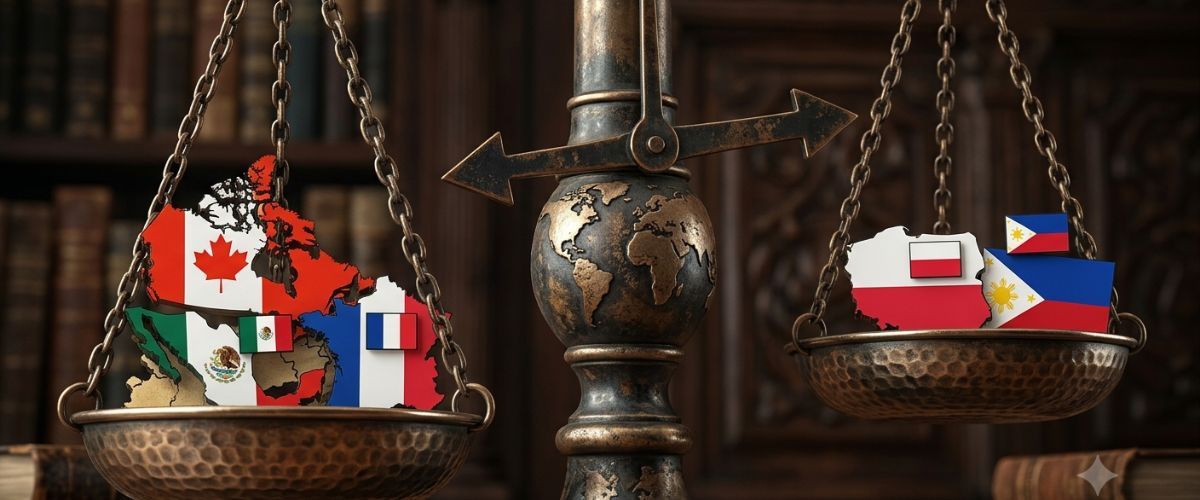
According to The Guardian, the survey, conducted across 36 countries and territories from February to May 2026, found that majorities or pluralities in 25 of those countries held more favourable views of China than the US, including in traditional US allies such as Canada, Mexico, and major European nations.
Only six countries, which are Poland, the Philippines, South Korea, India, Japan, and Israel, still view the US more positively than China.
A historic shift
Laura Silver, associate director of Pew’s Global Attitudes Research, described the finding as unprecedented. “Views of Beijing and Washington have been very similar at some points in the past but have not been significantly more favourable for China until now,” she was quoted as saying by The Guardian.
The shift follows the fading of COVID-19 as a defining issue, a period when China's image had been damaged globally, and a marked deterioration in how the world views the United States under the current administration.
“There was just an actual relationship between the outbreak of the war and the sense that the US is just not contributing to peace and stability, and that people have less confidence in Donald Trump,” Silver said.
The poll was conducted during a period when the US and Israel were engaged in a war against Iran. Inevitably, the conflict has shaped global perceptions of American foreign policy and its contribution to international stability.
Trump’s actions cited as key drivers
Beyond the Middle East war, Silver pointed to several specific Trump administration actions that have contributed to negative perceptions abroad: his demands to control Greenland, the American military raid that captured Venezuela’s then-leader Nicolás Maduro, and the US handling of the Israeli-Hamas conflict in Gaza.
Views of Xi Jinping also outpaced those of Trump in 22 of the 36 surveyed countries and territories, including Canada, Mexico, France, Germany, and the UK, though the report notes that many countries hold low confidence in both leaders.
The Canada shift is particularly stark
The change in Canadian attitudes illustrates how dramatically allied opinion has moved. In the new survey, only 33% of Canadians hold positive views of the US, down from 57% in 2023. Over the same period, favourable opinions of China rose from 14% to 44%, which is a near-complete reversal.
The shift follows Trump’s sweeping tariffs on Canadian goods and his repeated suggestions that Canada could become “the 51st state.”
Major European countries, including France, Germany, Spain, Italy, Sweden, and the Netherlands, have all switched their relative opinions on the two powers over the same period.
Even within the US itself, the gap has narrowed sharply. In 2023, about six in ten Americans held positive views of the US, with a 32-percentage-point spread in Washington’s favour over China. That gap has now essentially closed, with Americans viewing the two countries similarly.
Enjoying this article?
Subscribe to get more stories like this delivered to your inbox.
What China says
The Chinese embassy in Washington said the poll “demonstrates that China’s governance achievements and development progress are widely recognised.”
Silver offered a more nuanced explanation for China's relative gains: “By comparison, we know that China is seen to be a more reliable partner in many places. It’s more likely to be seen to contribute to global peace and stability.”
The US retains an advantage over China when it comes to perceived respect for personal freedoms, though the Pew report notes that gap is also shrinking.
The survey covered more than 42,000 people across 35 countries plus the West Bank and East Jerusalem, with margins of error ranging from 2.3 to 5.5 percentage points depending on the country.
Writer