
The story behind Little India, one of Singapore's most historic neighbourhoods
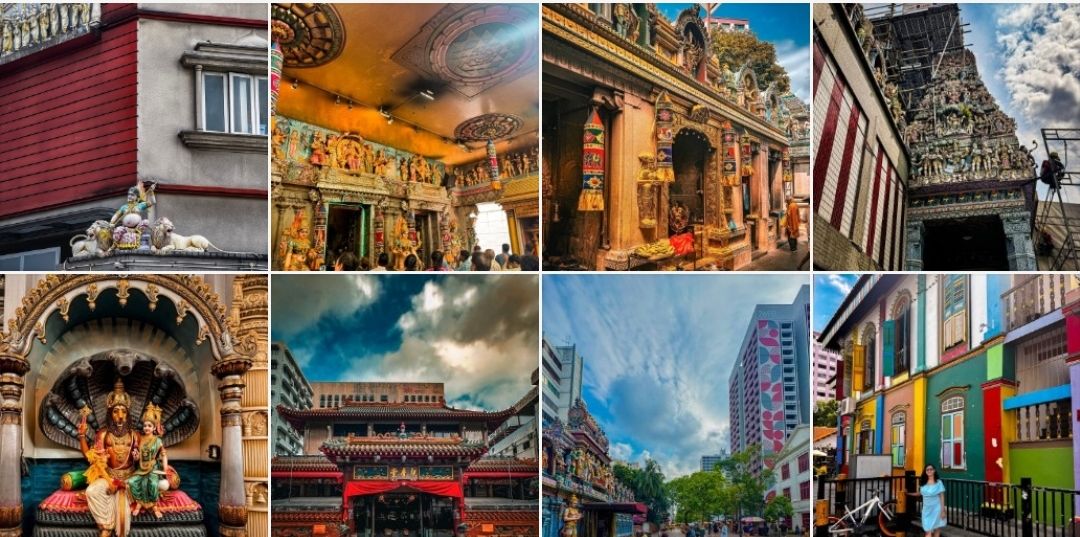
Singapore's Little India is home to a remarkable variety of temples.
Singapore’s Little India is more than a cultural district. Its streets, temples and historic buildings preserve the story of migration, commerce and the communities that helped shape the city-state.
Singapore is often associated with futuristic architecture, global finance and technological innovation. But beneath the modern skyline lies a city shaped by centuries of migration and cultural exchange.
Few places reveal that history more clearly than Little India.
Centred largely around Serangoon Road, the district has long been associated with Singapore’s Indian community, particularly its Tamil population. Its history is closely connected to the arrival of Indian workers, traders and entrepreneurs, whose presence became an important part of the development of colonial Singapore.
Over time, the area evolved into a centre of Indian commerce, religion and culture. The result is a neighbourhood where historic temples, traditional businesses and religious practices continue to exist alongside the modern city.
A history shaped by migration
The history of Little India is inseparable from the broader history of Singapore as a port city.
For centuries, the island was connected to maritime trade routes linking South Asia, Southeast Asia and the wider Indian Ocean world. Indian merchants and travellers were part of these networks long before Singapore emerged as a major British trading port.
The establishment of the British settlement in the early 19th century brought a significant increase in migration from the Indian subcontinent. Indian workers were employed in a variety of occupations, while merchants and traders established businesses that contributed to the development of the growing settlement.
The area around Serangoon Road gradually became associated with Indian communities and commercial activity.
What emerged was not simply a residential district but a cultural landscape shaped by language, religion, food, trade and community institutions.
Serangoon Road and the growth of a community
Serangoon Road became one of the central arteries of Singapore’s Indian community.
Businesses developed along the road, while temples and other religious institutions became important centres of social and cultural life.
The district also reflected the diversity of the Indian population in Singapore. Although the Tamil community became particularly prominent, the area was shaped by people from different parts of the Indian subcontinent.
This diversity remains part of Little India’s historical identity.
The temples of Little India
The religious buildings of Little India are among the most important reminders of the community’s history.
Sri Srinivasa Perumal Temple is one of the district’s historic Hindu temples. Dedicated to Lord Vishnu, it is closely associated with Singapore’s Vaishnavite Hindu community and reflects the architectural and religious traditions of South India.
The temple has stood for nearly two centuries and remains an important place of worship.
Another major landmark is Sri Veeramakaliamman Temple, dedicated to the goddess Kali.
Established in 1855, the temple is among the oldest and best-known Hindu temples in Singapore. Its history is closely connected to the Indian migrant communities who helped build the city during the colonial period.
Although its religious traditions are primarily Tamil, historical accounts also point to the contribution of Bengali workers in Singapore to its construction.
The temple therefore reflects the complex history of the Indian community in Singapore, where people from different regions and linguistic backgrounds lived and worked within the same colonial society.
A place of refuge during the Second World War
Sri Veeramakaliamman Temple is also associated with Singapore’s wartime history.
During the Japanese invasion and occupation of Singapore in the Second World War, the temple reportedly became a refuge for people seeking shelter from bombing.
The experience became part of the temple’s collective memory and contributed to its enduring importance within the community.
The history of the temple illustrates how religious institutions often served purposes beyond worship. For migrant communities, temples could function as places of social connection, cultural continuity and, at moments of crisis, refuge.
Hindu and Buddhist traditions side by side
Little India’s history also reflects Singapore’s broader tradition of religious diversity.
Near Albert Mall Walking Street, Sri Krishnan Temple stands close to Kwan Im Thong Hood Cho Temple, a Buddhist temple dedicated to Kuan Yin, the Goddess of Mercy.
The close proximity of the two religious sites reflects the layered cultural history of Singapore, where different faiths and communities have developed alongside one another.
This coexistence is part of the wider historical character of the city-state.
Trade, food and everyday culture
The history of Little India is not preserved only in temples.
It can also be found in the district’s commercial traditions.
For generations, businesses selling Indian clothing, spices, jewellery, flowers, religious items and food have contributed to the character of the area.
Places such as Tekka Hawker Centre reflect the importance of food in Singapore’s multicultural history. The centre and its surrounding area have long been associated with the everyday life of the neighbourhood and with the wider culinary traditions of the city.
Food, like religion and language, became an important way for migrant communities to preserve and express their cultural identity.
House of Tan Teng Niah and a layered past
House of Tan Teng Niah provides another reminder that the history of Little India is not limited to a single community.
The colourful historic building was associated with a Chinese businessman during Singapore’s colonial period.
Enjoying this article?
Subscribe to get more stories like this delivered to your inbox.
Its presence within Little India reflects the overlapping histories of Singapore’s different ethnic communities. The neighbourhood developed through interaction among Indian, Chinese, Malay and other communities, each contributing to the city’s social and commercial life.
The building is therefore significant not only for its architecture but also for what it represents: the layered history of a multicultural city.
Mustafa Centre and the evolution of commerce
The development of modern commercial institutions such as Mustafa Centre represents another chapter in the evolution of Little India.
The centre has become one of the district’s best-known commercial landmarks, reflecting the continued importance of Indian-owned businesses and South Asian commerce in the area.
Its 24-hour operation also reflects the changing nature of Singapore’s urban economy and the way traditional commercial districts have adapted to modern life.
A living historical district
Little India’s significance lies in the fact that its history remains part of everyday life.
The district is not a preserved historical site frozen in time. Its shops continue to operate. Its temples continue to serve worshippers. Its food traditions continue to evolve. Its streets remain connected to the communities whose history helped shape them.
That is what makes the area particularly important to Singapore’s national story.
The city-state’s modern identity was built not only through skyscrapers, technology and global finance but also through migration, labour, trade and cultural exchange.
Little India represents that history in a concentrated form.
Its temples recall the religious traditions of migrant communities. Its businesses reflect generations of commerce. Its architecture preserves traces of the colonial era. Its streets reveal the continuing presence of cultures that have helped shape Singapore for generations.
In a city known around the world for its modernity, Little India remains a reminder that Singapore’s story began long before its skyline took shape.
Its history is still visible—in the temples, the businesses, the architecture and the communities that continue to give the neighbourhood its identity.
Contributing writer at The Independent News